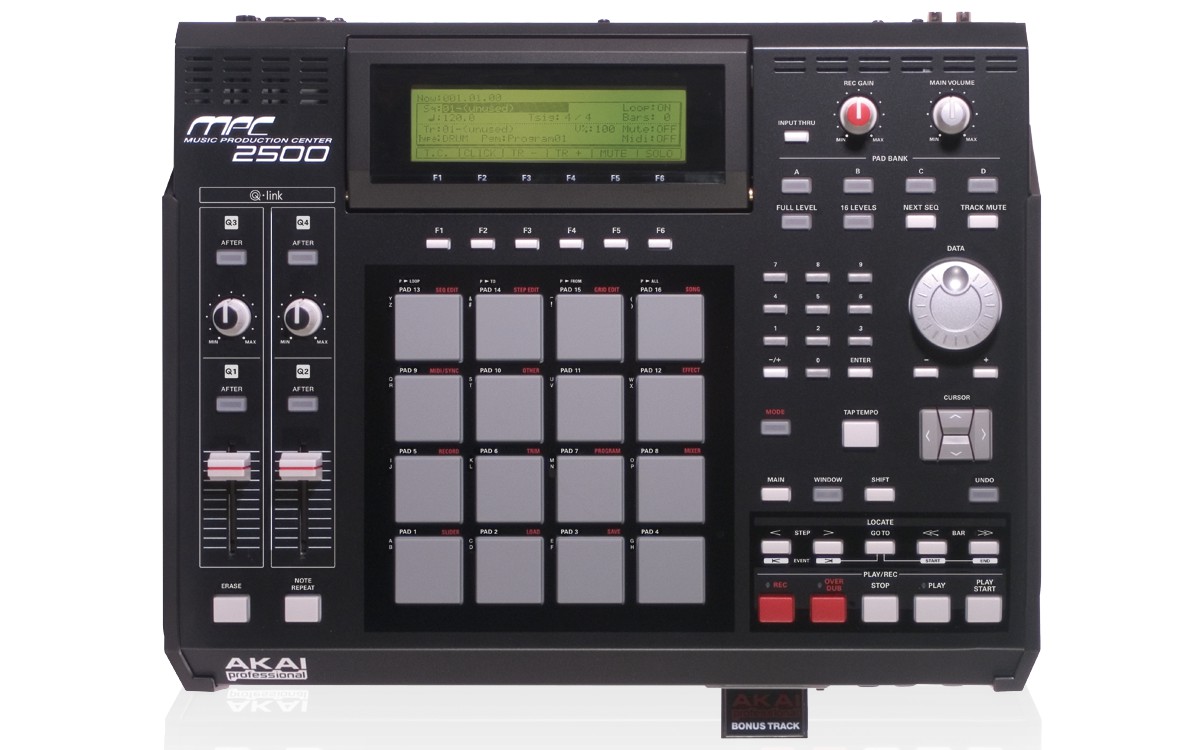
The Akai MPC 2500 is a versatile music production powerhouse that’s perfect for both studio and live settings. You’ll enjoy its 32-voice drum/phrase sampler and the capability to manage intricate compositions with a 64-track sequencer. The user-friendly interface and dynamic controls make it accessible, even if you’re just starting out. It supports compact flash cards up to 2GB, ensuring you have plenty of space for projects. With 128MB RAM, you’ll get excellent sound quality. It stands strong against competitors with its effects processing and expressive pad performance. Discover how to master its features for ultimate creative potential.
Features and Specifications
When it comes to features and specifications, the Akai MPC2500 stands out with its robust capabilities. As an mpc2500 music production center, it provides an extensive toolkit for creating intricate compositions.
The device’s operating system is designed to handle complex tasks, featuring a 32-voice drum/phrase sampler and a 64-track sequencer. This sequencer lets you control up to 64 channels via four MIDI outputs, making it ideal for detailed production work.
One of the standout features is its compatibility with a compact flash card, supporting up to 2GB for efficient data storage and sample management. This allows you to easily expand your creative possibilities without worrying about space constraints.
The 128MB RAM and 16bit/44.1kHz audio quality guarantee high-fidelity sound layering and production.
The MPC2500 is equipped with four Q-Link controllers, offering you hands-on control over various parameters, enhancing your sound design experience.
You’ll appreciate the two multi-effects processors that include ten different effect types, perfect for adding depth and texture to your music.
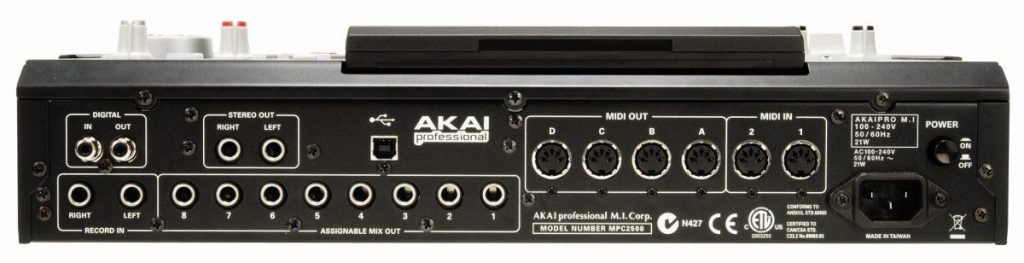
Its connectivity options, including 10 analog outputs and S/PDIF digital output, provide flexibility in both studio and live environments.
Performance and Versatility
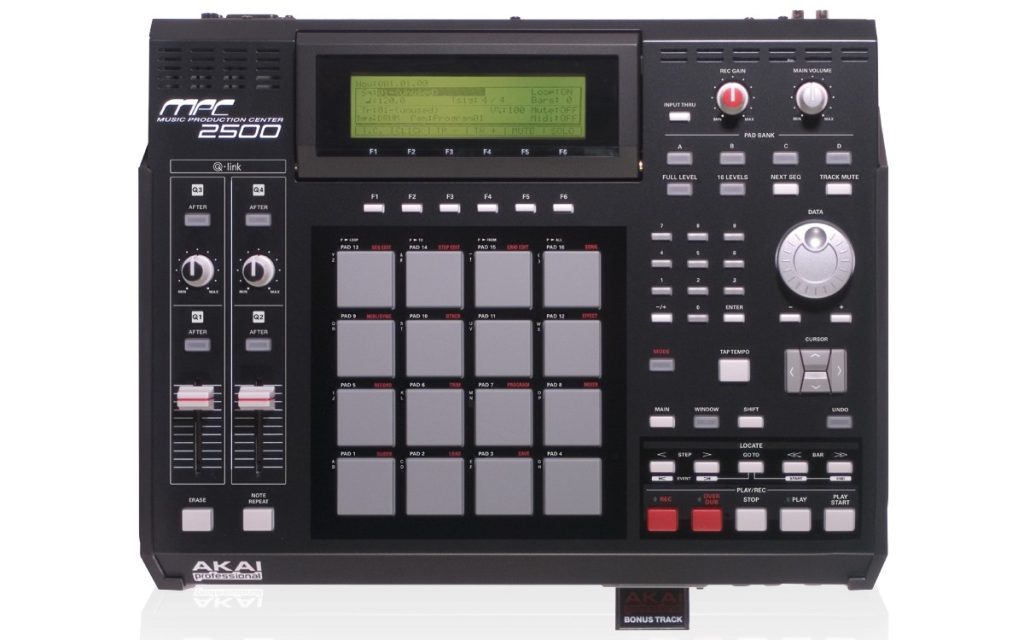
The Akai MPC2500 truly excels in performance and versatility, making it an essential tool for any music producer. With its 64-track sequencer, you can craft intricate beats and arrangements effortlessly. This mpc handles up to 100,000 notes, ensuring your compositions are as complex as you desire.
The 32-voice drum/phrase sampler, coupled with 128MB RAM, allows for dynamic layering and sound manipulation, whether you’re in the studio or performing live. Real-time control with four Q-Link controllers gives you the power to adjust parameters like filter cutoff and sample tuning on the fly, enhancing your creative workflow.



You’ll appreciate the built-in effects processing—ten multi-effect types and a master EQ/compressor—letting you shape your sound without needing additional gear. It’s a versatile unit, compatible with various sound formats like WAV and SEQ, ensuring seamless integration into your music production process.
The Akai MPC2500 offers USB connectivity for straightforward file transfers, making it easier to manage your projects. Plus, you can expand its capabilities with a hard drive or cf card, boosting storage and enhancing performance. This mpc is designed to meet the demands of modern music production.
User Experience
Maneuvering the Akai MPC2500’s interface offers an intuitive user experience that many music producers appreciate. With its 64 velocity-sensitive pads, you can easily create expressive and dynamic performances. The user-friendly interface guarantees that even those just starting in music production can dive right in without feeling overwhelmed.
The automatic sample assignment utility streamlines your workflow, making it simple to access all 64 pad slots for chromatic scale play. You’ll find the built-in Chop Shop feature indispensable for slicing drum loops swiftly, thanks to its automatic transient detection. This enhances both your creativity and efficiency, allowing you to focus on crafting the perfect beat.
The four Q-Link controllers offer real-time control over various parameters, so you can make on-the-fly adjustments during performances. The compact design and lightweight build make the MPC2500 perfect for both studio use and live gigs, easily fitting into your setup.
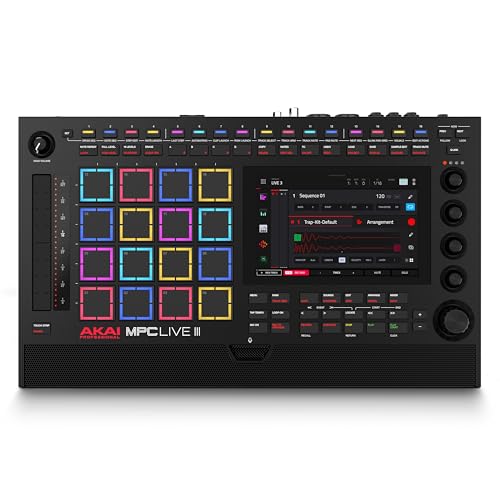
While it doesn’t have the wireless capabilities of the MPC Live II, the MPC2500’s card slot is a practical feature, allowing you to save and transfer your music effortlessly. This solid interface makes it a reliable choice for music producers aiming for versatility and ease of use.
Comparisons With Other Models
Although the Akai MPC2500 has long been a staple in music production, it’s vital to compare its strengths and weaknesses against other models.
The MPC2500 boasts a 32-voice sampler with 128MB RAM, surpassing the Roland SP-404MKII’s 24-voice sampler and 16MB memory. This makes the MPC2500 ideal for more complex sampling tasks. Its 64-track sequencer provides deep MIDI sequencing options, which the AKAI Pro MPC Key 37’s modern interface and built-in keyboard lack.
In terms of pricing, the MPC2500 falls between $700.00 and $1,100.00. Meanwhile, the Akai MPC LIVE II, priced around $1,188.00, offers more advanced features, reflecting its newer design and capabilities.
The integrated effects processing in the MPC2500 also offers more versatility compared to the optional effects board of the older MPC2000XL.
If portability is what you’re after, the Novation Circuit Rhythm might appeal more with its compact design and 8 velocity-sensitive pads, contrasting the MPC2500’s 64 pads and extensive MIDI functionality.
While the MPC2500 excels in feature richness, considering your specific needs will guide you to the right choice.
Tips for Optimal Use
While comparing the Akai MPC2500 to other models highlights its strengths, using it effectively can reveal its full potential. Start by mastering the 100,000-note, 64-track sequencer.
With 64 independently addressable MIDI channels, you can craft intricate arrangements, layering your beats with precision. This capability allows for rich compositions that can elevate your music production.
To enhance your live performances, make the most of the four Q-Link controllers. These let you adjust parameters like filter cutoff and mix levels in real-time, providing dynamic sound manipulation on stage.
This hands-on control can markedly boost your creative expression during performances.
For efficient sample management, utilize Compact Flash cards up to 2GB. This guarantees you have quick access to your extensive sample libraries, minimizing downtime and keeping your workflow smooth and uninterrupted.
Don’t forget to explore the built-in multi-effects. With ten types available, including tempo-synced LFOs and various filter modes, you can creatively process your sounds, adding unique textures and depth.
Frequently Asked Questions
When Did the Akai MPC 2500 Come Out?
You might be curious about when it came out. It was officially released in 2005, offering enhanced sampling and sequencing capabilities. You’d find it a significant upgrade from its predecessor, appealing to music producers across various genres.
Why Is Akai MPC so Popular?
You’re drawn to the Akai MPC because it empowers you with intuitive controls, versatile sampling, and dynamic sequencing. Its reliability, quality, and rich features make it a go-to tool for creating beats and music across genres.
What Does MPC Stand for in Akai?
Think of “MPC” like a Swiss Army knife for music, meaning “Music Production Center.” You’ll find it’s an all-encompassing tool for crafting and sequencing beats, perfect for creating intricate soundscapes in hip-hop or electronic music.
When Did the Akai MPC 2000 Come Out?
You’re curious about when the Akai MPC2000 was released, right? It hit the market in 1997, revolutionizing music production with its enhanced sampling capabilities, user-friendly interface, and MIDI sequencing, paving the way for future innovations.