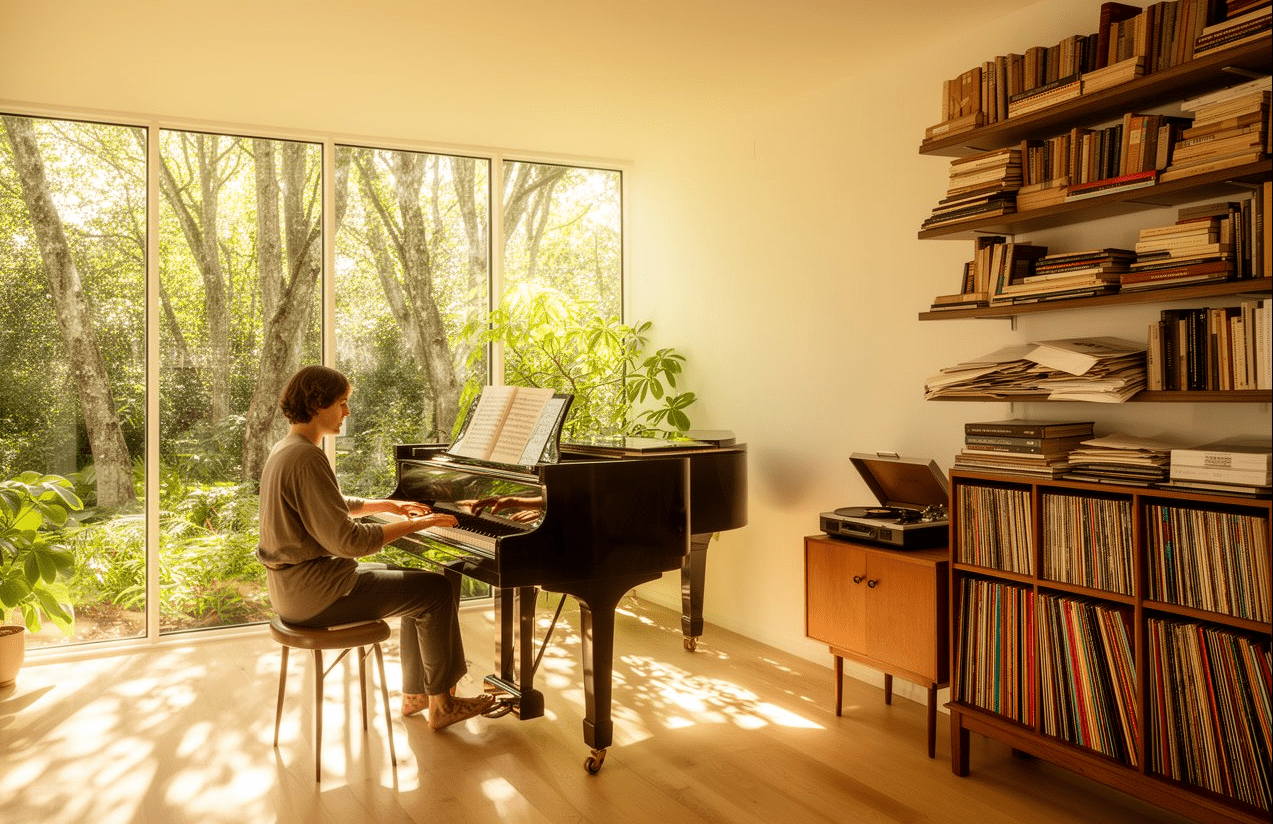
We’re going to answer the question about ‘ Can you use a digital piano as a midi controller or not’ today. As an experienced musician, let me tell you that using a digital piano as a MIDI controller is a fantastic idea!
It’s quite simple. Most digital pianos have MIDI or USB ports, making it a breeze to hook them up to your computer. Once connected, your piano can communicate with your digital audio workstation, allowing you to play virtual instruments with ease.
You might need to download some drivers from the manufacturer’s website to ensure everything runs smoothly.
But once that’s done, a whole new world of creativity opens up. You can experiment with different sounds and effects, adding layers and textures to your music.
This setup is not just for the tech-savvy. With a bit of exploration, it becomes a playground of musical possibilities.
So, plug in your digital piano and start discovering the endless ways it can enhance your music production. Happy playing!
Understanding MIDI Basics
Sure! Let’s dive into how MIDI works in a way that’s easy to understand.
MIDI, short for Musical Instrument Digital Interface, is like a universal language that lets electronic musical instruments, computers, and other devices talk to each other. Think of it as a way to send musical instructions rather than actual sound. When you hit a key on your digital piano, you’re not sending the sound of the note to your computer. Instead, you’re sending a message that says, “Hey, play this note with this strength for this long.”
These messages contain details about which key you pressed, how hard you hit it, and how long you held it down. So, it’s more like giving a set of instructions. Imagine telling a computer, “Play middle C softly for two seconds.” The computer listens and follows your command.
MIDI data can travel through cables or even wirelessly, making it super flexible and efficient.
To get started with MIDI, you’ll need a device that can send or receive these messages. Your digital piano can become a powerful tool by acting as a MIDI controller. This means you can use it to interact with various software applications, like digital audio workstations or virtual instruments.
It’s like having an entire orchestra at your fingertips.
In short, MIDI is a handy way to control and create music without being tied to actual sound. It lets you explore endless musical possibilities, turning your digital piano into a versatile and exciting instrument.
Digital Piano Features
Let’s dive into the world of digital pianos and explore the fantastic features they offer. These instruments are packed with possibilities that can make your playing experience truly enjoyable and creatively fulfilling. Knowing what’s available can help you get the best out of your digital piano.
First up is polyphony. This might sound fancy, but it simply refers to how many notes your piano can play at once. The more, the merrier! A higher polyphony lets you create richer and more complex music without any notes dropping out.
Another key feature to look for is weighted keys. Ever played an acoustic piano? You’ll notice they’ve a certain feel. Weighted keys on a digital piano replicate that feel, offering the touch sensitivity you need for expressive playing.
Digital pianos also come with a variety of built-in sounds and voices. Imagine switching from a grand piano to a church organ or even to funky electronic synths with just a button press. It’s like having a whole orchestra at your fingertips.
Some models also let you record your performances or practice sessions. This can be a fantastic tool for tracking your progress or sharing your music with others.
Don’t forget about the practice aids like metronomes and rhythm accompaniments. These tools can really help you improve your timing and rhythm skills, making practice sessions more productive.
Lastly, check out the connectivity options. Features like USB or Bluetooth mightn’t sound exciting, but they can open up a world of possibilities. They allow you to connect your piano to software and apps, expanding your musical journey in ways you mightn’t have imagined.
In short, digital pianos are more than just instruments. They’re gateways to creativity, learning, and fun. So, explore these features and make the most of your musical adventure!
Connecting Your Digital Piano
Plugging in your digital piano can feel like stepping into a world full of musical wonders. Start by finding the MIDI ports on your piano. They might say “MIDI In” and “MIDI Out.” If your piano has a USB port, you’re in luck, as this makes things easier.
Grab a USB cable or a MIDI-to-USB adapter, depending on what your piano supports. Once you have the right cable, connect it to your computer. For a USB connection, simply plug the cable into your computer’s USB slot. If you’re using a traditional MIDI setup, plug the MIDI cable into the “MIDI Out” port on your piano and connect the other end to your MIDI interface, which then links to your computer via USB.
Next, turn on your piano and your computer. Open up your favorite music software or Digital Audio Workstation (DAW). Your software should recognize your piano right away. If it doesn’t, double-check the settings to make sure the correct MIDI device is chosen.
Now you’re ready to use your digital piano to play virtual instruments and record your music. This setup can really boost your creativity and make your music-making process more fun.
Compatibility Considerations
Setting up your digital piano with your computer and music software doesn’t have to be a headache. Let’s dive into what you need to know to make everything work smoothly.
First, take a look at your digital piano. Does it have a USB-MIDI port? Most modern ones do, which makes connecting to your computer a breeze. If your piano is a bit older, it might only have traditional MIDI ports. In that case, you’ll need a MIDI interface to hook it up to your computer.
Now, let’s talk about drivers. These little programs help your piano and computer talk to each other. It’s a good idea to visit your piano’s manufacturer’s website and download the latest drivers. Using outdated drivers might cause problems, like delays or connection issues.
Your music software, or DAW, also plays a big role. Make sure it recognizes your digital piano as a MIDI device. Sometimes this requires a bit of setup, so don’t hesitate to check the user manual or look up tips online.
Also, double-check that your software version works well with your piano. Older software mightn’t support newer piano features.
Finally, think about your computer’s operating system. It’s important that both your piano and DAW are compatible with it. This way, you can avoid any unexpected hiccups.
With these steps, you’ll be making music in no time!
Enhancing Your Music Production
Once you’ve hooked up your digital piano and everything’s running smoothly, it’s time to see how it can boost your music production. Using a digital piano as a MIDI controller opens up a realm of creative possibilities. Its realistic touch and expressive capabilities can add life to your music. You’re not limited to piano sounds—imagine playing lush strings or powerful synths with the same keys.
Start by trying out different MIDI software and plugins. These tools are loaded with features like layering and splitting sounds, letting you create rich and complex arrangements. You can assign different sounds to various keys on your piano, making it easy to switch between instruments while performing or recording.
Don’t overlook automation. Use your digital piano to record dynamic performances by tweaking volume, modulation, and effects in real time. This brings depth and emotion to your tracks, helping them stand out.
Also, dive into MIDI effects like arpeggiators and chord generators. They can add unique textures and rhythms to your music.
In short, your digital piano is more than just a keyboard. It’s a gateway to endless musical creativity.
Summing Things Up
Did you know your digital piano is more than just a piano? It’s also a MIDI controller, ready to bring your musical ideas to life. Imagine conducting a digital orchestra right from your living room. All you need to do is connect it to your computer or music software. It’s like magic!
However, not all digital pianos can act as MIDI controllers. It’s important to check if yours is compatible, such as the Fesley Stage Digital Piano. Once you do, you’ll have a powerful tool at your fingertips. You might not win a Grammy, but you’ll definitely have fun making music!