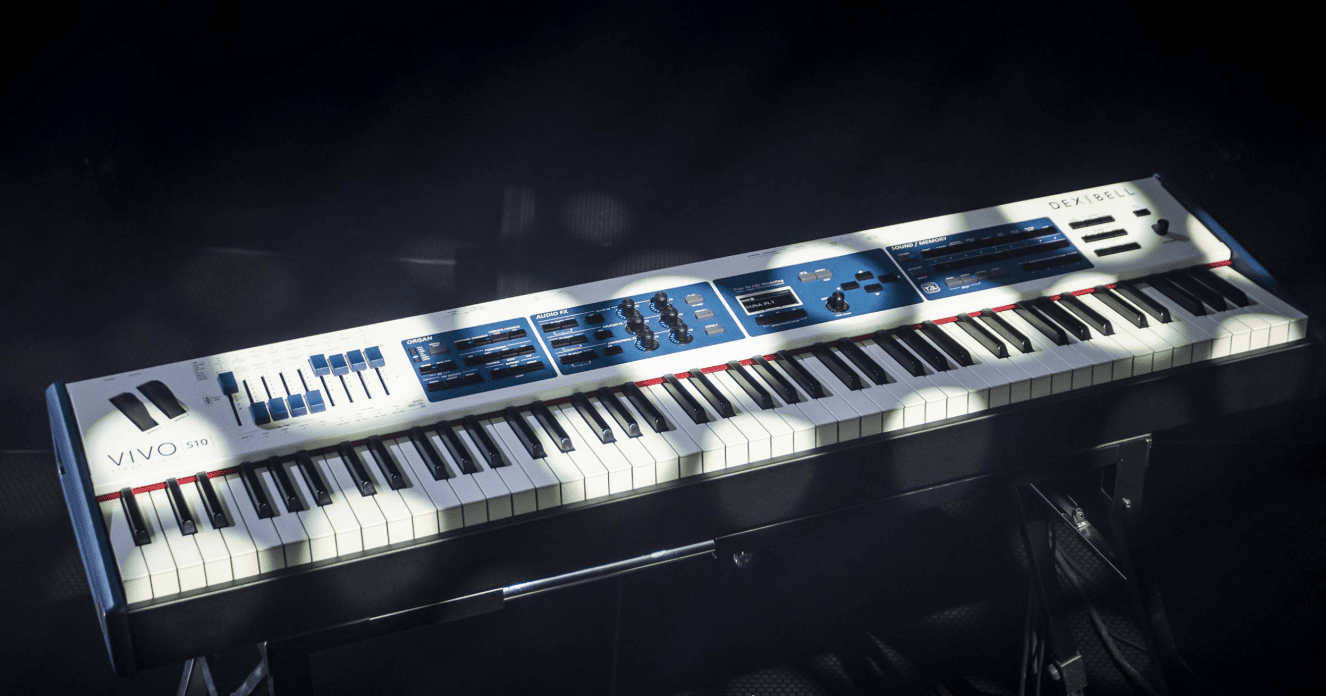
The Dexibell Vivo S10 Stage Piano arrives as a serious contender in the professional keyboard market, built for musicians who demand studio-quality sound reproduction in a road-ready package that can withstand the rigours of touring. What distinguishes the Dexibell VIVO S10 Stage Piano from mainstream competitors is its refusal to cut corners – from the premium Fatar keybed with wooden keys to the extensive connectivity options and powerful DSP engine, every specification targets the working professional who needs reliability, versatility, and exceptional sound quality across genres from classical to contemporary.
You’d think a stage piano this sleek sacrifices realism – it doesn’t. Instead you get Advanced T2L sampling and modelling plus an exclusive 88-note Hammer Action (wood + polymer) keyboard that actually feels like the real thing, unlimited 24-bit/48 kHz polyphony, a quad-core with 3.2 GB memory, 180 sounds and 100+ organ presets, Bluetooth MIDI/audio and XMURE support for wireless control – sung and played, live. But it’s heavy at 20 kg, so want help moving it?
The Keyboard Experience: Is It Really That Good?
You’re mid-set at a small club, the ballad swells and you need a piano that breathes – the VIVO S10 answers. Its Advanced T2L engine and 88-note Hammer Action with triple-contact keys give you real dynamic nuance and aftertouch, while unlimited polyphony keeps thick layers from choking; it feels like a proper grand in a roadable box. But at 20 Kg it’s no feather, so plan your loadouts. The ever popular Dexibell range, has another winner here!
Feel of the Keys: A Balanced Harmony
You’re practicing a delicate nocturne late at night and you want keys that behave like the real thing. The TP-400 W hybrid (wood & plastic) hammer-action keys with an ivory & ebony feel, triple-contact sensing and aftertouch give a warm, nuanced response – not too heavy, not too light. So if you like a natural, balanced touch you’ll be smiling, honestly it’s one of the best-feeling stage actions around.
Weight and Touch Sensitivity: How Does It Stack Up?
You’re hauling gear to a gig and the S10’s mass hits you – sturdy, not flimsy. At 20 Kg it’s manageable but you’ll want help for stairs; the payoff is pro-level hardware: 7 touch sensitivity types plus fixed mode, responsive aftertouch and a progressive damper that actually simulates sympathetic resonance so your dynamics translate the way you expect. Want tweakability? It’s got plenty.
You’re mid-setup and tweaking touch curves – the S10 lets you go from feather-light to real grand resistance, and that matters when you play for hours. It uses triple-contact sensors for fast repetition, offers aftertouch and seven sensitivity curves so your trills, accents and subtle rolls behave; Bluetooth MIDI also cuts down on cables which is a small but welcome thing. At the same time the combo of 20 Kg and the included plexiglass music rest and DX CP1 continuous pedal means it’s a bit bulky for one-person lifts – lift with help or use a case, but once on the stand your touch control feels utterly pro.

Sounds That Wow: Are They Worth the Hype?
What’ll hit you first is how a synth can sound so… alive, like it breathed between notes – and that’s the S10 thanks to Advanced T2L. You get 180 sounds and unlimited 24-bit/48 kHz polyphony, so layers never choke, even when you go wild. But yeah, it’s a bit of a beast to haul – 20 Kg is no joke if you gig solo.
A Deep Dive Into the Tone Generator
Surprising bit – the tone engine isn’t just giant samples, it’s modelling plus long samples, so the decay and pedal behavior actually feel convincing. The XXL waves (15s), 3.2 GB wave memory and a quad-core processor let you sculpt details most stage pianos gloss over. It’ll chew time though – there’s a steep learning curve if you want to unlock everything, but once you do, you’re golden.
The Dexibell Vivo series combines portable design with concert-quality sound. Discover the models that have become favorites among performing musicians.
Check Out The Dexibell Vivo Range
(You’ll be directed to the retailer)
Exploring the Organ Presets: Are They Any Good?
You might be shocked that a modern stage piano gives you vintage grit without faffing about – the S10 ships with over 100 organ presets including TW1, VX and PIPE types. The 9 motorized draw-faders and dedicated organ FX (rotary, overdrive, chorus) make it feel like a real combo – you can tweak on the fly. Some factory patches are bright though, so you’ll want to EQ or tame the highs.
There’s more under the hood – you can download User1/User2 organs, route parts to independently programmable outputs, and assign pedals for expression or morphing, which is huge for live rigs. Watch the gain staging – overdrive and routing mistakes can clip and ruin a set. And yeah, the XMURE app and Bluetooth MIDI make swapping presets and playing along easy, so you actually use those deep organ layers rather than leaving them buried.
Connectivity and Features: Are We Living in the Future?
Why this matters to you: connectivity decides whether the S10 fits into your rig and workflow, plain and simple. The Advanced T2L, quad-core chip and unlimited 24-bit/48 kHz polyphony mean sound and multitasking won’t hold you back, and that’s huge. But wireless MIDI/audio via Bluetooth is handy though it can introduce latency – so know the limits. You’ll get pro I/O and modern apps, so you can gig, record, or mess about at home with real ease.
Bluetooth and App Integration: A Game Changer?
It matters because if you like tweaking sounds on the fly, wireless control saves you time and sweat. The S10 uses Bluetooth MIDI BLE 4.2 and streams audio to apps like VIVO Editor and XMURE so you can edit presets or play along without cables. It’s slick and often seamless, but don’t assume zero latency or perfect stability – Bluetooth can drop or lag sometimes. Still, for rehearsal and quick edits it’s a real win.
Output and Recording Options: What Can You Expect?
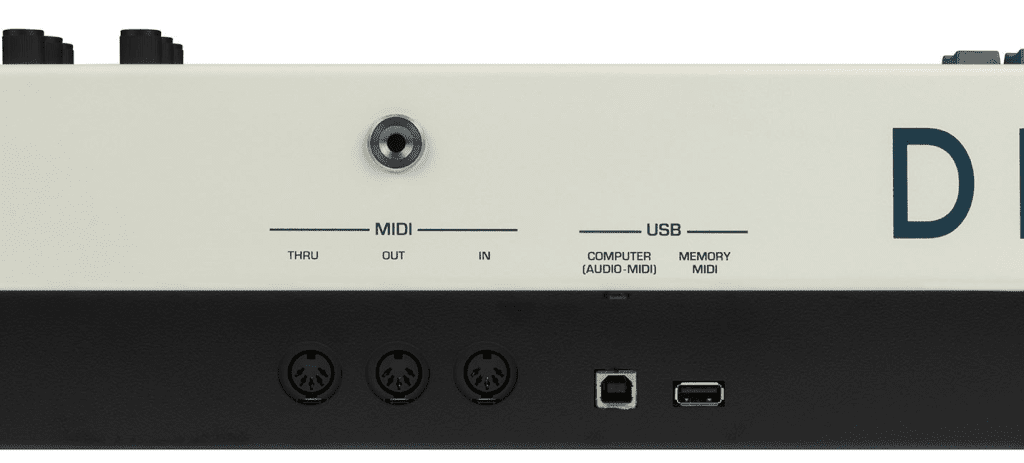
You care because if you gig or record you need flexible routing and clean captures. The S10 gives MAIN Balanced XLR outputs, MAIN/SUB, individual 1/4 outs and independently programmable outputs so you can route each part to the board or monitors. USB TO HOST handles digital audio in/out and you can record straight to USB in .wav (48 kHz, 32-bit floating). It’s pro-level I/O that doesn’t mess about.
Your stage patch and studio takes hinge on routing and capture quality, so this matters to your sound and sanity. The S10’s independently programmable outputs and 9 motorized draw-faders let you split organ, piano, lower and pedal into separate mixer channels so you – or the FOH engineer – can shape each part; that’s a massive workflow saver. You can record multitrack via USB TO HOST or bounce live to USB as .wav 48 kHz, 32-bit floating and the internal recorder is great for quick takes, but high-res files use a lot of space and slow USB sticks will bite you – test drives and formatting matter.
Pro tip – use fast, formatted USB drives and test your routing before the gig.
My Take on the Accessories: Are They Really Necessary?
Many folks assume accessories are just flashy extras, not part of the instrument, but with the VIVO S10 you can’t totally shrug them off – you rely on subtle control when the Advanced T2L engine is doing its magic. The included plexiglass music rest and continuous damper pedal are simple, yet they keep your setup honest on stage, though the plexi can glare under lights so you gotta watch that.
Accessories can make or break your live setup.
Music Stand and Pedals: Do They Up Your Game?
You might think a plexiglass rest and a basic pedal won’t change much, right? But the S10’s damper pedal includes sympathetic resonance simulation and progressive action, so your phrasing and sustain feel way more natural – and yes you notice it. If the stand wobbles or the pedal feels mushy you’ll hate it; if they behave, your performance breathes.
Is It All for Show or Does It Matter?
Some say the extras are mostly for looks, and sure, some gear is cosmetic, but with the S10 the accessories interact with real features like draw-faders and routing, so they’re functional. Because you can route parts to separate outputs and use programmable pedals, what seems small actually affects your sound and workflow. Not just a prop – they alter how you play and mix.
People dismiss included accessories as token freebies, however the S10’s design ties them into the instrument – the damper pedal connects to the keyboard’s sympathetic modeling, the plexi stand holds sheet music without hiding controls, and Bluetooth plus the VIVO Editor/XMURE apps mean you can tweak on the fly. So yeah, you can upgrade later but the stock setup gets you really far, fast – and that matters when you’re gigging or recording.
FAQ
Q: What are the standout sound-engine features of the Dexibell VIVO S10?
A: The VIVO S10 ships with 3.2 GB of wave memory, XXL samples up to 15 seconds on the lowest piano notes, and the Advanced T2L sampling-plus-modeling engine powering everything. It’s not just big samples – Advanced T2L blends sampled detail with modeling for velocity-sensitive behavior, sympathetic resonances and realistic decay, so the piano breathes and reacts like the real thing. The S10 also includes 180 selectable sounds, a selection of the legendary PLATINUM voices, and over 100 organ presets (TW1, TW2, FARF, VX, PIPE plus downloadable User banks).
Unlimited 24-bit/48 kHz polyphony with 320 oscillators means you won’t drop notes even in dense stacks, and the DAC + DSP chain gives you 24-bit/48 kHz conversion with a quoted S/N of 106 dB – so it sounds clean and big. Advanced effects are on board too: 24 reverbs, rotary/overdrive/vibrato/chorus for organs, and 12 independent DSP blocks (x17 types) that you can assign across Main, Coupled, Lower and Pedal parts with seamless changes when switching programs. Want to shape things fast? Nine motorized draw-faders and six FX encoders make live tweaks feel tactile and immediate.
Q: How does the keyboard and playing experience compare to acoustic pianos for stage use?
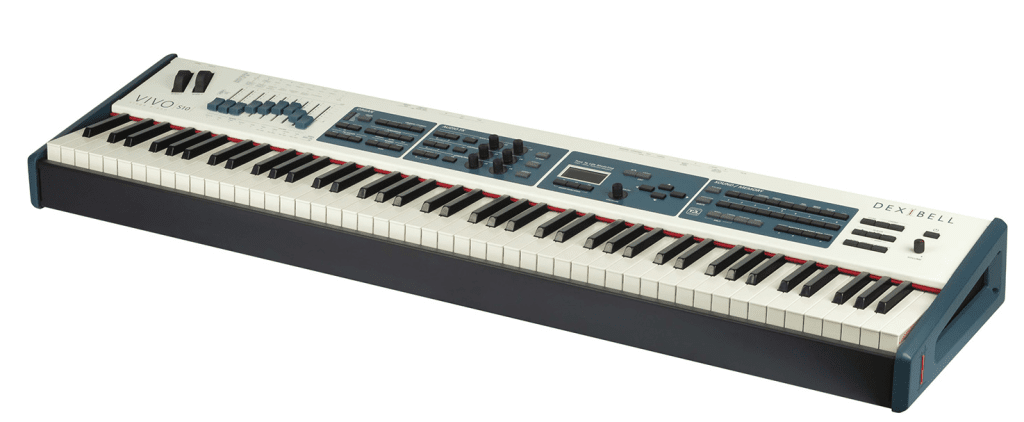
A: The S10 sports the TP-400 W 88-key hybrid hammer action keyboard – wood and polymer construction, triple contact, weighted with Ivory & Ebony feel and aftertouch. That combination gives you a satisfying, piano-like resistance and authentic finger feedback, so fast runs and soft legato both feel natural. This unit includes a progressive damper pedal that simulates sympathetic resonance, plus three assignable foot jacks (expression, morphing, function) and the Continuous Pedal DX CP1 in the box, so you get proper performance control right away.
It’s also got seven touch sensitivity curves plus a fixed option, so you can fine-tune responsiveness if you like things snappier or softer. It’s a stage-friendly package – 20 kg, 1270 mm wide, and built for gigging. Plays like a stage piano that can also sit in a studio without sounding thin.
Q: What connectivity, apps and live-routing features make the VIVO S10 practical on stage and in the studio?
A: The S10 offers Bluetooth BLE 4.2 for MIDI and audio streaming, USB TO HOST with MIDI and digital audio, USB TO DEVICE for memory and MIDI, plus balanced XLR MAIN outputs and unbalanced 1/4-inch outputs. So you can stream backing tracks from an iPhone or control patches wirelessly, while still sending pro-level outputs to a PA. You get independently programmable outputs and four keyboard parts (Main, Lower, Coupled, Pedal) that can be routed separately – which means you can send, say, organ to one desk channel and piano to another without hacks.
The VIVO Editor app lets you edit programs and parameters from an iOS device, and the XMURE app supplies multitrack styles and accompaniments for practice or performance. There’s also internal recording to WAV (48 kHz, 32-bit float) on USB, a built-in song player supporting WAV/AIFF/MP3, and motorized draw-faders for on-the-fly adjustments – in short, it’s designed to be flexible and fast for live use, no fuss.