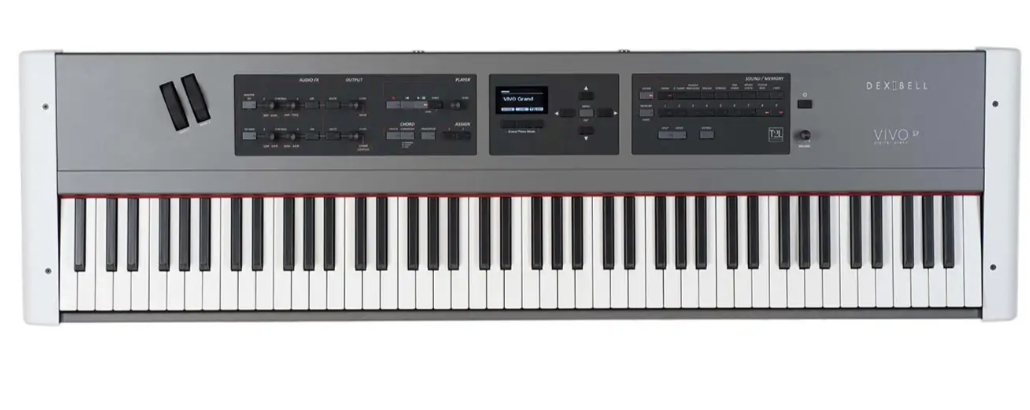
The Dexibell Vivo S7 represents the company’s full 88-key flagship stage piano, equipped with the premium TP-40M hammer-action keybed featuring triple contact sensors and ivory-feel keys that promise acoustic-level responsiveness. What sets the Dexibell Vivo S7 apart in the crowded professional piano market is its combination of Italian craftsmanship, advanced T2L modelling technology, and build quality that targets gigging musicians and studio professionals who refuse to compromise on touch sensitivity or tonal authenticity.
Let’s Dive Into the VIVO S7 – What’s Up with This Keyboard?
Ever wondered if a stage piano can feel like the real thing and still be future-proof? You’ll find a 88-key TP-40 M hammer action – triple contact – ivory feel that responds like a grand, plus Unlimited Notes Polyphony and 24 bit, 48 KHz T2L tech so your patches breathe, with 1.5 GB Wave Memory and seamless transition on recalls. It’s pro-grade and addictive, but note it’s hefty – 17.5 Kg.
So, What’s in the Box?
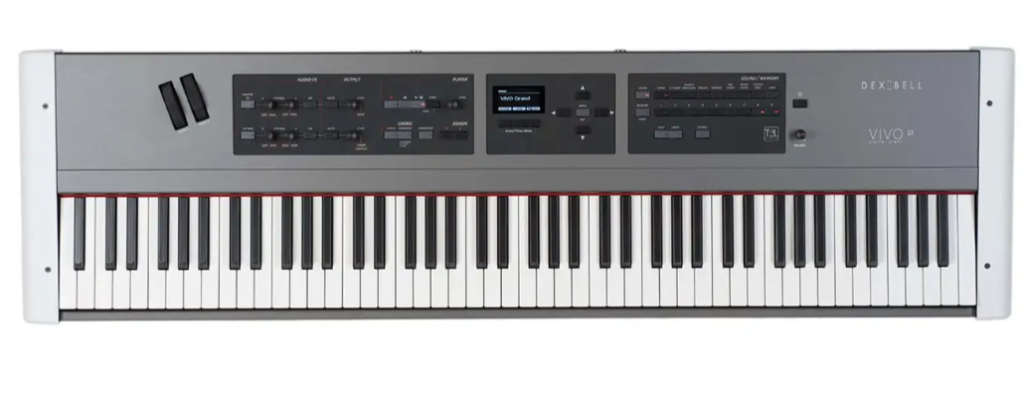
What’s actually in the box when you unbox a Dexibell Vivo S7? You get the piano itself, a power supply, a pair of pedals (including the progressive damper), a USB cable and a quick-start guide – straightforward, no fluff. The unit comes well-packed and ready to plug in, and while a bench isn’t included the package feels complete for immediate play; you’ll notice the 17.5 Kg weight that signals solid build and stage-readiness.
First Impressions – Design & Build Quality
Does this feel like a gig-ready instrument? The Dexibell Vivo S7 lands with reassuring heft and a slim, pro look, the TP-40 M 88-key hammer action with triple contact and ivory feel is the first thing you’ll touch and it’s expressive, responsive and pretty addictive. The OLED display is clear, controls are tactile and the chassis looks built to last, though fingerprints show up on some finishes – no dealbreaker but worth noting.
Key Features That Caught My Eye
Which features make the VIVO S7 stand out? The T2L (True 2 Life) engine blends sampling and modelling for uncanny realism, there’s Unlimited Polyphony, high-res 24-bit/48kHz processing, a 1.5 GB Wave Memory you can swap out, and the Seamless Changes tech that avoids annoying cutoffs when switching patches – all aimed at pro players who demand tone and reliability.
- T2L (True 2 Life) – hybrid sampling + modelling engine
- Unlimited Polyphony – no note-stealing even in dense passages
- 24-bit / 48 kHz – high-quality sampling and DAC
- 1.5 GB Wave Memory – user-changeable, SoundFont compatible
- TP-40 M 88-key – hammer action, triple contact, ivory feel
- Seamless Changes – uninterrupted sound during patch recalls
- Connectivity – USB audio/MIDI, Bluetooth streaming, multiple outputs
Knowing these specs, you can judge whether the S7 fits your studio setup or live rig without surprises.
How do those specs actually change the way you play? The extended XXL wave sampling gives lower piano notes up to 15 seconds of natural decay, the 320 oscillators and unlimited polyphony mean complex stacks never choke, and the DSP package with 6 independent effects and 24 reverb types keeps patches lush. It all adds up to an instrument that’s expressive and flexible, you tweak stuff quick and it responds like a real acoustic – no fake-feel.
- XXL Wave Size – long, natural piano decays
- 320 Oscillator architecture
- 6 DSP Effects x 17 types – assignable across parts
- 24 Reverb Types – room to cathedral
- Recorder / Player – .wav/.mp3/.aiff support, 48 kHz 32-bit floating recorder
- Master EQ & Chord Enhancer – quick tonal shaping
- Dimensions / Weight – 1330 x 372 x 135 mm, 17.5 Kg
Knowing those details helps you work out how the Dexibell Vivo S7 will slot into your workflow and whether it’s worth hauling to gigs.
Explore the full range of Dexibell digital pianos and keyboards, known for their superb sound and authentic feel.
Click Here To See More Dexibell Keyboards
(Link opens in a new window)
Oh, the Sound! How Good Does It Really Sound?
24-bit/48 kHz processing and unlimited polyphony give the VIVO S7 a transparency that punches way above its weight, you hear detail in sustain and decay that many keyboards miss.
Studio-grade clarity with huge dynamic headroom. You get airy acoustic tone and thick electric warmth at the same time, and with the 15 seconds of 3D recorded waves the sound actually breathes – it’s immediate, alive and oddly addictive.
The Magic of T2L Technology
T2L mixes sampling and modelling so you get both authentic timbre and expressive response, not one at the expense of the other. Because it runs at 24-bit/48 kHz with smart algorithms, dynamics track your touch and transitions stay smooth – no nasty jumps when you change patch. You’ll feel the nuance, and that’s what makes the Dexibell S7 play like a real instrument.
My Favorite Sounds and Why They Stand Out
The grand piano and vintage electric tones grab you first – they have weight, clarity and real personality, you can push them or whisper and they behave. With the 88-key triple-contact hammer action and ivory feel, those sounds become extensions of your hands. Want presence? They cut through without sounding shouty, which is rare and very welcome.
The S7 ships with over 80 sounds and a 1.5 GB wave memory so you can load huge, detailed samples or your own SoundFonts, giving insane variety. And the seamless changes mean no cut-offs during gigs or studio takes. Tweak envelopes, add reverb types and DSP – it’s pro-grade, flexible and honestly kind of fun to lose a few hours on…
Playing Experience – Is It a Joy to Use?
Many people assume stage pianos all feel identical – like you’re just switching samples, right? But when you play the VIVO S7 you get real depth: the 88-key hammer-action with triple contact and T2L sampling-modelling make phrasing and tone respond to your every nuance. It’s intuitive, expressive, and yes, a joy once you tweak settings; there is a slight learning curve though.
The Feel of Those Hammer-Action Keys
Some say hammer-action is just weight, but the TP-40 M proves them wrong. The action gives you a textured, slightly absorbent surface so your fingers don’t slip – ivory feel and triple contact make repeats and rapid passages honest. You’ll get a balanced resistance that’s forgiving for long sessions yet precise when you dig in.
Touch Sensitivity – What’s the Big Deal?
People think touch sensitivity’s just loud versus soft, but it’s how your nuance becomes tone. The S7 offers 7 touch curves plus fixed so you can match response to your technique, and with unlimited polyphony voices won’t drop out under heavy playing. Pick the wrong curve and your phrasing can die though – so try them all.
Many assume it’s only velocity curves – nope, it’s how sampling-modeling, triple-contact key scanning and DSP interact with your attack and release. Because the T2L engine and 24 bit/48 kHz waves react differently across the range, you can tune touch to feel like a Steinway or a lighter electric; that flexibility is powerful.
Set the wrong curve and you’ll squash your dynamics; test carefully.
So yeah – spend a bit of time with the seven curves, try genre presets, and tweak until your touch truly sings.
The Nitty-Gritty Tech Specs – What You Need to Know
Think tech specs are just a laundry list of numbers that don’t mean squat? They’re not – they tell you how the S7 behaves, and the headline is the exclusive T2L (True 2 Life) engine with Unlimited Notes Polyphony, 24-bit/48 kHz fidelity and a 1.5 GB wave memory that you can swap out. You get an 88-key TP-40 M hammer action, triple contact feel, 80+ top-tier sounds and seamless patch changes – so yeah, those numbers matter. Big time.
Connectivity Options – How Does It Stack Up?
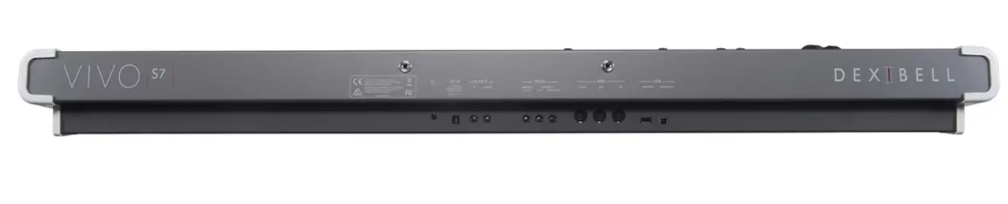
Don’t assume Bluetooth alone covers all your live and studio needs. The S7 packs pro I/O: USB TO HOST (MIDI & DIGITAL AUDIO IN/OUT), USB TO DEVICE for memory, full MIDI IN/OUT/THRU, dual headphone outs, balanced OUTPUT L/MONO and R, AUX IN and assignable pedals. And yes, there’s Bluetooth streaming audio input too, so you can jam with tracks quick – but for recording or routing you’ll lean on the wired stuff, like I do.
Dimensions and Weight – Is It Easy to Move Around?
Think all stage pianos are brick-heavy beasts? The S7 is fairly trim but not featherlight: it’s 1330 mm wide, 372 mm deep, 135 mm high and weighs 17.5 Kg. So you can carry it solo for a short hop if you’re spry, or toss it in a car no problem, but frequent lugging? That weight adds up, fast – plan accordingly.
If you worry that lighter means flimsy, chill – the S7’s weight gives it a solid, pro feel and helps stability on stage, you know, no wobble when you lean into a chord. But don’t kid yourself: 17.5 Kg can strain you after a few gigs, so use a decent gig bag, a stand with good grips, or get a buddy for longer moves. The payoff is real though – it feels built, not toyed with.
Wrapping Things Up
The Dexibell Vivo S7 delivers 88 hammer-action keys with T2L sound technology for serious musicians. Explore its TP-40M keybed, features, and professional performance.