Konix PH88CX Digital Piano 88 Key Full Size Semi Weighted Electronic Keyboard
Please Note: These links are affiliate links—meaning we may earn a tiny commission if you buy, but don’t worry, it costs you absolutely nothing (your wallet can relax)
Let’s Dive Into This Digital Piano
Want to know if this Konix PH88cx Digital Piano 88-key will get you playing fast? You’ll feel the 88 semi-weighted keys that mimic real touch, and with 128 sounds, Bluetooth/MIDI and recording you’ll mess about and actually make music – serious fun for beginners.
It comes with a sustain pedal, double-X stand and a full kit so you can start right away. But handle the Li-battery or DC 5V adapter with care.
Perfect starter package – pretty much everything you need.
What’s Great About the Konix PH88CX Key Electric Piano?
Many think budget keyboards sound thin and flimsy, but the KONIX punches above its weight. You get 88 semi-weighted keys (but note they’re not full-weighted hammer action), 128 tones, 129 rhythms, Bluetooth and MIDI, plus recording/playback – so you can practice, layer tracks and play with apps. It’s aimed at beginners but serious enough to record ideas. The kit includes a sustain pedal, double-X stand and bag, so you start playing right away.
Keys That Actually Feel Real
People assume semi-weighted means fake feel, but you’ll be surprised – the Konix PH88cx Digital Piano semi-weighted action gives responsive touch and good dynamic control, making chords and expression come through. It’s softer than full hammer action, which means easier practice sessions but also not the exact feel of a concert piano, so if you want pro hammer realism that’s the trade-off. Still, for learning and feel, it delivers.
Sounds and Rhythms That Inspire
Think onboard voices are toy-like? Nope. With 128 sounds, 129 rhythms and 30 demo songs you’ve got real variety to spark ideas, jam or practice different genres. Bluetooth streaming lets you play along with tracks from your phone and MIDI opens creative doors. It’s fun, practical and it actually makes you want to play more – who knew presets could do that?
Don’t assume the presets are locked – you can record, edit and export. The KONIX supports MIDI and Bluetooth, so you can hook into DAWs, stream backing tracks or use music apps, and the recording/playback lets you capture takes. There’s audio in, headphone and mic jacks, plus external speaker support, so whether you’re practicing quietly or sketching songs you’ve got options that punch above this price point.


MIDI and Bluetooth: Are They Worth It?
MIDI’s been an industry standard since 1983 and nearly every DAW will talk to it, so if you want real control you’re already set. You’ll love that MIDI gives precise recording, editing and low-latency performance, but Bluetooth brings freedom – and frustration because audio lag and dropouts can mess timing. So yes – for practice and app integration they’re worth it, but for tight recording you’ll favor MIDI over Bluetooth.
Connecting Like a Pro
USB-MIDI connections usually sit under 10 ms of latency, so when you plug into your computer things feel immediate. If you want slick recording you’ll use USB or a MIDI interface, and you’ll hook into DAWs, notation software or lesson apps fast – just make sure your drivers are up to date or you’ll waste time.
USB-MIDI = reliable, low-latency control
Streaming Music Made Easy
Bluetooth audio latency often ranges 30-200 ms, so you’ll notice delay if you’re trying to lock to a metronome or backing track. But for jamming along, lessons and streaming backing tracks it’s brilliant – no cables, quick setup, phone to keyboard, done. Just be aware of lag, occasional dropouts and extra battery drain, but if you’re practicing or teaching kids it’s pure convenience.
The aptX Low Latency and similar codecs can cut Bluetooth delay to around 40 ms, which makes things a lot smoother if your phone and keyboard both support it. Pairing tips: keep devices close, close other apps, and disable wifi interference, or switch to USB when you need rock-solid timing. If you need accurate recording or live performance, go wired; for casual practice it’s fine.
My Thoughts on the Features
With the recent boom in app-driven home practice and affordable 88-key boards, the KONIX feels timely and useful – you get a lot for the price and it’s built for everyday playing. The 88 semi-weighted keys respond nicely for pop and practice but be aware they’re not full hammer action so they can limit classical technique development. You’ll love the Bluetooth and MIDI connectivity and the recording/playback function, but it’s not a studio rig, and that’s fine for most of what you’ll do at home.
Buy Now
Order the KONIX Digital Piano 88 Key Full Size Semi Weighted Electronic Keyboard Piano Set.
Recording and Playback – A Game Changer
These days being able to capture ideas fast matters, right? The KONIX lets you record and play back takes so you can critique yourself, overdub, or send demos to friends – super handy when you’re noodling at odd hours. But don’t expect multitrack studio quality, it’s more of a practice and sketchpad tool – still, that feature alone changes how you practice.
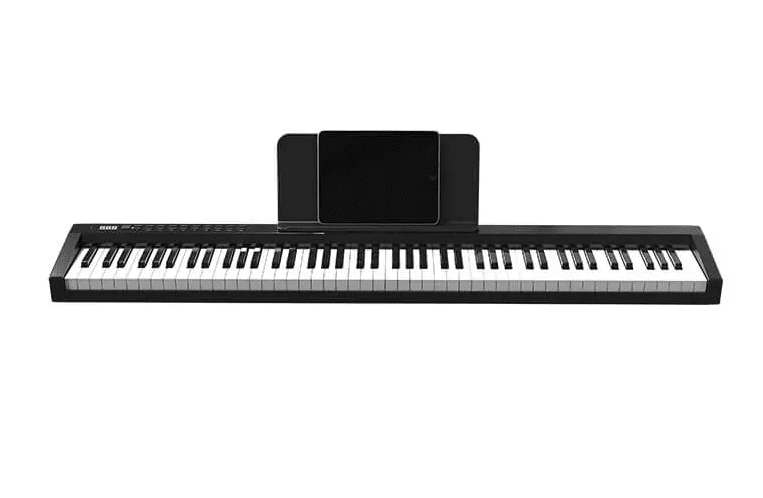
A Beginner’s Best Friend
If you’re new you’ll appreciate the full kit – stand, sustain pedal, bag and a music rest – it gets you playing right away and keeps things tidy; the starter package really removes the friction. The semi-weighted keys make learning less tiring so you’ll play more, though again – they can teach a lighter touch than a concert piano.
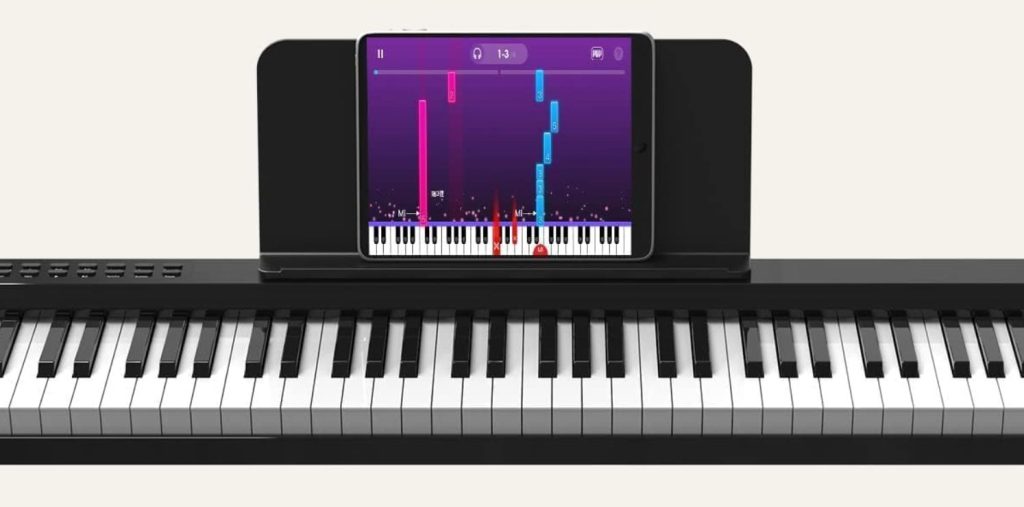
There’s more to like: 128 tones, 129 rhythms and 30 demo songs give you loads of ways to mess around and learn by ear, and Bluetooth/MIDI lets you hook up apps for lessons. Practice late? Use the headphone jack and you won’t bug neighbors or family. Power options are flexible too – USB or DC – handy if you move the keyboard around a lot.
What’s In the Box? The Perfect Starter Kit
The Konix PH88cx Digital Piano set ships with six items: the keyboard with 88 semi-weighted keys, a double-X stand, sustain pedal, USB power adapter, music rest and a keyboard bag. You get semi-weighted action that’s responsive without being heavy, built-in stereo speakers and a simple layout so you can dive in fast. There’s also a Li-battery option for portable play – handle charging carefully – and honestly, it’s everything a beginner needs to get going.
Extra Gear You’ll Actually Use
129 rhythms and 128 sounds are onboard so you’re not stuck with one tone – and the Bluetooth & MIDI make jamming with apps or a DAW dead simple. You can plug in a mic, use the headphone jack for late-night practice, or record straight to the keyboard. Want backing tracks? It handles that no problem, and those are the extras you’ll actually reach for, not the fluff.
Is It Worth the Price?
With 88 semi-weighted keys, recording capability, and Bluetooth/MIDI included, you’re getting a ton for an entry-level kit. It’s not a concert grand – the keys are half-weighted so pros will notice – but for lessons, home practice and basic recording it’s a very sensible buy. You get real features and useful hardware without dropping a load of cash, so for most new players it’s worth it.
One double-X stand, one sustain pedal, a USB power adapter and a bag are included, so you don’t have to hunt for basics right away. The 30 demos, rhythms and tones give you lots to mess with, but if you want fully-weighted action or boutique samples you’ll upgrade later. For your first full-size keyboard this bundle covers practice, portability and recording – and that’s pretty hard to beat.
The Konix PH88cx Digital Piano sound quality centers on its dual 25W speaker system and piano sound engine, which together create the audio experience that defines your daily practice sessions. While the specifications suggest adequate power and tonal variety, actual sound reproduction quality—including dynamic range, tonal clarity, and speaker distortion at higher volumes—reveals whether this piano delivers satisfying audio. This analysis compares the Konix sound quality against both entry-level and mid-range competitors to show exactly what your ears will experience.