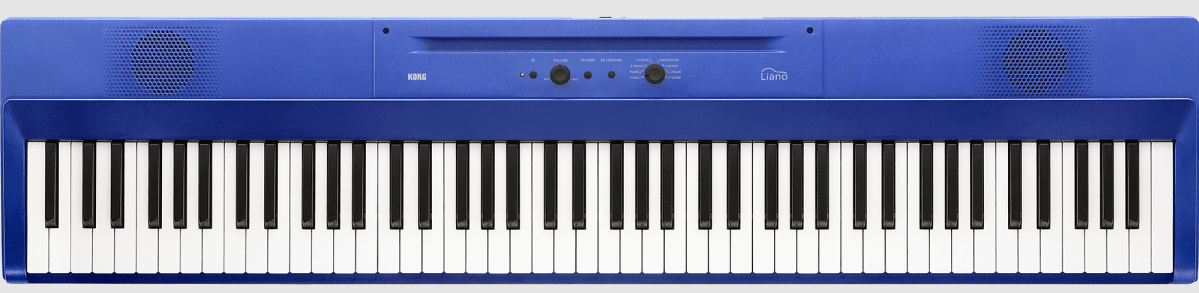
Why The Korg Liano Caught My Eye
It weighs just 6.2 kg and is only 7 cm thick, so you can carry a full 88-key piano without killing your back. You get semi-weighted keys, USB audio/MIDI and built-in speakers – practical features that actually matter to your daily practice.
Yes, really. The Korg Liano Portable 88-key Digital Piano offers great value.
Because switching sounds is as easy as a dial turn, you can jump from grand to electric in seconds, hook up to your DAW and start recording; it’s just bang-for-your-buck convenience. Want portability that sounds legit? This does the job.
Let’s Talk About the Key Features
Why this matters: your gear decides if you’ll practice regularly or let it gather dust – the right features make the Liano a practical, fun instrument you actually use. It blends a full-size 88-key feel with ultra-portability, solid onboard sound and simple connectivity so you can play, learn and record without fuss, which is exactly what many players want.
- 88 semi-weighted keys for realistic touch and feel
- Built-in front-facing speakers with bass-reflex ports for richer low end
- Sustain pedal included for expressive playing
- Music stand and sleek black (plus five new color options)
- Free software bundle incl. 3 months Skoove access
- Lightweight body (about 6.2 kg) and optional battery power for portable gigging
- Eight onboard sounds (piano, electric piano, organ, strings, etc.)
- Reverb and chorus effects to add depth
- USB Audio/MIDI for DAW and app integration
- Easy front-dial operation for quick sound selection
Assume that this mix gives you a full 88-key piano experience, strong onboard speakers, simple connectivity and a light, slim body you can actually move around.


How Many Keys Do You Need?
Why this matters: the number of keys shapes what you can play and how portable your setup is – full classical pieces need 88 keys, while lots of pop and practice can be done on 61 or 76. If you’re serious about growing as a player you want all 88, and since the Liano packs 88 keys into a slim, 6 kg body you get full capability without lugging a heavyweight around.
What Makes the Sound So Rich?
Why this matters: tone affects how you connect to the instrument – the Korg Liano uses a renowned Italian grand piano sample, front-mounted speakers and bass-reflex ports that give warmth and punch, plus reverb and chorus to add space; so when you play expressively it feels alive, not flat or thin, which is what you’ll notice first.
Why the details count: the speakers are aimed at you so the sound is immediate, the bass-reflex design beefs up low frequencies so chords ring out, and the simple effects let you dial ambience fast. Hook it up via USB audio to your DAW or use headphones for silent practice and the Liano still delivers convincing, usable tone that outperforms its slim silhouette.
Let’s Dive Into Portability
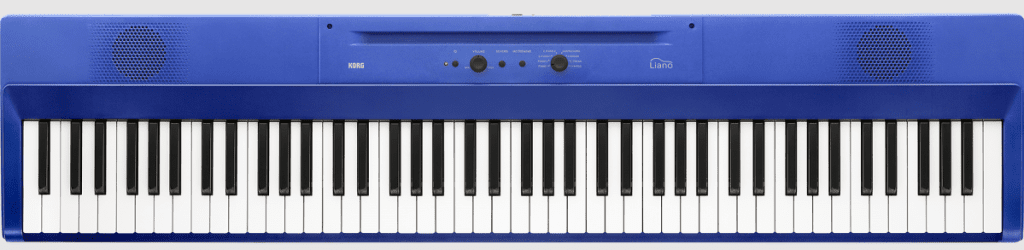
You’re stuffing gear into a hatchback for an evening jam and the Korg Liano slides in like it was made for this – slim enough to fit behind a seat, full-size 88 keys intact, only 7 cm thick so it doesn’t hog space. It weighs just over 6 kg so you can actually carry it without sweating buckets, and the built-in speakers mean you don’t have to lug an amp. Handy, right?
Is It Too Heavy to Move?
You’re hauling it up two flights of stairs to a rooftop practice and you wonder if this will kill you. It won’t – at 6.2 kg (plus ~200 g with six AA batteries) the Korg Liano is featherlight compared to full pianos, and that slim profile makes it easy to grip. Can you carry it solo? Yeah, in most cases. But if you’ve got a flight of stairs, grab a friend for peace of mind.
Can You Practice Anywhere?
You’re on a sunlit park bench and you want to play – why not? With optional battery power, front-facing speakers and a headphone socket for late-night sessions, the Korg Liano lets you practice in living rooms, patios or outdoor spots. USB Audio/MIDI ties you into apps or your DAW, and the free 3-month Skoove trial helps you keep progressing. So yes, you can practice almost anywhere; it’s built for it.
You’re setting up for a backyard jam as the sun drops and you need gear that won’t overcomplicate things. The Liano runs on six AA cells if you want to go wireless, its bass-reflex speakers give decent low end, and the headphone jack lets you go silent when needed. USB connectivity and simple controls mean you jump straight into practice or recording, and that sustain pedal and music stand make it feel a bit more like a proper piano – low fuss, full enjoyment.
My Take on the Playing Experience
With the recent trend toward slim, colorful portable pianos, the Korg Liano feels like exactly what you’d expect from KORG right now: sleek, light and actually playable. The 88 semi-weighted keys give you a responsive touch that teases real piano dynamics, and the sustain pedal helps you shape phrases – it’s surprisingly expressive for such a thin board. You can tote it, plug in, and play in seconds. Want real piano feel on the go? This comes close.
How Does It Feel Under Your Fingers?
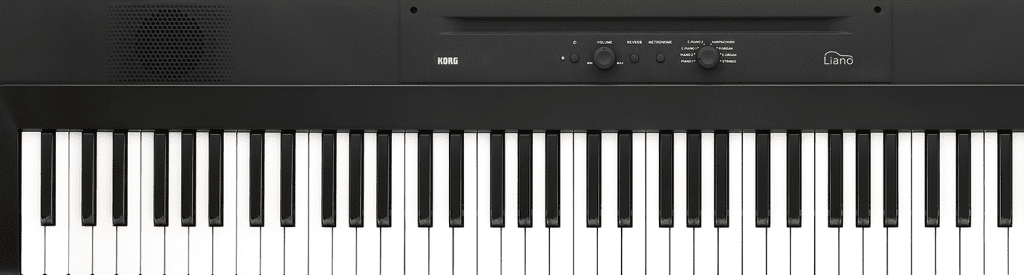
When you press a key on the Korg Liano, you get a semi-weighted action that balances lightness with noticeable resistance; it’s not a grand but it’s miles ahead of cheap synth keys. You’ll find it forgiving for learning, yet responsive enough to phrase and articulate if you pay attention. Some fast passages feel a tad springy, and that’s fine – overall it invites you to play longer without tiring your hands.
What About the Sound Quality?
Sound-wise, the Korg Liano surprises for its size: the Italian grand sample sings through front-facing bass-reflex speakers with real body. You’ve got eight tones to pick from, reverb and chorus to color things, and the built-in speakers fill a room better than you’d expect. Plug in headphones and it’s quiet practice heaven. So yes, it’s not a concert grand, but it’s warm, immediate, and fun to play.
Digging deeper into the sound, you’ll notice the bass reflex ports give surprisingly solid low end considering the 6.2 kg chassis – that’s rare. The piano voice is the standout, with usable electric piano and strings too; effects add space without sounding fake. USB audio and MIDI make it easy to record or expand your palette, so if you want to route better speakers later you can, but straight out of the box it’s punchy and usable.
The Real Deal on Connectivity and Extras
Connectivity matters because it’s how your Korg Liano stops being just a piano and starts being the hub of your music life – recording, learning, jamming with apps, whatever you want. The USB Audio and MIDI give you straightforward hooks into DAWs and virtual instruments, the speakers mean you can play anywhere, and battery power keeps things portable. It’s simple, no fuss, and gives you real options when you want to expand your setup or just plug in and go.
Can You Connect the Korg Liano to Your Computer?
If you’re into recording or using plugins, this is where it pays off – yes, you can connect. USB Audio and MIDI let you send audio and control data to your computer so you can record tracks, drive soft synths, or use the Korg Liano as a master keyboard. You’ll need a USB cable (sold separately) and for iPhone/iPad an adapter, but once it’s hooked up you’re basically ready to track or practice with your favorite apps.
What’s in the Free Software Bundle?
You care about learning and getting value, right? The bundle gives you a head start: three months of Skoove piano lessons plus a handful of trials and discounts for music apps and plugins so you can actually use the Liano with software. It’s not just fluff – it’s stuff that gets you playing and recording quicker, and it usually covers lesson time and tools you’ll actually use.
Digging deeper, the star of the pack is the Skoove access – guided lessons that adapt to your pace and help you work through real songs, not just scales. Three months of guided lessons. Beyond that you often get short trials or promo credits for virtual instruments, DAW plug-ins and sometimes sample libraries, so you can experiment without dropping extra cash right away.
Consider An Extended Warranty For Your Instrument
FAQ
Q: How does the Korg Liano actually sound for home practice and small gigs?
A: The Korg Liano sounds way bigger than its slim profile suggests. The front-facing bass reflex speakers and the sampled Italian grand give the piano a surprisingly full low end and a clear top – there’s real presence for sitting in a living room or playing a small cafe. It has reverb and chorus to add depth, plus eight tone choices so you can flip from grand to electric piano or strings in seconds, very grab-and-go friendly.
That front-mounted speaker design means the sound is aimed at you, not away from you, which helps when you’re learning dynamics or trying to be heard without mics. It punches above its weight.
Got a late-night practice? There’s a headphone jack for silent sessions, and the onboard speakers still carry well when you want to be heard without hauling a PA – so yeah, it’s versatile, and it surprises you more often than not.
Q: Is the Liano a good choice for beginners who want a real piano feel?
A: For beginners it’s an ideal compromise – real-feeling keys without lugging a thousand pounds around. The 88 semi-weighted keys are engineered to feel piano-like while keeping the whole unit featherlight at about 6.2 kg. You get a sustain pedal and a music stand out of the box, plus 3 months of Skoove in the software bundle, so you can actually practice with structure – which matters when you’re starting out.
The keybed is surprisingly pleasant – not a full hammer action, but more than enough to learn good technique and dynamic control. Surprisingly satisfying keybed.
Also it’s portable and battery-capable, so if you want to move it between rooms or take it to a friend’s place you can – that convenience makes sticking with practice way easier, trust me.
Q: Can I use the Korg Liano for recording and to control virtual instruments?
A: Yes – the Liano doubles as a neat little studio controller and a standalone instrument. It has USB Audio and MIDI so you can hook it to your DAW and record directly or use it to trigger virtual pianos and plugins. Integration is straightforward and the lightweight body makes it easy to set up wherever you make music – studio, couch, or backyard jam session.
You will need a USB cable for most computer connections, and for iPhone/iPad you’ll need a USB cable plus a Lightning-USB camera adapter – both sold separately. You’ll need a USB cable – sold separately.
There’s also a free software bundle included which gets you started without buying extra sounds right away, so you can record, experiment and expand your setup bit by bit. Korg, you have done well with this one!