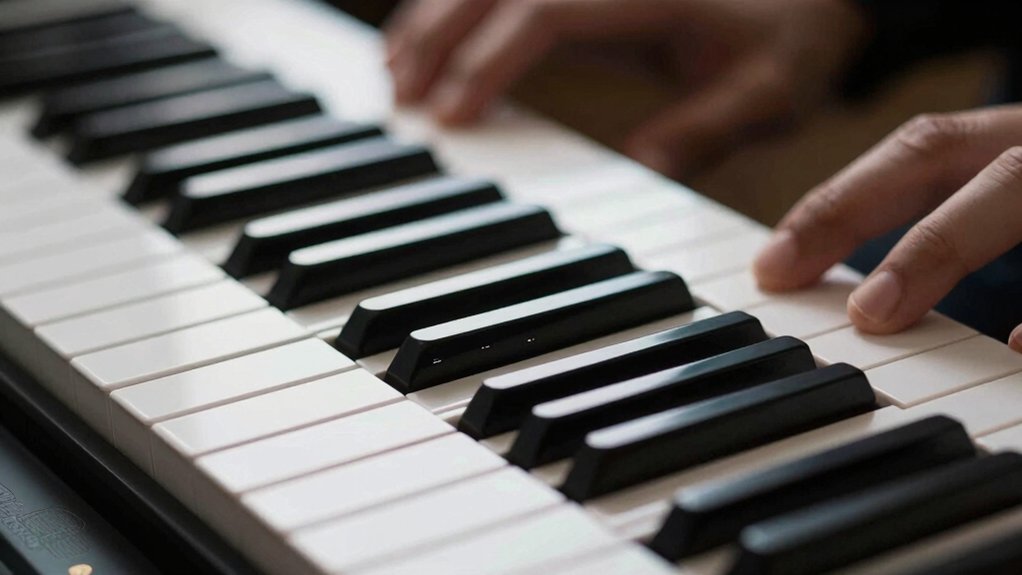
You can learn piano on a keyboard, but success hinges on choosing the right instrument and practicing with purpose. A full-size, weighted 88-key keyboard with touch sensitivity helps you build proper technique and finger strength, while digital options offer portability and progress tracking. The surprising part is that consistent, targeted practice matters most, not the gear alone. Ready to explore how to bridge gaps, pick the right keyboard, and pace toward real-piano skills?
Can a Keyboard Build Real Piano Skills? A Step-by-Step Path
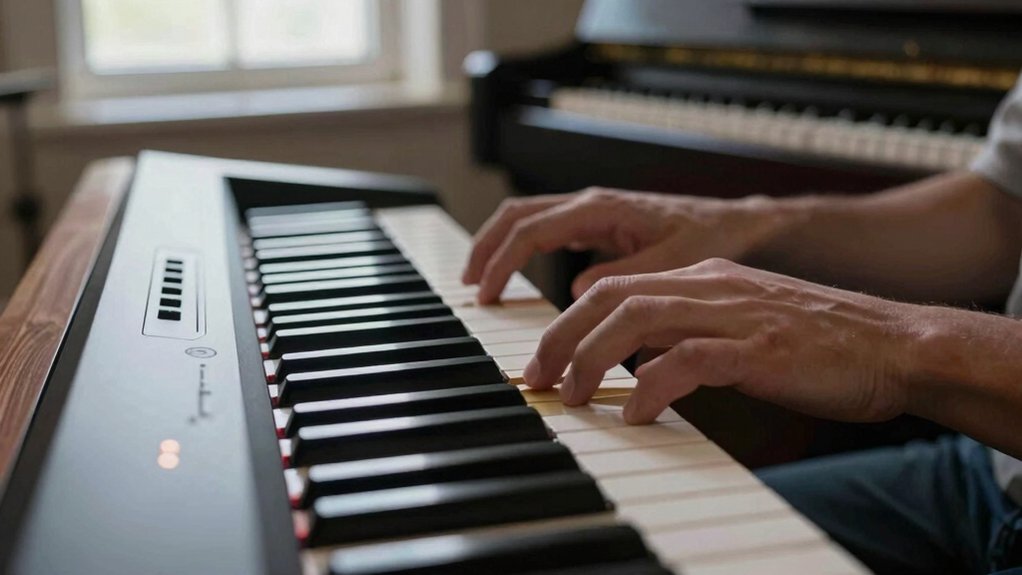
Yes, you can build real piano skills with a keyboard, but it requires a deliberate practice plan and proper technique. Start by aligning your goals with a focused routine: scales, arpeggios, and two to three pieces that challenge technique without overwhelming you.
Use a metronome to enforce steady tempo and incremental speed increases. When practicing dynamics, treat touch as a physical skill—fingers gradually relax and press, controlling sound color.
Track progress with short recordings to reveal subtle timing errors and tone inconsistencies. Acknowledge limits of the digital interface, but leverage its consistency for accuracy drills and repetition.
Prioritize sound quality by selecting a keyboard with weighted keys or a responsive action, and maintain posture to sustain long sessions.
Consistency, reflection, and deliberate repetition yield genuine skill development.
Can You Feel the Difference: Keyboards vs. Acoustic Pianos
Keyboards and acoustic pianos feel different under your fingers, so your technique will adapt to each instrument’s nuances. You’ll notice a lighter touch on many digital keyboards and a more nuanced response from hammers and strings on an acoustic piano. This difference affects timing, phrasing, and dynamic control, so you should adjust your practice focus accordingly.
Digital sound on keyboards can simulate tonal variety, but it won’t always replicate the weighted feel or sustain of an acoustic instrument. Key sensitivity varies by model, influencing how you articulate soft and loud passages.
To build transferable technique, train with consistent touch and listen for natural decay, resonance, and pedal interaction. Use both gear types thoughtfully to refine expression without overreliance on one interface.
Which Piano Skills Transfer From Keyboard Practice
Even though keyboards and pianos feel different, several skills learned on a keyboard transfer directly to acoustic piano technique. You’ll carry over finger independence, even touch, and dynamic control from scales, arpeggios, and Hanon-like routines.
Regular keyboard practice builds mental mapping of finger patterns, so when you switch, you can keep consistent phrasing, articulation, and rhythm. You’ll also apply steady tempo, control of attack and release, and goal-oriented practice strategies that support long-term technique growth.
Recognize that digital sound can tempt quick perk-ups, but precision matters more than volume. Be mindful of keyboard latency in practice to align your timing with the instrument.
Transferable habits include daily warm-ups, objective metrics, and gradual escalation of difficulty for reliable progress.
Gaps to Bridge When Practicing on a Keyboard
Gaps to bridge on a keyboard aren’t about starting from scratch but about recalibrating technique for a different instrument. You’ll notice shifts in touch, timing, and articulation as you adapt.
To guide you, focus on these areas:
1) Sense of rhythm and pedal independence, translating steady beat from a weighted piano to a lighter action.
2) Finger strength and control, building precision for varying velocity without sacrificing tone.
3) Interaction with digital interface and sound quality, ensuring you hear accurate dynamics and sustain on headphones or speakers.
Practice tips:
- Use slow, deliberate scales to map tactile feedback to audible results.
- Record and compare performances to identify subtle inconsistencies.
- Reiterate with purposeful tempo changes until transitions feel seamless.
How to Pick the Right Keyboard for Piano Learning
Choosing the right keyboard is essential for building proper piano technique and preventing bad habits, so start with features that support learning rather than just familiarity.
Look for a full-size 88-key instrument with touch-sensitive keys to reflect dynamic playing. Prioritize a graded hammer action if available, or at least weighted keys, to train finger independence.
Verify consistent key response across the board and minimal latency for immediate feedback. Favor keyboards with built-in metronome, lesson modes, and clear visual cues to reinforce rhythm and technique.
Check digital features like adjustable touch sensitivity, transferability to apps, and reliable headphone output for silent practice.
Consider portability benefits for frequent travel or practice spots, but don’t sacrifice key feel or stability. Informed choices accelerate progress and reduce bad habits.
Master Scales, Chords, and Rhythms on a Keyboard
Mastering scales, chords, and rhythms on a keyboard is foundational for fluent piano playing, and you’ll progress fastest by practicing them as interconnected skills. You’ll build intuition for finger patterns, harmony, and timing, which boosts both sight reading and musical understanding. Treat each area as a module you can revisit, not a checklist you finish.
1) Scales train finger economy and key awareness, reinforcing memory of your instrument.
2) Chords lock in harmony, enabling quick accompaniment decisions and accompaniment patterns.
3) Rhythms sharpen pulse, articulation, and dynamics, translating to expressive playing.
This approach ties music theory to practical playing, grounding decisions in structure rather than guesswork. Practice deliberately, compare results, and listen critically to confirm accuracy and musical sense.
Build Finger Independence Without a Grand Piano
Building finger independence can still flourish even if you don’t have a grand piano. You can train separate finger patterns on a keyboard by using simple, repeatable routines.
Start with five-finger scales for each hand, then add independent finger exercises: place each finger on a single key and lift without moving others. Use slow tempo, metronome, and graduated repetitions to build control.
Transfer the same patterns to both hands, then combine into short, hands-together drills. A digital interface can guide you with tactile feedback and tempo suggestions, reinforcing correct motion.
Track progress with consistency rather than volume. Remember portability benefits: practice anywhere, anytime, keeping a steady routine. Focus on clean articulation and even tone to develop real independence over time.
Expressive Touch: Dynamics and Articulation on a Keyboard
Expressive touch on a keyboard means you control how loudly and how smoothly you sound, not just what notes you press. Your aim is to translate dynamics and articulation from touch into audible color, whether you’re playing digital or acoustic tools.
Recognize expressive nuances, then practice precision rather than speed.
- Start with light, gradual presses to shape phrasing and breath-like crescendos.
- Use deliberate accents to differentiate motifs, not just hits on the beat.
- Alternate finger weight and release speed to reveal legato, staccato, and pedal-like clarity.
Digital vs. acoustic responses vary, so adapt your touch to the instrument’s response curve. With deliberate practice, you’ll craft expressive lines that stay musical across keyboard types.
Repertoire That Works on a Keyboard: Smart Picks
You’ll want repertoire that fits a keyboard learner, prioritizing pieces with clear hand separation and manageable rhythms.
Start with short, repetitive patterns that reinforce finger technique while staying musical, and choose works that sound satisfying even when played at slower tempos.
This approach helps you build confidence and consistent progress before tackling more complex pieces.
Repertoire For Keyboard Learners
If you’re building a keyboard-only repertoire, start with pieces that balance musical interest with approachable technique. You’ll learn by pairing musical sense with concrete goals, using music theory to guide decisions and Practice techniques to build consistency. This approach keeps you engaged while you develop reliable habits.
- Choose pieces that reveal clear melodic shapes and repeating patterns so you can see progress quickly.
- Favor short, self-contained works before longer pieces to reinforce technique without overwhelming yourself.
- Layer in simple accompaniment or left-hand patterns gradually to expand your total-hand coordination.
These steps help you grow confidence while aligning practice with theory-informed choices, ensuring your repertoire remains practical, enjoyable, and sustainable as you advance.
Smart Picks For Pieces
Smart picks give you pieces that feel rewarding while building core keyboard skills. You’ll choose repertoire that aligns with beginner-to-intermediate technique, ensuring steady progress without overwhelm. Focus on short, repetitive phrases that reinforce finger independence and consistency, which supports finger strength over time.
Favor pieces with clear hand separation, moderate tempo, and predictable rhythms so you can practice efficiently between sessions. This approach also promotes sight reading by exposing you to steady melodic contours and simple chord progressions in context, rather than isolated exercises.
Track your accuracy and tempo with a metronome, then gradually increase challenge as you stabilize. By prioritizing practical, attainable targets, you create meaningful gains that translate to broader repertoire and confidence at the keyboard.
Practical Practice Routines That Move You Forward
Consistency in practice lands results. You’ll build momentum with focused, time-efficient routines that reinforce technique and musicality. To move forward, adopt these core practices:
1) Practice blocks: 15–20 minutes of hands-on drill, then 5 minutes of reflection on hand position and fingerings to lock in muscle memory.
2) Progressive repertoire: choose pieces slightly above your comfort level and dissect them measure by measure, emphasizing accurate rhythm and dynamic shaping to sharpen sight reading skills.
3) Deliberate variation: alternate between slow, accurate runs and quick tempos to train accuracy under pressure while maintaining control and tone.
Keep a brief log, note sticking points, and revisit hand position and sight reading skills daily for measurable growth.
Troubleshooting Common Keyboard Barriers to Progress
Even with solid routines, you’ll encounter barriers that slow progress; identifying and addressing them quickly keeps momentum intact.
First, assess your digital interface. If you struggle with latency, update drivers, optimize buffer size, and simplify software settings to minimize delays between thought and action.
Next, inspect keyboard ergonomics: ensure your wrists stay neutral, shoulders relaxed, and feet flat. If you experience tension, adjust chair height or try a keyboard tray to maintain a straight forearm alignment.
Spacing and touch sensitivity matter too; calibrate key responsiveness or switch to a lighter action if fatigue wins.
Eliminate distractions, schedule focused blocks, and track sessions to spot patterns.
When to Move to a Real Piano and What to Expect
After you’ve ironed out the digital and ergonomic kinks from the previous section, you may wonder when it’s time to switch from a keyboard to a real piano. Shift timing hinges on technique, musical goals, and listening accuracy, not age of your device.
Expect a real piano to reward tonal control, attack, and dynamics with less fatigue over long practice sessions. Plan a gradual move if you’re still developing finger independence or touch consistency.
3-key imagery checklist:
- Feel: key resistance and sustain deepen your expressive range.
- Response: pedal precision sharpens rhythm and legato.
- Portability: digital pianos and portable keyboards fade as you move toward a full, touch-weighted instrument.
Embrace a staged move, guided by progress, not pressure.
Conclusion
You’ve seen the evidence: a keyboard can train your fingers, rhythm, and musicality. But the real test isn’t inches of ivory—it’s consistency when the nerves whisper, when the sound matures, when fingernails and habits align. Stay curious, practice smart, track progress, and bridge the gaps. The moment you switch to a real piano won’t erase what you’ve learned; it’ll reveal how far you’ve come—and how far you’re still willing to go. Are you ready to listen and move forward?