
Let’s Dive Into It – What’s the Deal with the Dexibell VIVO H10 MG?
The Dexibell VIVO H10 MG Digital Piano represents the Italian manufacturer’s answer to premium home instruments, combining their acclaimed T2L sound modelling technology with elegant furniture-grade cabinet design that belongs in sophisticated living spaces. What sets the Dexibell VIVO H10 MG Digital Piano apart from mainstream home pianos is its refusal to compromise on sound quality or touch response despite its domestic focus – this instrument targets serious pianists who want stage-piano performance and studio-quality sound reproduction without the industrial aesthetics of portable models cluttering their homes.
This is the closest thing to a mini grand you can buy without selling your soul. When you play it, the Italian red spruce soundboard from Val di Fiemme pours warm, round tones through tiny organ-pipe like channels, so the strings actually sing. You get hybrid wooden keys, expressive modeling and a brutal amplification setup – 15 speakers, 4 amps, 112 W – so it breathes like a real piano. Want that big-room presence at home? Be careful though, it can hit 113.6 dB max, that’s loud.
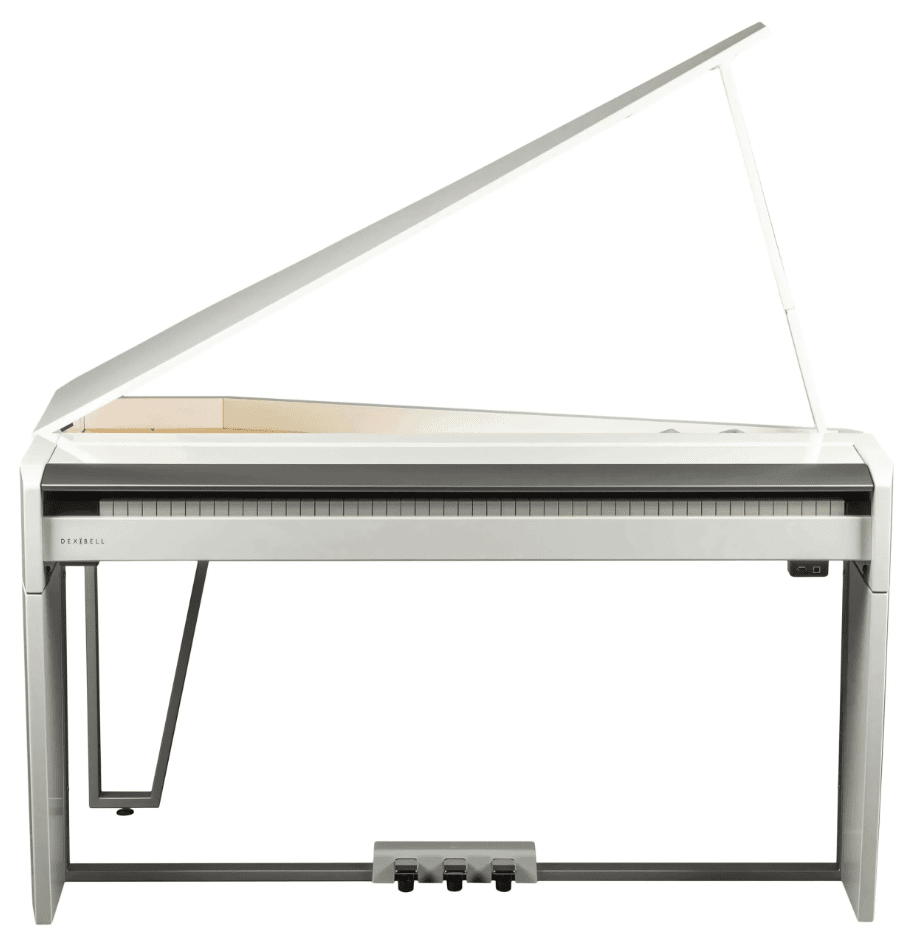
Why the Soundboard Matters – The Magic of Italian Red Spruce
Trees are felled during the waning moon, between October and November, to lower sap in the trunk. If you play, you’ll notice the difference – the soundboard is what turns steel-string energy into the tone you actually hear, and with Italian red spruce from Val di Fiemme that tone is warmer, clearer and more alive. It’s elastic and filters harshness, so your touch and dynamics translate straight to sound – you get presence, sustain and that satisfying personality that makes a piano sing.
What Makes Red Spruce So Special?
Italian red spruce has microscopic lymphatic channels that act like tiny organ pipes, and that physical oddity really shapes the voice you get. You hear it in the way the wood’s elasticity transmits desirable frequencies while absorbing higher, gritty overtones, so notes bloom instead of ringing thin. Makers from Stradivari on have chased this timber because it’s not just pretty wood – it sculpts sound in a way strings alone can’t.
How This Wood Transforms the Sound Experience
Dexibell mates a Val di Fiemme red spruce soundboard with 15 speakers and 4 amplifiers – total power 112 W max @ THD+N < 0.1% – so the result isn’t flat sampling, it’s physically resonant. You feel round, mellifluous vibrations under the lid and the soundboard pushes body into the tail, giving real grand-like presence. Want intimacy and stadium power in the same instrument? this design sells it to your ears.
Holophonic recording captures up to 15 seconds on low notes, which preserves decay and the real cabinet breathing you want. You get detail from Near Field speakers, weight from Bass speakers, sweet sustain from 4 speakers mounted on the soundboard, and spatial depth thanks to the Mid-Side configuration-so whether you’re whispering or hammering, the character stays true and convincing.
The Tech Behind the Tunes – Unpacking the Specs
This thing is built to convince you it’s a mini grand. You get a real wooden soundboard carved from Italian red spruce from Val di Fiemme, paired with a multi-amplification rig of 15 speakers and 4 amplifiers that push up to 112 W-so the tonal detail and body are there. And yes, at max levels the front-end can hit 113.6 dB so protect your ears if you crank it.
The Processor – Is It Really That Powerful?
The CPU is no marketing afterthought. A Quad-Core Cortex @ 1.8 GHz with 4 GB of RAM runs the T2L engine, streaming huge waves and modelling in real time so you don’t hear glitches when switching sounds or stacking layers. You’ll notice fast, seamless changes and stable DSP even with effects and mic input – it handles multitasking like a pro, not like a bargain synth.
Unlimited Polyphony – What Does That Even Mean?
Unlimited polyphony actually means you won’t lose notes. Dexibell uses modelling plus a 320 oscillator approach and smart resource handling so your sustained chords, binaural layers and long holophonic samples don’t get chopped off when you pile on sounds. Play big, hold long, blend layers and the engine keeps every voice alive.
In real use you’ll hear the payoff. With 3.2 GB wave memory, holophonic recording on low notes and up to 15 seconds of sampled decay, the system preserves pedal resonance, sympathetic strings and mic-driven color without note-stealing, and “seamless changes” mean programs swap without gaps – though if you blast it loud you’ll need ear protection because that SPL is intense.
Features That’ll Blow Your Mind – The Goodies You Get
Some people say digital pianos are all flash and no soul, but you get real substance here: a soundboard of Italian red spruce from Val di Fiemme, a 15-speaker, 4-amplifier system with up to 112 W, a hybrid wooden keyboard and 3.2GB wave memory with PLATINUM samples. You also get Quad-Core power, seamless effects and a mic input with independent controls – so you’re not buying bells, you’re buying a mini grand experience that actually behaves like one.
The Hybrid Keyboard – Do You Really Feel the Difference?
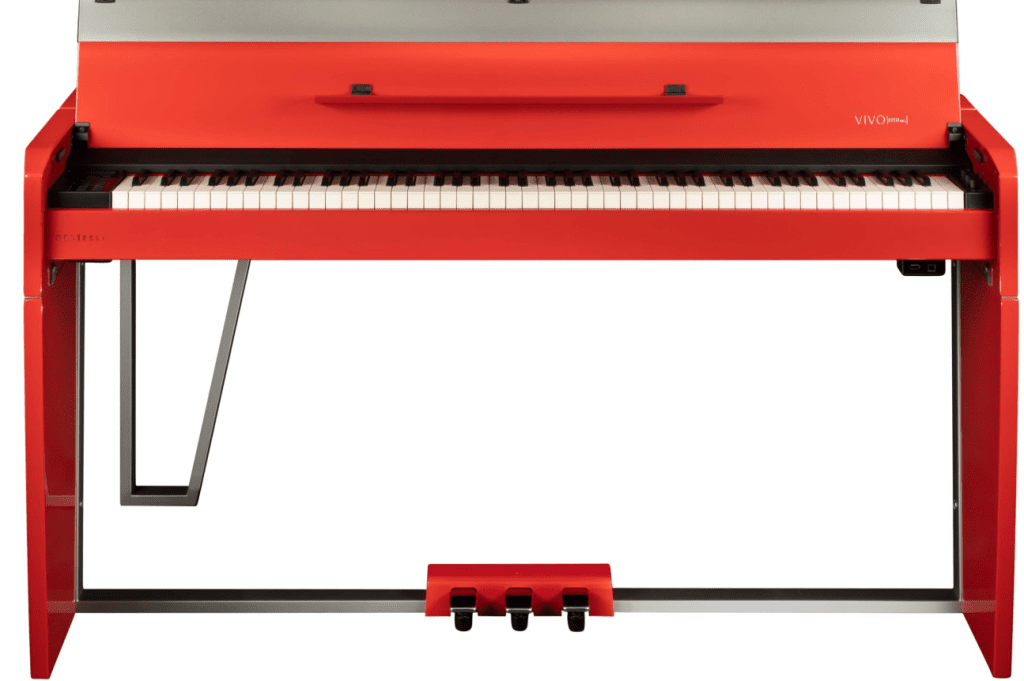
Lots of folks think wood keys are only about looks, but when you touch the TP-400 W hybrid keyboard with ivory and ebony finish and escapement you feel the weight and subtle return that coax expression out of your playing; the triple-contact hammer action and sympathetic resonance give phrasing real life. Does it turn you into a concert pianist overnight? No, but it makes you want to play more, and that’s what counts.
Mic Input and Effects – Are They Worth It?
You might assume the mic input is an afterthought – it isn’t. You get independent MIC level and MIC effect controls plus 14 reverb types, 3-band EQ, compressor, low cut and delay, so you can sing, mic an acoustic or run a vocal through tasteful processing without hauling extra gear. It’s handy for streaming, small gigs or practice, and it’s surprisingly musical.
Some say onboard mic FX are just toy presets, but Dexibell’s DSP and routing are actually robust; the mic plugs into a 1/4-inch MIC IN with front-panel control, you can tweak EQ and compression on the fly and route audio to USB for clean .wav recording at 48 kHz – 32-bit float. And because the H10MG has a soundboard-driven rear speaker array that sweetens timbre, your vocal sits in a warmer, more natural space than you’d expect. 113.6 dB max is real power though – so be careful with stage volume, ear damage is no joke. But if you want an all-in-one mini rig that handles keys and vocals without constant patching, this one actually delivers – practical, punchy, and musical.
Explore the full range of Dexibell digital pianos and keyboards, known for their superb sound and authentic feel.
Click Here To See More Dexibell Keyboards
(Link opens in a new window)
In My Honest Opinion – Would I Recommend It?
Can this VIVO H10 MG actually give you a grand-piano vibe without buying a real grand? Yes, if you want seriously realistic tone and touch – the Italian red spruce soundboard, hybrid wooden keyboard and the 15-speaker / 112 W quadri-amp system deliver warmth and presence you can feel. But it’s not light or tiny: 87.8 kg and a possible 113.6 dB SPL mean you must plan movers and ears. If you want top-tier realism at home, go for it.
Who This Piano’s Perfect For
?Who should consider dropping cash on the H10 MG? If you’re a serious hobbyist, home pro, vocalist who needs a mic input, or a small studio wanting real grand resonance, this is your thing. The hybrid wooden TP-400 keyboard, escapement and the red spruce tail make it feel alive under your fingers. But if you need something ultra-portable or you’ve got a shoebox apartment, this beast might be too much.
What I Wish I Knew Before Buying
?What surprised me most after delivery? The heft – 87.8 kg means you won’t be moving it solo, and the sound can get intense – 113.6 dB at full tilt, so you gotta manage volume. Also the real spruce soundboard is beautiful but reacts to humidity and temp, so you’ll want stable room conditions. Tweak the DSP and mic settings or it’ll sound flat or too bright.
?Want more practical stuff I wish I’d known? You should plan delivery with pros, measure doorways and floor strength, and budget time to dial in the T2L engine and amp DSP – it takes patience but pays off.
Hire movers – it’s heavy and awkward. Once it’s set and the room’s right, the payoff is huge, honestly – the resonance and mic features are addictive.
FAQ
Q: How does the Val di Fiemme red spruce soundboard actually change the VIVO H10 MG’s tone compared to other digital pianos?
A: You’d be surprised – a digital piano with a real resonant soundboard actually changes the whole feel, not just the marketing blurb. The H10 MG uses Italian red spruce from Val di Fiemme, the same wood luthiers like Stradivari prized, and that wood behaves in a special way: it soaks up the harsher upper stuff and lets the musical tones sing through, thanks to its elasticity and those tiny lymphatic channels that act a bit like organ pipes.
And because the trees are cut in the waning moon between October and November, there’s less sap in the trunk, which makes the wood respond cleaner to vibrations – yeah, it’s old-school forestry meets modern tech. The soundboard works with four speakers mounted right on it to send round, mellifluous vibrations into the instrument’s tail, so you actually feel body and warmth instead of a flat, boxed digital sound. It ends up sounding and breathing more like a small grand than a typical upright digital.
Consider An Extended Warranty For Your Instrument
Q: The spec sheet brags about 15 speakers and 4 amplifiers – is that overkill or does it actually give a better piano experience?
A: It’s not just about loudness – it’s about placement, detail and depth. Dexibell split the system into front near-field speakers for hammer and resonance detail, dedicated bass woofers for the low end, four speakers on the spruce soundboard to amplify sweet vibrations, and a 3-speaker mid-side array to tweak sound depth. Add four amps controlled by a DSP with dynamic EQ and compression and you get surgical control over different frequency zones.
So yeah, those 15 speakers let the H10 MG simulate the spatial cues of a grand – hammers up front, a body that resonates behind you, low frequencies that actually move air. Total output tops out at 112 W max @ THD+N < 0.1% and the design aims to recreate the sensation of playing a grand about 270 cm long. Want detail? You’ll hear hammer attack and sympathetic string resonance the way you’d expect from a real acoustic. It’s a speaker orchestra built to fake the physics of a real piano – and it does a convincing job.
Q: Is the VIVO H10 MG just about fancy speakers and wood, or does the keyboard and onboard tech back up the promise?
A: The surprising bit is that Dexibell didn’t skimp on the playing interface – the TP-400 W hybrid wooden keyboard gives you 88 weighted keys with hammer action, triple contact, an ivory and ebony feel and escapement, so the touch matches the sound. Play a few bars and you’ll notice nuances you don’t usually get from cheaper digital actions.
But there’s more under the hood: a Quad-Core Cortex at 1.8 GHz with 4 GB RAM, 3.2 GB of wave memory including PLATINUM samples, T2L sampling and modeling tech, and effectively unlimited polyphony with up to 320 oscillators. And yes it’s packed with practical stuff – mic input with independent effects, Bluetooth streaming and MIDI BLE, USB audio and host, recorder at 48 kHz 32-bit float, multiple temperaments, and flexible pedal behavior with sympathetic resonance simulation. The keyboard actually feels like a real grand under your fingers.