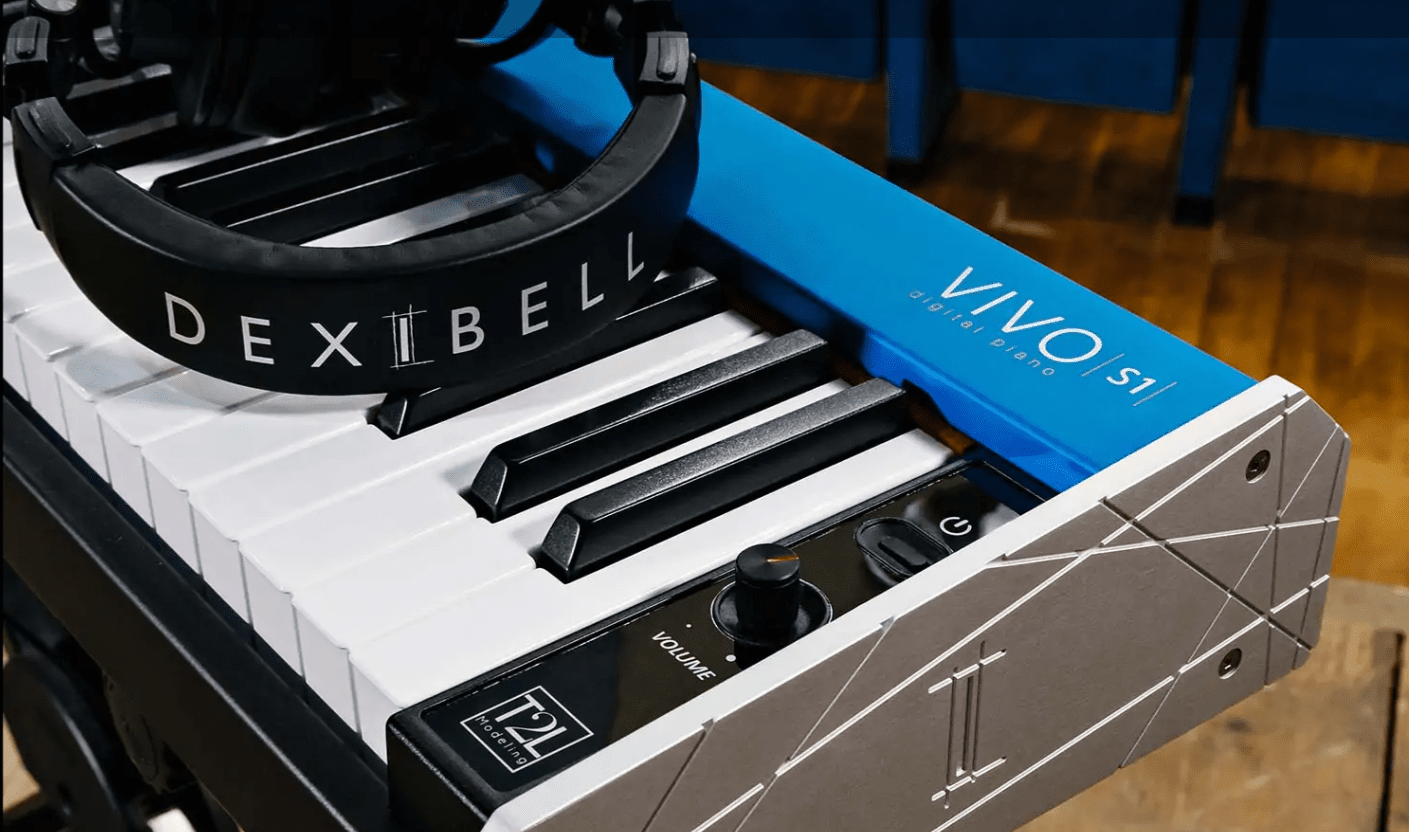
The S1 has been making waves in the stage piano market since its release, promising studio-quality sound in a surprisingly lightweight package that won’t destroy your back during load-in. Whether the Dexibell Vivo S1 lives up to its premium price tag depends on what you value most – this Italian-engineered instrument boasts T2L modelling technology for incredibly realistic acoustic piano sounds, but it also costs significantly more than mainstream competitors from Yamaha and Roland.
Let’s Dive In: What’s This Dexibell Vivo S1 All About?
Weighing just 8.5 kg, the VIVO S1 gives you legendary acoustic and electric piano tones in a crazy-portable package – it’s light and eye-catching in that light blue aluminum case. You get a 68-key slightly weighted keyboard that feels like an 88-key A, and the exclusive Virtual Damper means you can play without lugging a pedal. The T2L tech brings unlimited polyphony and 24-bit/48 kHz audio, plus long 3D tails, so if you travel or gig, isn’t that what you want?
What’s Under the Hood: Key Features That Matter
With the boom in compact stage pianos for streaming and travel, you want something that sounds massive but stays portable. The S1’s T2L engine gives you 24-bit/48 kHz audio, long 3D sampling and unlimited polyphony, so your stacked patches don’t choke. You get a slightly weighted 68-key feel, a handy Virtual Damper and pro-level effects with seamless transition tech. Thou’ll find pro features in under 9 kg and still feel like you’re at a grand.
- T2L sampling + modeling engine
- Unlimited polyphony (dynamic, 320 oscillators)
- 24-bit / 48 kHz audio and DAC with S/N 106 dB
- XXL wave size – up to 15 seconds 3D surround on low notes
- Virtual Damper – play without a physical damper pedal
- 68 keys – light weighted, dual contact
- 1.5 GB user-changeable wave memory, 80+ sounds + downloadable library
- Seamless Transition for interruption-free patch/effect recall
- Recorder .wav (48 kHz, 32-bit floating) on USB
- 6 independent DSP effects, 24 reverbs, 3-band EQ
The Genius of T2L Technology
Hybrid engines are all the rage now – and T2L is a neat take on it. It blends long, expressive samples with modeling algorithms so you get authentic attack, body and sympathetic resonance; that means natural dynamics and believable decay, not just canned tones. You hear nuance, you play nuance, and it reacts like a real instrument – pretty sweet, right?
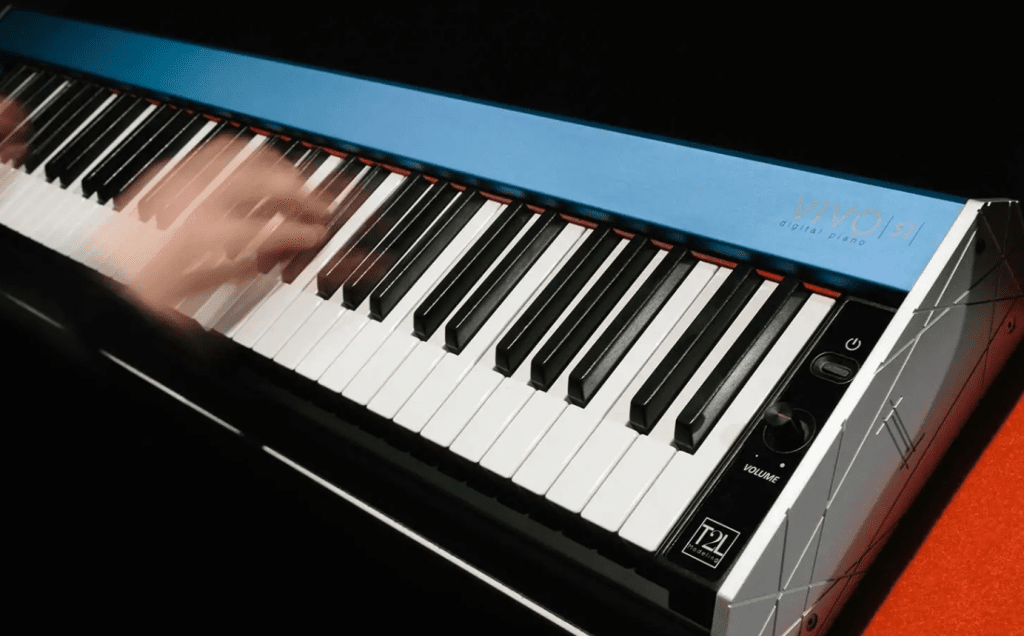
Unlimited Polyphony – How Cool Is That?
With dense virtual orchestras and layered patches trending, unlimited polyphony is a game-changer for you. No more voice-stealing when you pile effects and pads on top of pianos; everything rings out clean. Want long ambient tails and furious arpeggios at the same time? Go for it.
Because the engine can address up to 320 oscillators dynamically, every note, release and sample layer can coexist so decays don’t get chopped and sympathetic resonances stay vivid. No note-stealing. Ever. In live rigs that matters a ton – and in the studio it saves you from weird, abrupt cutoffs when you layer sounds or recall patches mid-song.


The Notes: How’s the Sound Quality?
Ever wondered if a lightweight board can sound like a grand? With the Dexibell Vivo S1 you get T2L sampling and modeling, 24-bit/48 kHz audio and unlimited polyphony, so your stacked pads and dense chords don’t collapse. The XXL wave tails give low notes breathing room – up to 15 seconds – and even at 8.8 Kg the tone is rich, roomy and surprisingly alive, you’ll catch subtleties that make gigs legit.
Impressive Sampling and Modeling
Want studio-grade realism on the go? The S1’s mix of huge samples and smart modeling means keys react – dynamics, sympathetic resonance, harmonic color – like a full-sized instrument. You’re getting 1.5 GB of wave memory, the proprietary T2L engine and clean 24-bit/48 kHz playback, so sounds breathe and evolve, not sit flat or lifeless.
Rich, Dynamic Sounds You Can Trust
Can a compact stage piano be your main sound source? Yes – the S1 ships with over 80 pro sounds, loads more from the Dexibell library and its effects/reverbs actually add depth, not just shimmer. Seamless Transition keeps your patches uninterrupted when you switch, so your flow doesn’t get wrecked mid-song.
How much control do you want over feel and tone? The 68-key TP-8P action gives real playability and the onboard DSP – 6 effects, 24 reverbs, 3-band EQ – lets you shape fast, tweak on the fly and lock in a signature sound.
Virtual Damper means you don’t need a pedal when you travel. And with unlimited polyphony and a 320-oscillator engine complex arrangements never choke, which is a big deal live.
Playing Experience: Is It a Joy to Use?
Weighing just 8.8 kg, the VIVO S1 is built to travel without killing your back, and that portability matters when you’re gigging non-stop. The slightly weighted 68-key action gives you familiar resistance so your chops translate, and the Virtual Damper means you can ditch a pedal on the road – nice, right? With T2L, 24-bit/48 kHz audio and unlimited polyphony the sound stays full and responsive, so playing feels effortless and actually fun to explore.
The Feel of the Keyboard
68 slightly-weighted keys share the same initial “A” as an 88-key instrument, so your spacing and fingering feel like the real deal from the first note. The dual-contact sensors and 7 touch curves let you set responsiveness how you like it – tight for pop, softer for ballads. That slightly weighted, dual-contact 68-key setup gives convincing piano action without hauling a full 88, but be aware it’s not a full 88 which might bug purists.
Seamless Transitions – Why It Works
Seamless Transition prevents unwanted interruptions in sound or active effects when you change patches or layer sounds, so your performance stays intact even when you’re winging it. That means effects and sustain won’t choke out mid-phrase – and with 6 independent DSP effects x 17 types and multiple effect slots you get rich textures that switch cleanly. You end up focusing on expression, not frantically fixing dropped tails.
6 independent DSP effects x 17 types (2 x Main, 2 x Coupled, 2 x Lower) run with the unit’s seamless changes tech, so recalls crossfade parameters instead of muting, which is why nothing cuts off unexpectedly. The T2L engine plus 1.5 GB wave memory and up to 15 seconds on low notes preserves long reverbs and piano decays, and with unlimited polyphony your layers won’t choke each other out during fast program switching – perfect for live multi-timbral setups.
My Take on Connectivity and Customization
This matters because how the S1 hooks up and bends to your workflow decides if your gig is smooth or a flop – and you don’t want mid-set surprises. You get insane flexibility: USB audio in/out at 24-bit/48 kHz, multiple outputs and assignable foots, plus a huge, reconfigurable sound library. So you can patch in a minute and sound pro. And yes, that Virtual Damper and lightweight case mean fewer accessories to haul.
All Those Ports – Seriously, Why So Many?
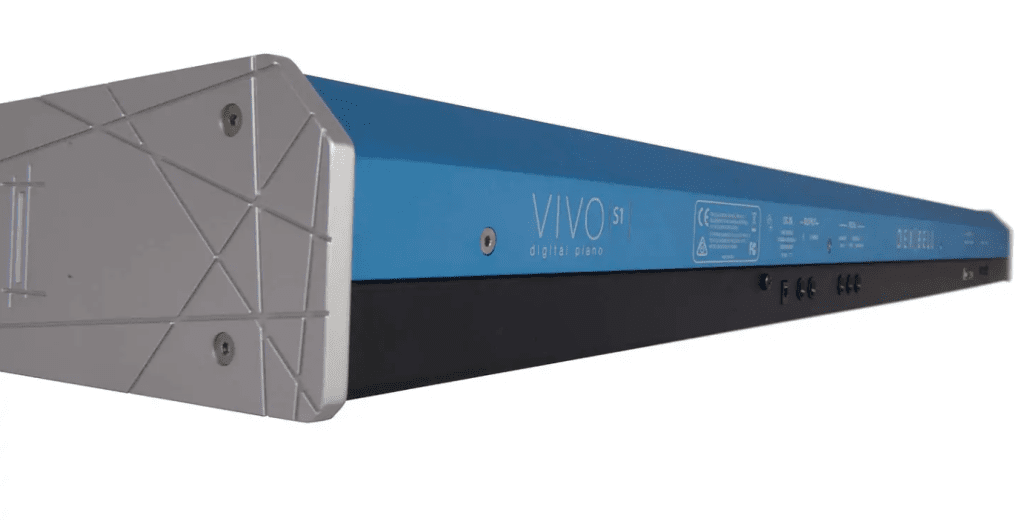
You’re probably wondering why there’s a mini-arena of sockets on a portable piano. Inputs and outputs cover stage needs – L/R outputs, two headphone jacks, AUX in, three foot jacks, USB TO HOST and TO DEVICE – and that massive connectivity is a huge plus for gigs and studios. But too many cables = clutter and potential feedback on stage, so plan your routing or you’ll be chasing hum and tangles.
The Dexibell Vivo series combines portable design with concert-quality sound. Discover the models that have become favorites among performing musicians.
Check Out The Dexibell Vivo Range
(You’ll be directed to the retailer)
Interaction with Your Devices – What You Need to Know
What you plug into the S1 changes everything: the TO HOST port gives you MIDI + digital audio in/out, TO DEVICE handles USB sticks and MIDI, and the recorder writes .wav at 48 kHz, 32-bit float. If you want clean DAW transfers or iPad jamming, use the right USB mode – otherwise no audio, only MIDI. Latency and driver quirks can bite, so test before the show.
More detail – when you use the S1 as an audio interface, set your sample rate to 48 kHz to match internal processing; mismatch can cause clicks or resampling artifacts. The keyboard’s 3-part mode and 4 MIDI zones let you split sounds across apps and hardware, which is awesome. But beware: swapping host/device roles mid-setup can leave you with no sound until you reboot or reconfigure, so power and cable order matter.