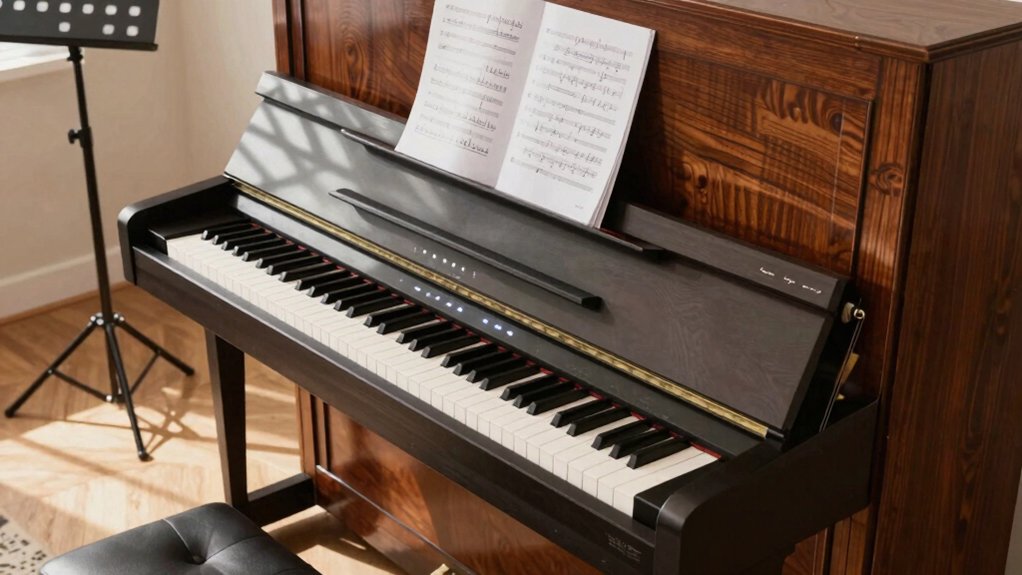
Like a compass in a crowded room, your choice between digital piano vs acoustic pianos points to where you’ll grow as a player. You’ll weigh portability, cost, and consistency against touch, nuance, and long-term value. In modern settings, that balance isn’t just about sound—it’s about workflow, maintenance, and how you perform. So where do you start, and what trade-offs will most shape your progress? Let’s explore what truly matters for you.
The digital piano vs acoustic piano decision represents far more than choosing between old and new technology—it’s a fundamental choice between entirely different instruments with distinct advantages, limitations, and long-term implications for your musical development and daily life. Acoustic pianos offer unmatched tonal complexity, natural touch response, and the authentic piano experience that classical training traditionally demands, while digital pianos provide volume control, zero maintenance, portability, and modern connectivity that solve genuine problems for apartment dwellers, families with neighbors, and players who need practice flexibility. This comprehensive comparison reveals the crucial differences in touch sensitivity, sound production, ongoing costs, and practical considerations that determine which instrument type actually serves your specific living situation, musical goals, and budget reality.
Decide in 5 Steps: What Matters for Your Piano Today
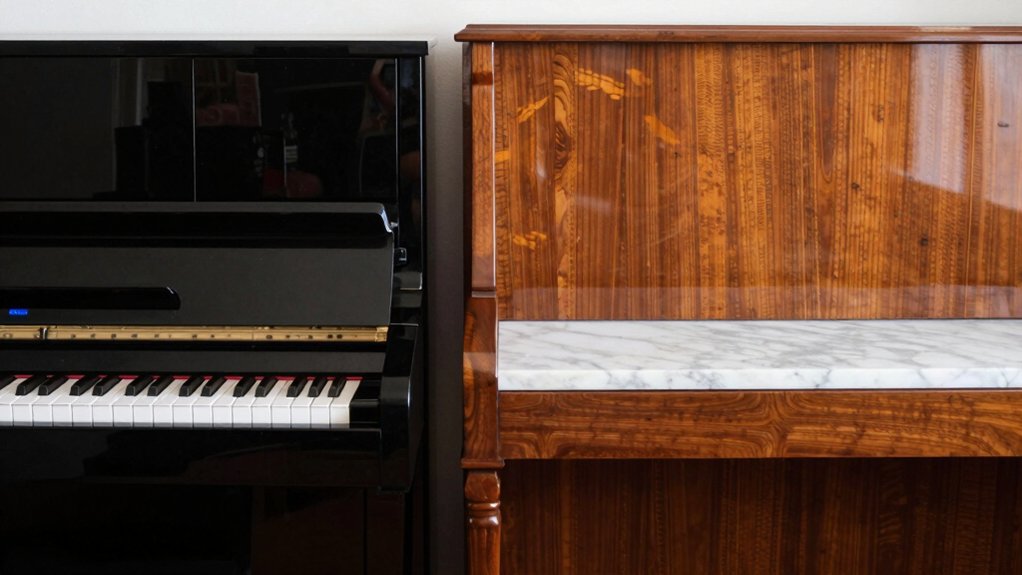
Choosing the right piano today comes down to five core decisions: purpose, touch, sound, maintenance, and budget. You’ll map these factors in a practical checklist, then test how each choice impacts daily use.
Start with purpose: what roles will the instrument fill—practice buddy, stage partner, or studio tool?
Touch matters next; you want a response that feels reliable under pressure, not stiff or unpredictable.
Sound is your anchor, balancing tonal complexity with consistency across dynamics.
Maintenance asks you to forecast ongoing care, from tuning cycles to hardware wear.
Finally, budget steers the hardware and features you accept, including portability for transport and setup.
Evaluate sound quality and portability in real-world scenarios, prioritizing stability, durability, and future-proofing to maximize current and long-term value.
Digital vs Acoustic Pianos: The Core Differences You’ll Feel
Digital pianos and acoustic pianos diverge most in feel, touch, and ongoing cost, even before you factor in maintenance or portability. You’ll notice core differences in key touch and sound quality that define daily playability.
Digital models offer variable key weighting, allowing you to simulate graded hammer actions or opt for lighter, quicker responses, but may trade nuance in velocity sensitivity at extreme dynamics.
Acoustic pianos deliver authentic key resistance and resonant soundboard behavior, rewarding subtle pedal work and harmonic overtones.
In practice, you’ll also sense consistency: digital systems stay stable across rooms and climates, while acoustics depend on tuning and room acoustics.
For modern players, the core choice centers on tactile fidelity and tonal realism balanced against reliability, portability, and long-term cost.
Product offers are temporarily unavailable.
Real-World Uses: Practice, Recording, and Stage Scenarios
Real-world uses map directly to how you’ll actually play, record, and perform with either option. In practice, you’ll leverage digital pianos’ seamless integration: immediate access to digital recordings, USB audio export, and flexible layered sounds that suit practice and quick demos.
For recording, you’ll value consistent touch response and built-in metronomes, while preserving direct control over tempo and tone shaping.
Acoustic pianos deliver authentic dynamic range and natural decay, with acoustic resonance shaping your performance’s expressiveness in room acoustics and live spaces.
Stage scenarios favor reliability, monitor compatibility, and quiet practicing options; you’ll compare cabinet resonance, microphone placement, and feedback susceptibility.
Budget and Long-Term Value: What You Actually Pay For
When you price both options, you’re not just comparing sticker costs—you’re weighing total ownership: upfront price, maintenance, software/firmware updates, and resale value.
In this framework, a digital piano often wins on initial cost and upgrade cycles, but you must account for ongoing subscription or service fees and potential peripheral investments (audio interfaces, speakers).
An acoustic piano carries high upfront price and seasonal tuning, yet maintenance costs tend to be steadier, with fewer periodic fees beyond occasional restoration.
Consider depreciation trajectories: digital models typically hold value more consistently if updated, while acoustic pianos can appreciate in prime condition or suffer from environmental damage.
Cost comparison, long-term reliability, and your space influence practicality more than snap affordability.
Prioritize total cost of ownership over a short-term bargain.
A Practical Decision Framework for Testing and Choosing
To decide between a digital and an acoustic piano, start with a structured testing framework that emphasizes real-use scenarios, measurable criteria, and update-ready expectations. You’ll compare action feel, tone consistency, and maintenance cadence under daily practice, studio sessions, and performance conditions.
Structure tests around objective metrics, not vibes, ensuring repeatability and clear pass/fail thresholds. Key touchpoints: Keyboard feel, tuning stability, dynamic range, and sustain behavior.
- Create a test matrix that mirrors your actual use—practice, recording, and live gigging—then log results.
- Establish objective benchmarks for touch, resonance, and stability, updating criteria as you refine goals.
- Validate long-term suitability with serviceability, firmware or capstone updates, and resell considerations.
This framework prioritizes measurable outcomes and rapid decisions for modern players.
Myths Debunked: What Really Impacts Your Playing Today
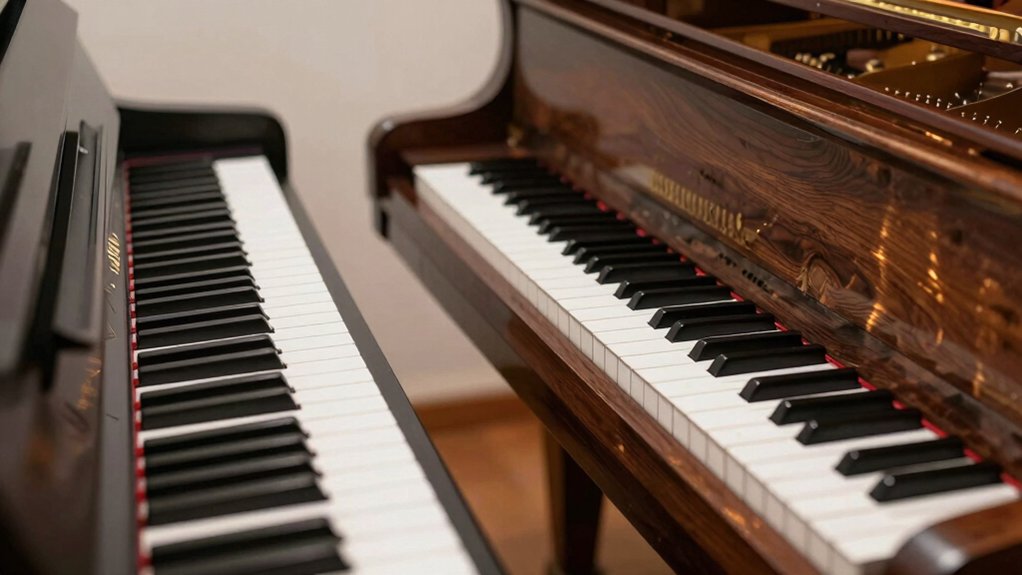
Despite what a viral video may imply, your playing today is driven far more by technique, setup, and consistent practice than by gimmicks or quick fixes.
Myths Debunked: What Really Impacts Your Playing Today cuts through hype with precise, evidence-based insight. You’ll learn that incremental improvements in finger independence, tempo control, and listening accuracy yield far bigger gains than chasing flashy gear trends.
The conversation shifts to tangible factors: proper piano maintenance, calibrated action, and reliable lab-tested sounds that preserve sound authenticity across contexts.
Tech-centric analysis reveals how room acoustics, monitoring, and consistent routine trump shortcuts.
In short, invest in fundamentals, verify gear through rigorous checks, and align practice with purposeful goals to unlock robust, repeatable progress.
Conclusion
You’ll notice a contrast: digital versatility meets acoustic nuance. One fits compact studios, streaming sessions, and late-night practice; the other, timeless touch, evolving dynamics, and salon-grade expressiveness. But the line isn’t binary—it’s a spectrum. You can chase consistency with digital tech, then chase immediacy with an acoustic upgrade later. Start by testing both in your actual workflow, measure impact on your goals, and let your budget and room guide the crossing point. Your decision, precisely aligned with your playing reality.