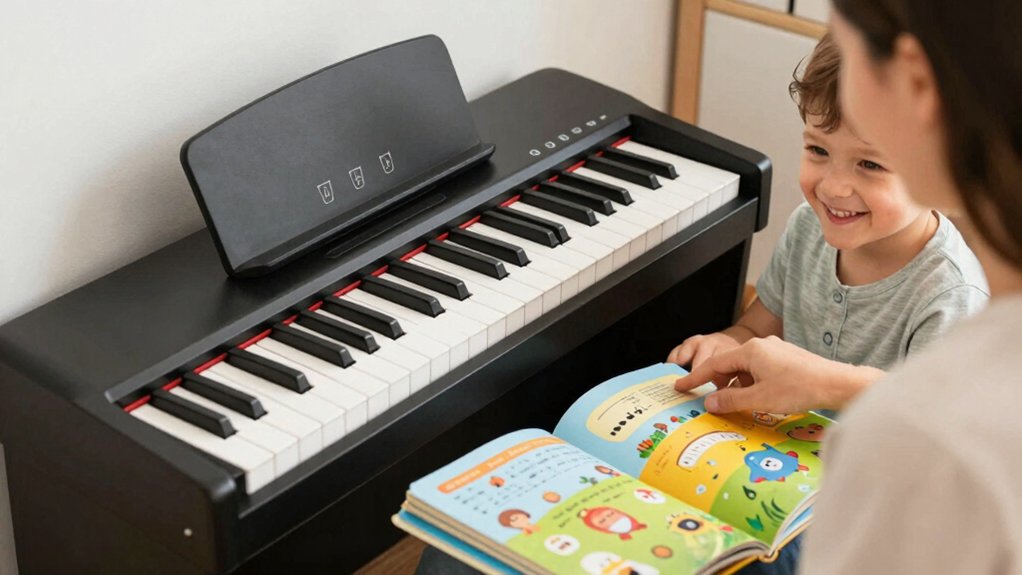
Finding the best digital pianos for kids means balancing proper weighted keys that develop correct technique against budget reality when facing uncertain commitment, plus considering instrument durability that withstands enthusiastic young players and practical features that engage rather than overwhelm beginning students.
The challenge involves distinguishing between genuine kid-friendly digital pianos with appropriate touch sensitivity and learning features versus toy keyboards with flashing lights that provide entertainment but zero musical development, while also addressing whether full 88-key models suit small hands or if compact alternatives serve younger children better. This comprehensive guide reveals which digital pianos deliver age-appropriate quality for children at different developmental stages, which features actually support young learners versus marketing gimmicks that waste money, and exactly how to match instrument investment to realistic assessment of your child’s interest level and practice commitment.
You might not realize that kid-focused digital pianos blend safety design with built-in learning tools to boost practice without needing extra gear. You’ll want something durable, kid-sized, and easy to use, with interactive tricks like metronomes or song suggestions that actually keep a young learner engaged. There’s value in finding a model that pairs long-lasting construction with apps or peripherals that make practice feel like play, so you don’t waste time on gear that tires quickly. Let’s compare options that fit your goals.
Durability Criteria for Kid-Friendly Digital Pianos
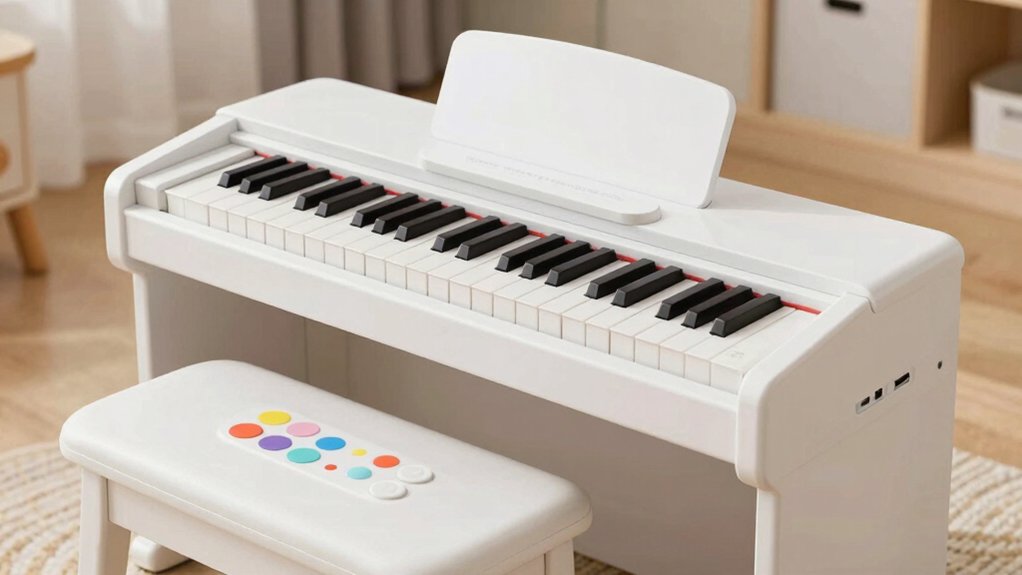
Durability is the backbone of kid-friendly digital pianos. You want a unit that can survive enthusiastic practice, accidental drops, and portable use between rooms. Look for shock-absorbing cases, reinforced hinges, and rounded edges to reduce damage from bumps.
Check keys and keybed for smooth travel and resilience, not squeaks or looseness. A sturdy chassis and non-slip feet help it stay put during play sessions.
Battery options or reliable power supply reduce interruptions, while a robust build supports longer life with growing skills. Consider features like removable stands or compact dimensions for safe transport.
For your goals, think about music therapy benefits from steady touch and reliable sound. Also note digital piano maintenance needs, such as dust prevention and regular firmware checks.
Product offers are temporarily unavailable.
Choosing Kid-Sized Keyboards: Essential Features
When you’re choosing kid-sized keyboards, start with the keybed size to make certain of comfortable, age-appropriate play and learning. Look for a sturdy, non-slip surface and material standards that keep little fingers safe during practice.
We’ll cover these essentials—keybed size and safe materials—as you compare options.
Keybed Size Essentials
Choosing the right keybed size matters because kids need a comfortable, accurate playing surface that fits their hands and posture. When you’re shopping, look for a keyboard that offers a kid-sized reach without forcing awkward wrist angles or overextension.
The goal isn’t just smaller keys; it’s a sensible keybed shape that aligns with growing hands and natural playing posture. Pay attention to keybed responsiveness, since a well-tuned surface encourages confident finger independence and velocity control.
Note key size variations across models: some imitate full-size action, others reduce both key width and travel. Test springy versus weighted feel to match your child’s technique and goals.
A thoughtfully sized keybed helps sustain practice, reduces fatigue, and supports early musical concepts.
Safe Material Standards
Safe Material Standards: When selecting kid-sized keyboards, prioritize non-toxic, low-emission plastics and hardwoods with smooth finishes that resist chipping. You want surfaces that stand up to curious hands and frequent cleaning without releasing fumes or odors. Look for certifications like CPSIA or EN71 to gauge safety, and choose models with simple, accessible parts for quick inspection.
- Non toxic finishes ensure hands and mouths stay safe during play.
- Child safe plastics reduce chemical concerns without sacrificing durability.
- Low-emission materials minimize indoor air quality impact.
- Smooth, splinter-free surfaces prevent accidental injuries and scratching.
Best Digital Pianos With Built-In Learning Modes
Many digital pianos now include built-in learning modes that guide beginners step by step. You’ll find modes that turn on metronomes, slow down sections, and loop correct notes to reinforce memory. These features help you build confidence before tackling advanced pieces.
Look for guided intervals, chord drills, and scale practice that adapt to your pace, so you won’t feel overwhelmed. Built-in learning can also suggest suitable songs, aligning with your growing musical genres interests while you explore rhythm and melody.
When you shift from drills to songs, you’ll notice clear progress in performance techniques, such as finger independence and timing accuracy. This makes practice feel purposeful, not repetitive, and keeps engagement high for kids and busy families alike.
Apps and Peripherals That Boost Hands-On Practice
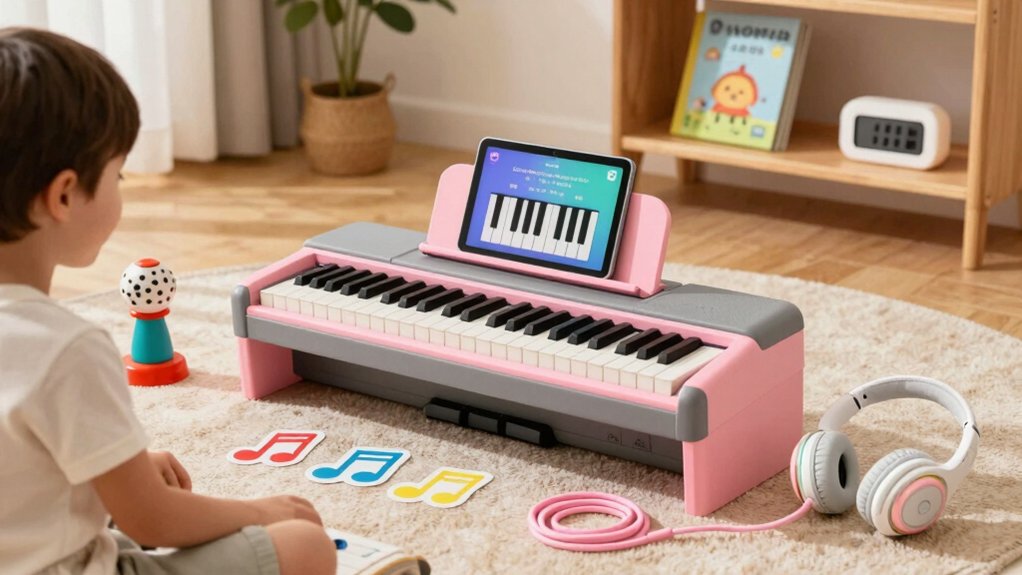
Apps and peripherals can turn practice into a fast, hands-on habit, pairing digital pianos with tools that reinforce skills outside of standard lessons. You’ll boost repetition, feedback, and motivation by layering tech with play.
- music apps guide you through chords, scales, and rhythm drills with instant feedback.
- instructional peripherals like MIDI keyboards, pedal plugs, and Bluetooth adapters expand what you can learn at home.
- game-based apps reward progress, turning practice into short, repeatable sessions.
- interactive metronomes and tempo apps help you lock in timing and dynamics during pieces.
Together, these tools make practice feel purposeful, not tedious, and help you track improvements beyond weekly lessons. Use them to reinforce theory, ear training, and note accuracy in a kid-friendly way.
Budget, Value, and Long-Term Durability Considerations
When you’re weighing options, think about budget-friendly choices that still offer solid longevity, so you get more value over time. Look for features that support long-term playability and durable construction, not just initial appeal.
This approach helps you balance cost, durability, and ongoing enjoyment as your child grows.
Budget-Friendly Longevity
Investing in a kid-friendly digital piano that lasts won’t break the bank if you focus on value, build quality, and practical long-term use. When considering budget-friendly longevity, you want instruments that endure daily practice, resist kids’ rough handling, and stay relevant as skills grow.
Key factors to prioritize include scalable features, accessible repair options, and reliable key action.
- Prioritize durable construction and simple repairability for longevity.
- Look for models with lesson-friendly features that evolve with music theory needs.
- Choose compact, ergonomic design to reduce strain during long sessions.
- Favor brands offering readily available parts and clear upgrade paths.
With these, you’ll balance cost, performance, and lasting value without sacrificing ergonomic design or musical growth.
Value-Driven Durability
Value-driven durability means choosing a digital piano that delivers long-term value without breaking the bank. You’ll prioritize models with sturdy construction, reliable key switches, and protective enclosures that withstand daily kid-use.
Look for innovative materials in keyboards and casings that resist impact and wear, helping the instrument feel durable beyond its price. Don’t overlook the importance of a solid chassis and non-slip feet, which reduce tipping during enthusiastic practice sessions.
Budget-conscious buyers should compare features against price, not just sticker cost, to maximize long-term usefulness. Warranty coverage matters: a robust warranty signals confidence from the maker and can save you headaches on repairs.
Long-Term Playability
Long-Term Playability means you’re thinking beyond today’s buy, weighing how a digital piano supports ongoing practice, growing repertoire, and durable use over years. You’ll assess budget, value, and long-term durability before committing.
- Consider how music theory integration helps with future skills, not just immediate tunes.
- Evaluate electronic sound quality across dynamics, so kids stay engaged as their ears mature.
- Check keybed wear resistance and hardware sturdiness for daily practice and travel.
- Look for update paths or app compatibility that extend learning and repertoire without quick obsolescence.
Top Picks by Age: Durable, Fun, and Educational Options
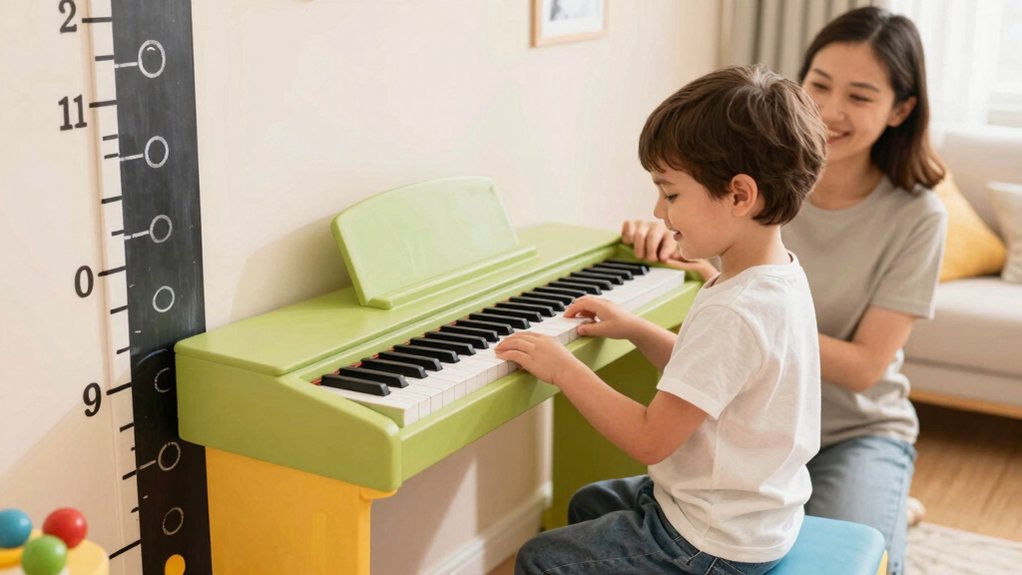
Choosing the right digital piano by age makes learning more engaging and sustainable. For toddlers, look for sturdy builds, large keys, and simple, color-coded functions that spark curiosity—these foster early musical confidence without frustration.
By early elementary years, prioritize lighter touch keyboards, built-in teaching modes, and engaging songs to reinforce practice habits.
In late elementary and preteen stages, seek dynamic articulation, varied sound profiles, and lesson features that support Music therapy-inspired goals, like rhythm therapy and emotional regulation through pattern repetition.
Prioritize durability and simple Digital piano maintenance routines, so kids can own their equipment with minimal worry.
Tailor options to development, not just popularity, ensuring sustained motivation and meaningful, educational play.
Conclusion
You’ll grab a kid-friendly piano that’s practically unbreakable, and suddenly their practice sessions feel like a blockbuster concert tour. With shock-proof casings, kid-sized keys, and built-in learning modes, you’ll watch skills explode faster than a rocket. Apps and peripherals become your backstage crew, turning every drill into a game-changing moment. Durable, fun, and educational isn’t just a claim—it’s your new household superpower, making every jam session feel like a triumph you can actually brag about.