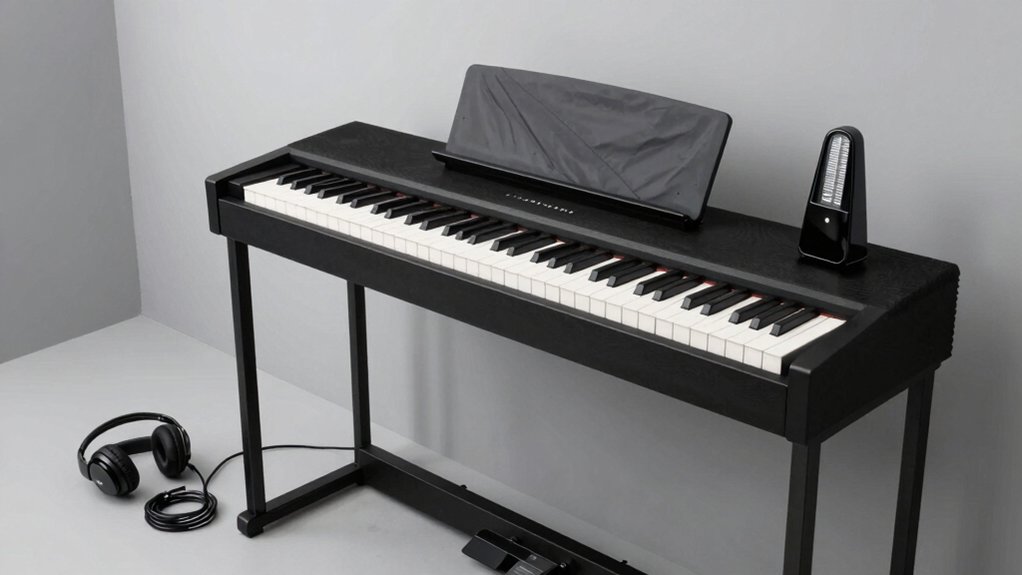
When you’ve just purchased a digital piano, you might think you’re ready to start playing immediately, but the right digital piano accessories can make the difference between frustrating practice sessions and genuinely enjoyable musical progress. Investing in quality digital piano accessories isn’t just about convenience – the proper bench height affects your posture and technique, a sturdy stand prevents wobbling during dramatic passages, and decent headphones protect your hearing whilst letting you practise at any hour without disturbing the neighbours.
When you get a new digital piano, you’ll want a few solid basics first: a stable stand, a reliable sustain pedal, and a music stand to keep sheets visible. Add decent headphones or powered speakers for practice, and a dust cover to protect the keys. If you’ll record or need smoother sessions, consider an ergonomic bench and a USB interface later. Start with the essentials, then layer in options as your goals become clearer.
Start Here: Essential Digital Piano Accessories
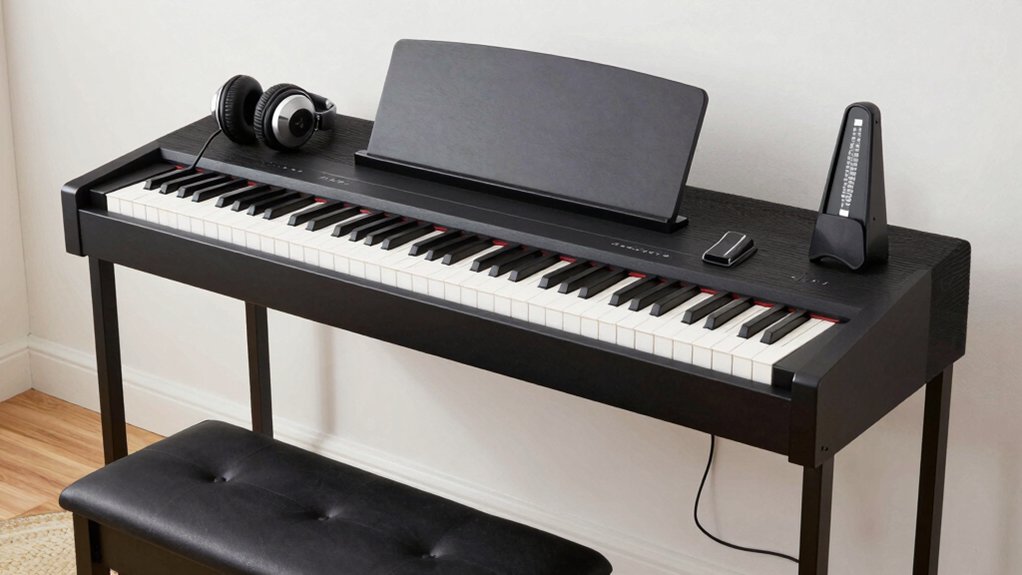
Getting your digital piano off to a strong start means choosing the right accessories from the outset. You’ll want a practical setup that supports steady practice and quick references.
Start with a stable stand to ensure consistent touch and posture, then add a reliable music stand to keep sheet music visible without crowding the keys.
A sturdy power supply with appropriate voltage protection reduces unexpected shutdowns, while a basic sustain pedal can be used temporarily if you don’t have one yet.
Consider a compact dust cover for the keyboard when not in use and a MIDI/USB cable if you plan to connect to a computer or app.
Finally, organize sheet music and lesson materials in a designated spot for easy access.
Choose a Sustain Pedal and Bench You Can Trust
After setting up a stable stand, music stand, and reliable power, you’re ready to pick a sustain pedal and bench that won’t hold you back.
- Check pedal compatibility with your digital piano’s jack type and polarity to avoid grounding issues.
- Prioritize a half-pedal function if you rely on expressive subtleties for slow passages.
- Test bounce and resistance; a medium stiffness typically suits varied dynamics without fatigue.
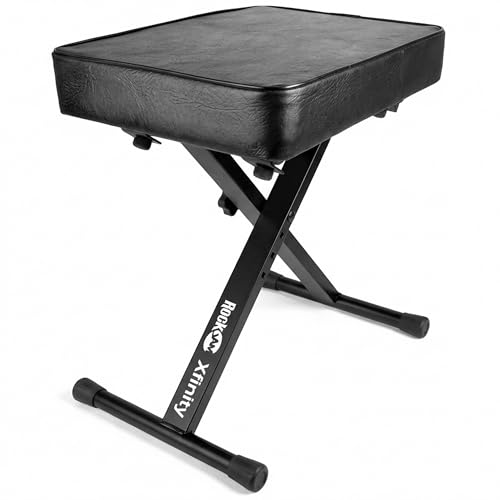
Choose a bench with adjustable height and front-to-back seating to optimize posture.
– Evaluate bench ergonomics: ensure knee clearance, comfortable hip angle, and stable, non-slip legs.
These choices prevent discomfort, enhance control, and keep your technique consistent across practice sessions.


Headphones or Speakers: How You’ll Practice
Choosing your practice audio setup hinges on how and where you’ll play. You’ll decide between headphones for solo sessions and speakers for shared spaces or family rooms.
If you value quiet, lightweight closed-back headphones with secure fit reduce fatigue during long practices.
For room-filling sound, compact powered speakers offer broader dynamics without cranking up the piano’s internal volume. Pay attention to impedance and amplifier compatibility to avoid distortion at higher levels.
If you lean toward digital workflow, mp3 compatibility lets you audition backing tracks and exercises outside your piano’s onboard library.
Bluetooth connectivity can simplify cabling, but ensure latency is minimal to keep timing accurate.
Prioritize a setup that travels easily and preserves touch feel while delivering clear tonal guidelines for progress.
Upgrades to Smooth Practice and Recording
To smooth practice and recording, add targeted upgrades that blend seamlessly with your workflow and gear. You’ll want solutions that stay dependable and don’t clutter routes between your piano and playback setup. Focus on tools that boost consistency, protect your keyboard, and ensure easy integration with existing accessories, keeping piano maintenance in mind.
Check accessory compatibility before buying to avoid mismatches or extra adapters. Prioritize durability, low latency, and straightforward wiring so practice sessions stay efficient and recordings stay clean.
- Dampening mats and bench upgrades that reduce fatigue
- USB audio interfaces with robust drivers for stable recording
- Sustain pedals with selectable polarity and reliable connection
- USB-C or 3.5mm MIDI cables that match your gear
- Laptop/tablet stands that keep screens within quick reach


Budgeting by Goal: Prioritize Accessories for Your Path
Budgeting by goal means you map your purchases to your practice and recording ambitions, not just the latest gadget hype. You’ll prioritize items that directly improve outcomes, then defer ancillary buys until you’ve hit clear milestones.
Begin with a music stand that fits your space and a cleaning kit to prolong keyboard life; these basics prevent wasted effort chasing performance gains from cosmetic upgrades.
Next, quantify your needs: how often you play, record, or teach? Allocate funds to reliability, not novelty.
If you photo- or video-record, invest in a stable stand and proper cable management.
Avoid overbuying: chances are you can borrow or upgrade later. Track costs versus progress, reallocate savings when improvements arrive.
Reassess quarterly, trimming or expanding as your path becomes clearer.
Conclusion
You’ve got the piano—now pick the essentials first: solid stand, reliable sustain pedal, and a sturdy bench. Add headphones or powered speakers to suit your practice space, then consider a dust cover and a basic USB interface or ergonomic options as your needs grow. Stay practical: buy reliable, basic gear first, upgrade gradually, and align choices with your goals. The more you pin down your setup, the more your playing will improve—and your enjoyment will follow, almost enchantingly.
Essential digital piano accessories can transform your playing experience. Discover must-have stands, benches, pedals, headphones, and covers to protect your investment and enhance comfort and performance.