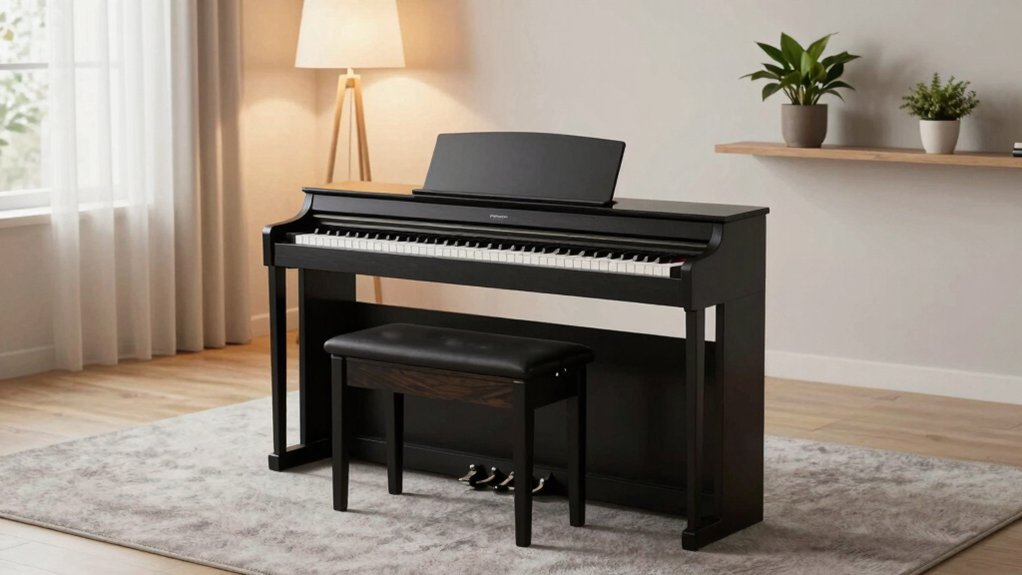
Choosing the best digital piano for home use means balancing authentic feel, sound quality, and practical features for your space. You’ll want weighted, graded hammer action, rich sound with natural decay, and reliable build quality, plus speakers or headphones that suit your room. Consider connectivity like MIDI and Bluetooth for growth, and decide how many keys and pedals fit your practice needs. Start with your room and budget, then compare models that meet those criteria to narrow the field.
What’s the Best Way to Choose a Home Digital Piano?
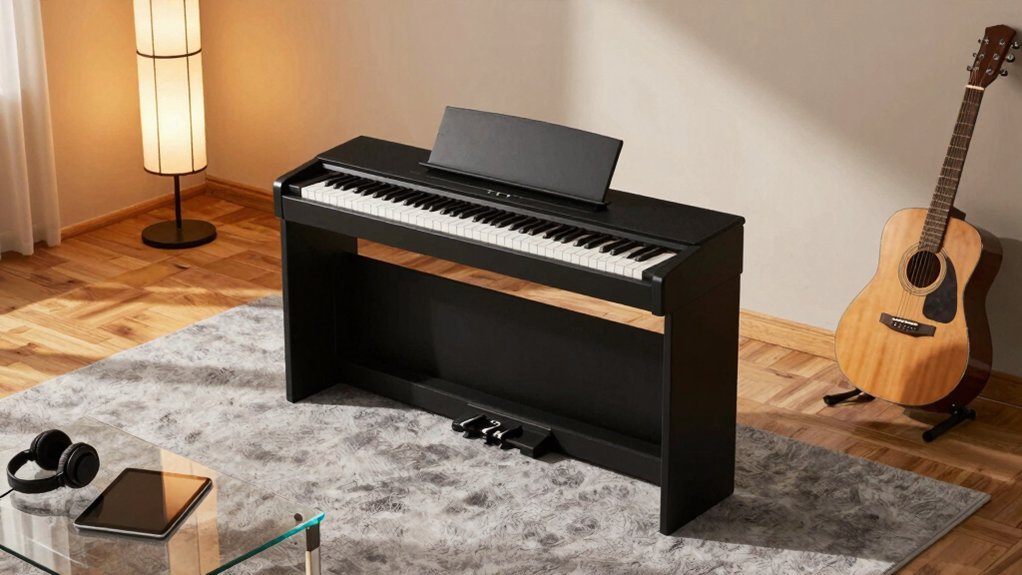
Choosing a home digital piano isn’t about chasing the latest feature list; it’s about matching an instrument’s feel, sound, and size to your space, playing style, and goals.
To select effectively, evaluate keyboard action, built-in sounds, and speaker quality against your room’s acoustics and volume needs. Consider your typical repertoire and whether you’ll play silently with headphones or aloud for social settings.
Prioritize models with reliable digital piano maintenance guidance, accessible firmware updates, and durable keys.
For beginners, follow beginner digital piano tips such as starting with a realistic touch, practicing consistency, and using metronome features to build rhythm.
Compare model ranges, warranty terms, and customer support responsiveness.
Finally, test in-store or via reputable demos to verify tactile comfort and sonic clarity before purchase.
How Does Weighted Action Differ From Light-Action Keyboards?
Weighted action mimics the feel of an acoustic piano by adding resistance and a noticeable hammer-like response.
Light-action keyboards prioritize quick, lighter keystrokes with minimal tactile feedback.
This difference shapes touch sensitivity and dynamic control, influencing how you express nuance in tempo, tone, and articulation.
Consider how these nuances align with your practice goals and the genres you play when evaluating home-use options.
Weighted Action Nuances
When you press a weighted-action key, the keyboard simulates the heavier feel of an acoustic piano by using heavier hammer weights and mechanical weights in the action. This contrasts with light-action keyboards that have lighter springs or sensors.
In practice, weighted actions deliver higher resistance and slower return, aiding dynamic control and expressive nuances across velocity ranges. You’ll notice more consistent key weighting across the keyboard and better alignment with touch response, especially for practice in legato passages and repeated notes.
Digital piano brands often calibrate graded weighting to mimic acoustic feel, though implementation varies. For home use, assess how key weight, return speed, and finger fatigue interact with your technique, ensuring reliable, repeatable touch across the instrument.
Light-Action Keyboard Differences
Light-action keyboards use lighter springs or sensors to produce faster return and less resistance, which can feel sharper and more responsive for quick passages. In this section, you compare light-action to weighted action by focusing on touch sensitivity and key weight.
Light-action boards typically have lower key weight, translating to easier task switching between chords and rapid passages. However, the reduced resistance can lessen dynamic control at the pupil level, making expressive shading harder for some players.
Across models, you’ll observe variations in velocity curves, aftertouch behavior, and consistency of key feel across the keyboard. When evaluating, test how touch sensitivity responds to subtle articulation and how evenly key weight is distributed from the first to the last key. This helps determine if light-action meets your home-use needs.
What Tone Qualities Define a Great Home Piano Sound?
Great home piano tone blends more than just raw loudness; it hinges on balance, clarity, and natural harmonic content that tracks with your touch.
In evaluating piano tone, you should compare how notes decay, how timbre shifts with dynamics, and how pedal interaction alters sustain.
A high-quality sound quality feels coherent across registers, with consistent harmonic content from bass to treble. Look for even response: no lopsided brightness or dull patches when you alternate touch.
Harmonics should remain musical, not buzzy or overtly metallic at forte. Realistic string and hammer models typically produce a cohesive, expressive pedal legato.
The best home pianos deliver transparent, well-textured sound across playing styles, avoiding artificial processing that masks nuance in piano tone and sound quality. Avoid gimmicks; seek authenticity and control.
How Many Keys and Which Pedals Do You Really Need at Home?
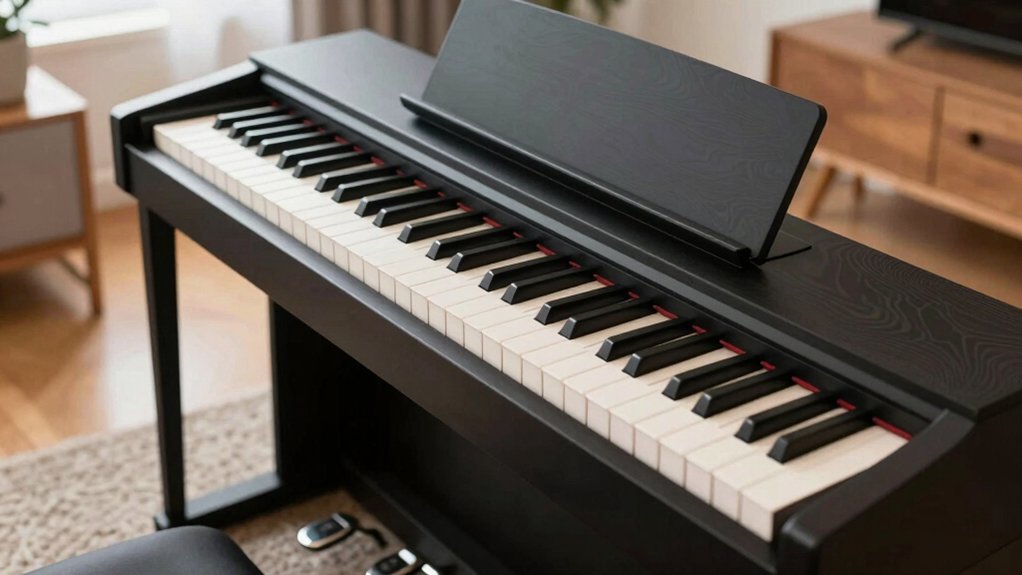
A home piano doesn’t need every feature, but the right combination matters: you’ll want enough keys and the right pedals to cover common playing needs without unnecessary extras.
In practice, most homes are best served by a 76- or 88-key layout, depending on your repertoire and comfort level. If you mainly play pop, jazz, or practice routines, 76 keys can suffice, saving space and cost.
For classical training or expanding repertoire, 88 keys better replicate standard pianos. When evaluating pedal options, aim for at least a sustain pedal, with optional soft and sostenuto pedals if you anticipate more nuanced phrasing.
Keyboard size impacts touch response and action compatibility, so test feel carefully. Prioritize a realistic weighted action over extraneous features to ensure reliable practice.
Which Listening Options Matter: Speakers, Headphones, and Connectivity?
When evaluating listening options for a home digital piano, prioritize sound quality and practicality by considering built-in speakers, headphone compatibility, and connectivity.
You’ll assess audio quality at typical home volumes, noting whether speakers deliver balanced mids and clear highs without distortion.
Headphone options matter for late-night practice; confirm impedance compatibility and included cables or adapters for your device.
Connectivity should support USB, MIDI, and Bluetooth where relevant, enabling easy integration with computers, tablets, or external amplifiers.
A flexible output setup lets you switch between speakers for daily playing and headphones for private practice without changing settings.
Your listening environment influences perceived performance; consider room size, furnishings, and noise levels to determine if built‑in speakers suffice or if external amplification is needed.
How to Judge Build Quality and Long-Term Reliability?
Building a digital piano you’ll rely on for years hinges on solid construction and proven reliability, so start by inspecting the chassis, keys, and pedal mechanism for uniform gaps, smooth travel, and absence of creaks. You should assess fit and finish, control panel sturdiness, and internal routing for signs of stress or loose components. Material quality matters: look for dense keyboard action, metal framing, and smooth, vibration-resistant housings.
Build durability hinges on consistent tolerances and tested switches, while long-term reliability rests on wear-rated parts and reputable vendors. Be mindful of warranty coverage and service availability.
1) Check chassis rigidity, keybed feel, and pedal play across pressing ranges.
2) Verify screw-secure assemblies and reinforced joints in high-stress areas.
3) Confirm materials and finish resist scuffs, moisture, and temperature fluctuations.
What Budget Fits Your Home and Use Case?
Budget determines not just price but usable features, portability, and long-term satisfaction, so start by mapping your space, playing time, and future needs.
You’ll want to align your budget with your use case, distinguishing essential from optional items. For home use, consider how often you’ll practice, whether you need headphone quiet, and if you’ll perform casually for guests.
Compare digital piano brands for consistency in key action, sound quality, and warranty terms. Look for beginner features that ease learning, such as layered sounds, metronome, and easy transposition, then evaluate upgrade paths as you improve.
Remember that cheaper models may save upfront money but limit expansion or resale value. Balance budget against reliability, after-sales support, and the likelihood you’ll actually use the instrument daily.


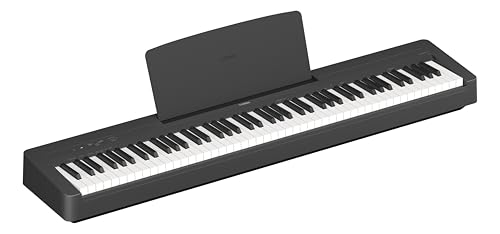


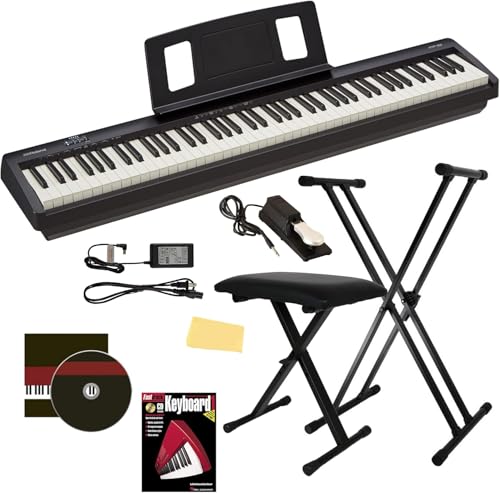
Where to Place a Digital Piano for Optimal Sound and Space?
Room acoustics shape how your digital piano sounds in the room, so consider wall materials, room size, and any nearby reflective surfaces.
Position the piano away from corners and angled walls to minimize bass buildup.
Aim for balanced speaker-like output by adjusting distance from walls and, if needed, adding a slightly dampening rug or curtains.
Start with a central placement in a moderate-sized room and test from typical listening spots to guide adjustments.
Room Acoustics Matters
Placing a digital piano correctly can considerably improve its overall sound and your playing experience. Room acoustics directly affect perceived tone, depth, and clarity, so you should consider how the space shapes sound reflection and diffusion. Even small adjustments can change resonance and balance across registers.
- Position relative to walls: keep at least a short distance from walls to reduce harsh sound reflections and prevent boomy bass.
- Use furniture and soft materials: curtains, rugs, and cushions absorb excessive reflections, yielding more accurate mids and highs.
- Avoid corners and open doorways: corners amplify low-frequency buildup, while doorways create inconsistent reflections during play.
Test your setup by playing a wide range of notes and listening for even response and clarity.
Speaker Placement Tips
Good speaker placement can dramatically improve the digital piano’s overall sound, balance, and perceived clarity. To optimize your setup, position the instrument away from walls and corners to minimize bass buildup and standing waves.
Aim for ear level or slightly above, so outputs align with your listening position. Use a sturdy, level stand or bench to prevent vibration transfer that muddies sound.
If you have adjustable speakers or a monitor system, angle them inward by about 15 degrees toward your listening spot to enhance sound dispersion. Avoid covering vents or ports that affect airflow.
Consider room acoustics—soft furnishings soften reflections, while reflective surfaces can create harsh echoes. Regularly reassess placement as furniture or decor changes.
Speaker placement directly influences perceived detail and balance.
Essential Connectivity: MIDI, Bluetooth, and App Control
Connectivity is central to modern digital pianos, and understanding MIDI, Bluetooth, and app control helps you access recording, learning, and playback capabilities. You’ll gain reliable integration with music software and clear access to recording features, ensuring smooth workflow for home use.
1) MIDI compatibility for external devices and sequencing
2) Bluetooth and app control for wireless lesson apps and playback
3) Onboard and external storage options to preserve sessions
This approach remains objective and detail-oriented, focusing on practical implications rather than marketing language. You’ll evaluate latency, compatibility with common music software, and the balance between built-in features and expandable options, ensuring you choose a setup that aligns with learning and recording goals.
Consider how app control can streamline practice, while MIDI continuity supports future studio expansion without overcomplicating your home setup.
Practical Buyer Checklist: Must-Have Features for Home Use
A home-use digital piano should center on practical, repeatable criteria you can verify before purchase. You’ll assess keyboard action for weight, consistency, and a true pianissimo to fortissimo range, prioritizing weighted or graded hammer actions if you play classical repertoire. Look for dynamic response that matches your touch, plus a reasonable key count and backlit controls for low-light practice.
Connectivity matters, but prioritize reliable power, quiet operation, and firmware stability over flashy apps. Consider speaker quality and headphone compatibility for late-night practice.
Evaluate build durability and footprint to suit your space. Understand digital piano maintenance needs, including periodic calibration and software updates.
Compare beginner vs advanced models openly, ensuring you select a model that scales with your growing skill.
How to Test and Compare a Digital Piano in Your Space
To test and compare a digital piano in your space, start by evaluating how it fits physically, acoustically, and ergonomically. Consider footprint, height, bench alignment, and reachable key range. Then assess how the instrument’s sound projects in your room with or without headphones.
Next, compare touch feel, key weighting, pedal response, and interface usability under typical practice conditions. Finally, test sound customization options, speaker quality, and headphone isolation to verify consistent output across styles.
Use objective criteria and note any glare or resonance, as these affect long-term comfort and accuracy.
1) Measure and compare dimensions, stand stability, and chair alignment.
2) Evaluate tactile response, dynamic range, and pedal feel across programs.
3) Test room acoustics, headphone performance, and sound customization settings.
Conclusion
At a glance, you’ll notice what you’ve been seeking aligns with what you already own: space, budget, and playing style. Coincidence nudges you toward weighted keys if you practice daily; it nudges you toward built-in speakers if you rehearse in a living room. Your future self taps the Bluetooth and MIDI, revealing that the right model grows with you. In the end, the best home digital piano matches your room, your routine, and your evolving musical goals.