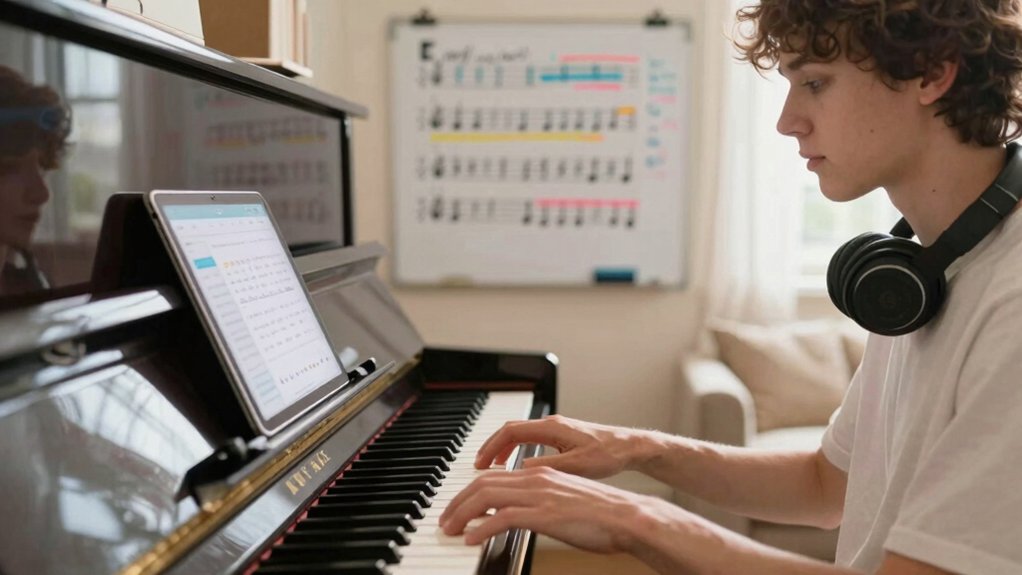
In today’s digital age, many aspiring pianists wonder: can you learn piano with apps alone, or is a traditional flesh-and-blood teacher still essential for developing proper technique and musicality? The question of whether you can learn piano with apps alone has become increasingly relevant as companies like Simply Piano, Flowkey, and Yousician promise comprehensive piano education at a fraction of the cost of private lessons, but the reality is more nuanced than their marketing suggests.
Did you know that apps can teach you rhythm and basic technique faster than you might expect, yet they can’t capture subtle musical expression or adapt to your evolving needs? You’ll likely start with structured drills and instant feedback, but you’ll still face limits in pacing, phrasing, and nuanced interpretation. This tension invites a practical blend: use apps for fundamentals while seeking occasional human guidance to deepen musicality and adjust goals as you progress.
Can You Learn Piano With Apps Alone? What They Fix and What You’ll Still Need From a Teacher
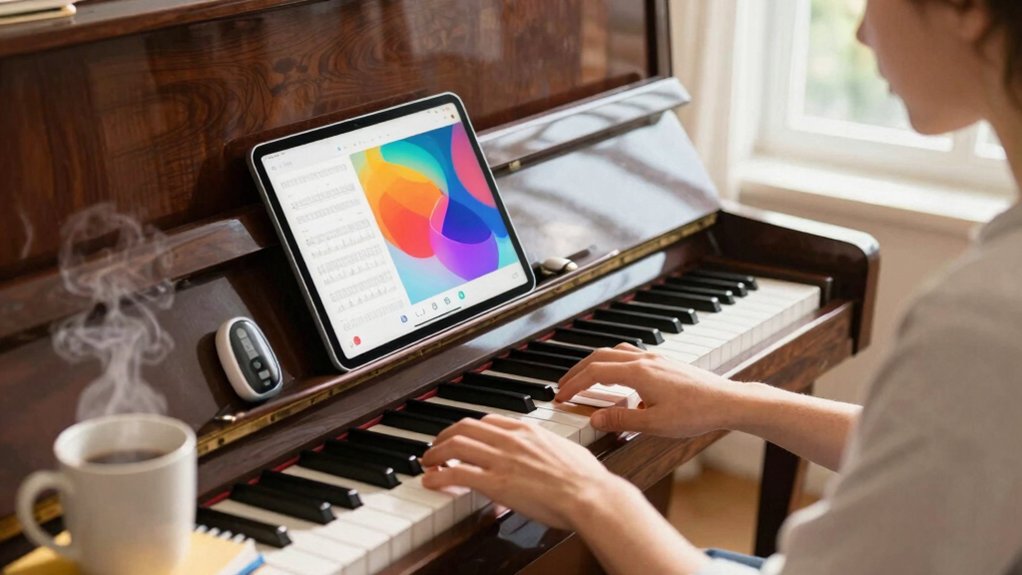
While apps can teach fundamentals and provide structured practice, they don’t fully replace a teacher. You’ll gain clear routines, immediate feedback, and scalable drills, but a live instructor narrows blind spots and personalizes pacing.
Apps fix technique basics, timing, and repetition errors through guided exercises, yet they can miss subtle musical cues, phrasing, and expressive goals. You’ll still need repertoire guidance, targeted repertoire selection, and human input on interpretation.
With a teacher, you develop musical intuition by sensing nuance, balance, and gestural energy beyond metrics. Apps can bolster performance confidence by tracking progress, but feedback from a skilled mentor translates to stage-ready choices and emotional communication.
Use apps to complement, not substitute, professional mentorship for holistic growth.
How Apps Teach Rhythm, Posture, and Technique in Practice
Rhythm training apps provide immediate feedback on timing and consistency, helping you refine beat emphasis and tempo control with measurable data.
Posture in practice is supported by guided cues and ergonomics tips that reduce strain and improve reach, so you can sustain technique longer without sacrificing form.
Technique through games translates complex motions into engaging challenges, turning repetition into purposeful practice and making progress trackable.





Rhythm Training Apps
Rhythm training apps guide you through timing and feel with structured drills, feedback, and real-time metronome cues. You’ll map rhythm patterns to tempo, refine subdivisions, and compare accuracy across attempts, forming a data-driven path to steadier tempo control.
Evidence suggests that immediate cues bolster consistency and transfer to performance contexts. Visual feedback helps you see mis-timings and adjust wrist and hand movement in real time, while progressive difficulty calibrates complexity to your skill level.
Use these tools to distinguish pulse from groove and to internalize meter. By isolating rhythm components, you can measure improvement without conflating technique.
- Visual feedback enhances error awareness and correction
- Tempo control evolves with adaptive metronome pacing
- Pattern repetition supports consistency
- Objective scoring guides progression
Posture In Practice
In practice, posture matters as much as timing when learning piano, and apps that guide you through rhythm training often extend their feedback to alignment and body mechanics. You’ll notice that effective practice sequences pair metronome cues with cues about arm, wrist, and finger positions, reinforcing consistent posture.
Evidence-based interfaces analyze tendencies like shoulder elevation or overly tense hands, then prompt micro-adjustments that reduce strain and improve control. Hand positioning emerges as foundational: apps visualize finger angles, encourage relaxed grip, and promote gradual wrist motion to maintain fluidity between notes.
Sight reading techniques benefit from stable posture too, because steady alignment supports line-by-line scanning and minimizes unnecessary head or torso movement. Consistent, posture-aware sessions translate rhythm accuracy into reliable technical execution over time.
Technique Through Games
Games can translate rhythm, posture, and technique into engaging, bite-sized challenges, turning practice into feedback loops that reinforce correct feel and timing. In this approach, apps scaffold technique by pairing metronome hits with hand position cues, guiding you to adjust weight, fingerings, and relaxed tension. You’ll train rhythm through responsive prompts, while posture feedback highlights alignment shifts that impact tone and efficiency.
- Ear training drills tied to scale patterns and dynamics
- Real-time tempo adjustments to sharpen timing precision
- Improvisation techniques using guided motif development
- Posture and hand-position cues that prompt quick corrective data
This method emphasizes measurable progress, data-informed adjustments, and practical transfer to repertoire, rather than abstract theory alone. Evidence supports short, focused sessions for motor learning and consistency across pieces.
Assessing Your Starting Point and Setting a 12-Month Plan
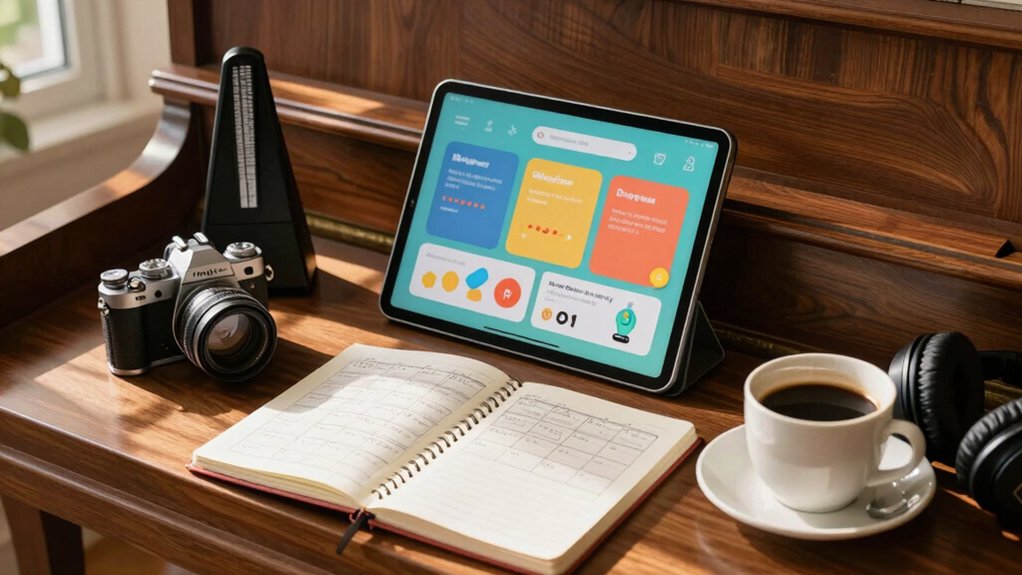
To start, you should assess your current piano abilities and habits before planning a full year of study; this baseline helps you set realistic milestones and choose the right learning modes. You’ll map your skills across technique, rhythm, and musical ear, noting strengths and gaps with specific examples.
Use short, objective benchmarks—two scales cleanly, a 60-second sight-reading test, a simple piece at a chosen tempo. Then translate findings into a 12-month plan with quarterly targets and varied practice modes (apps, structured drills, and occasional real-piano sessions).
Ground your schedule in evidence: alternate focus blocks, deliberate repetition, and periodic reassessment. Expect gradual gains in performance confidence as consistency grows, and adjust goals if you plateau or overreach.
Maintain concise records to track progress and remaining challenges.
Balancing App Practice With Real-Piano Sessions
You’ll want a clear balance between app-based practice and real-piano sessions to build both accuracy and musicality.
Start with a data-informed ratio—for many students, a 60/40 split (apps to real piano) supports feedback loops without neglecting touch and dynamics.
Track progress with quick checks after each week to adjust the mix based on what you’re actually improving.
App-Based Practice Balance
Balancing app-based practice with real-piano sessions is essential for steady progress. You’ll optimize outcomes by blending digital drills with tangible touch, timing, and expressiveness. Apps can guide technique and tempo, while real keys reinforce tactile feedback and musical phrasing. Evidence suggests structured variety sustains engagement and reinforces concepts.
- Alternate short app sessions with longer, focused piano practice to lock in motor memory
- Use app prompts to spark musical improvisation before translating ideas to the keyboard
- Schedule dedicated sight reading strategies practice on real piano to connect notation with sound
- Track progress across both domains to adjust difficulty and maintain balanced growth
This approach emphasizes measurable improvement, practical skill transfer, and ongoing evaluation for reliable advancement.
Real-Piano Session Mix
Real-piano sessions provide tactile feedback and musical phrasing that digital drills can’t fully replicate, making them essential for converting app-based gains into tangible skill. You balance app practice with real-piano sessions by scheduling short, focused runs that target specific motion patterns, touch consistency, and phrasing.
Evidence suggests that hands-on repetition strengthens neural pathways differently than screen-based drills, improving transference to live performance. Use real-piano time to calibrate rhythm, dynamics, and pedal technique, then validate progress back in the app.
Integrate music theory prompts during sessions to anchor patterns to harmonic context, strengthening improvisation techniques later. Track outcomes with objective metrics—tempo stability, note accuracy, and dynamic range.
A deliberate mix reduces cognitive load, sustains motivation, and accelerates overall musical development.
Choosing Piano App Features That Fit Your Goals
Choosing piano app features that fit your goals means matching what the app can offer with what you actually want to achieve. You’ll assess features through an evidence-based lens, prioritizing measurable outcomes over hype.
Focus on how tools support consistent practice, musical expression, and progression tracking. Consider modules for technique, repertoire, and feedback quality, then map them to your target milestones. Use data like tempo accuracy, repetition success, and time spent on tasks to guide decisions.
A practical approach helps you avoid feature overload and wasted sessions.
- Align features with your concrete goals (technique, repertoire, improvisation techniques)
- Check feedback clarity and actionable guidance
- Favor adjustable difficulty and measurable progress
- Prioritize tools that enhance musical expression without sacrificing fundamentals
Overcoming App Limits: Developing Listening and Expressive Playing
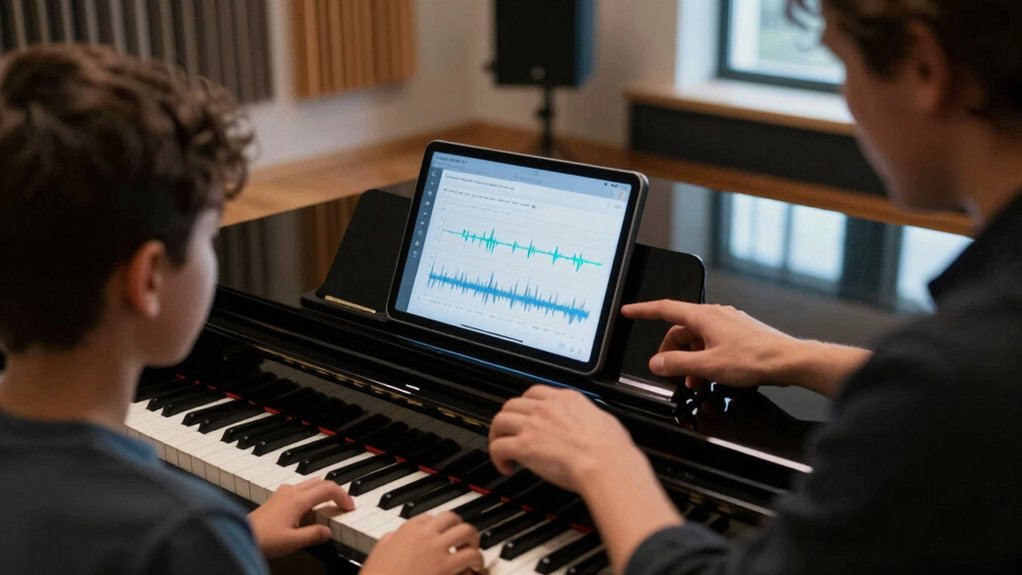
Even with well-chosen features, many piano apps fall short on listening development and expressive playing, so you’ll need targeted strategies that work beyond built-in modes. You’ll engage ear training outside the app by slow-minging melodies, transcriptions, and interval drills, then verify with playback comparisons.
Focus on expressive nuance by rehearsing dynamics, tempo rubato, and tonal color in short, repeatable phrases, not just scales. Use a deliberate practice approach: isolate listening tasks, measure improvement, and adjust difficulty weekly.
Pair app guidance with live feedback from a teacher or recording yourself to spot subtle timing and tone gaps. Track progress with concrete metrics—precision of intervals, accuracy of chord tones, and consistency of dynamic shaping.
This evidence-based mix strengthens listening acuity and expressive capability beyond platform constraints.
Designing a Practical, Hybrid Practice Routine
A practical hybrid practice routine combines structured, evidence-based methods with flexible, real-time adjustments to fit your schedule. You’ll blend focused drills with expressive playing, ensuring steady progress without burnout. Prioritize short, consistent sessions, not marathon deep-dives, and calibrate intensity using objective benchmarks.
Integrate musical expression by pairing technical work with phrasing choices, recording yourself for objective critique. Build sight reading skills through daily, scalable challenges that advance as you improve.
- Schedule 20–30 minute blocks featuring a mix of technique, repertoire, and sight reading
- Alternate days between metronome-driven drills and expressive, musical phrasing practice
- Track progress with simple metrics, adjusting goals weekly
- Use app-guided feedback as supplementary insight, not primary judgment
Tracking Progress and Staying Motivated With Technology
Technology helps you track progress and stay motivated by turning practice into measurable, actionable steps. You’ll use built-in metrics from apps to monitor accuracy, tempo, and consistency, then set incremental goals that align with your long-term piano aims.
An evidence-based approach means prioritizing data you can interpretation: scores, reaction times in ear training, and milestones in music theory understanding. Regular dashboards highlight trends, so you spot plateaus early and adjust routines accordingly.
When motivation wanes, gamified rewards and streaks help sustain engagement without sacrificing precision. Be mindful of overreliance on metrics; couple quantitative feedback with qualitative reflection—what pieces feel easier, where expressive control improves.
In short, tech supports deliberate, informed practice, not a substitute for thoughtful musical decisions.
When to Seek Human Guidance to Deepen Musicality
If you’re deep into practice and still struggle to move beyond a plateau, recognizing when to seek human guidance is essential for deepening musicality. You’ll gain external feedback on technique, musicality, and interpretation beyond self-assessment, with targeted strategies for growth.
- Identify persistent bottlenecks in technique or timing and request a focused session.
- Explore emotional expression and phrasing with a tutor who can tailor dynamic decisions.
- Test improvisation techniques under guidance to expand spontaneity and musical choices.
- Use feedback to design concrete practice objectives and measurable progress milestones.
Evidence-based approaches show guided critique improves transfer of skills to real performance, not just mechanics. Seek guidance when intrinsic cues stall, or when you want deeper stylistic fluency and confidence.
Conclusion
You’re building a bridge between screens and keys, but the river runs deeper than any app. The apps are your compass, pointing to rhythm, posture, and drills; your teacher is the current, shaping nuance and expressive pull. Use the tools as scaffolding, not the whole house. Your progress rests on balancing practice with real-piano sessions, listening, and feedback. When the music asks for depth, seek human guidance to illuminate what the light alone cannot reveal.