
The question “can a digital piano replace an acoustic” divides piano teachers, professional musicians, and serious students into passionate camps arguing about tonal complexity, touch authenticity, and whether modern digital technology has finally crossed the threshold from “adequate substitute” to “legitimate alternative” for genuine piano learning and performance. The honest answer depends critically on your specific context—playing level, musical goals, practice environment, and budget reality—since digital pianos solve genuine problems that acoustic instruments cannot address (volume control, zero maintenance, portability) while acoustic pianos provide organic tonal depth and mechanical responsiveness that digital technology continues approaching but hasn’t fully replicated
Statistics show that digital pianos are now the most common classroom keyboards, yet many teachers worry they’ll miss essential touch and tonal nuance. You’d weigh practical benefits—price, portability, built‑in features—against the authentic feel and dynamic response of an acoustic. The evidence suggests a blended approach works best for beginners and practice, but for advanced performance, the piano’s physical and psychoacoustic feedback remains influential. If you’re deciding, consider how you’ll balance access with long‑term musical development.
Digital vs Acoustic: Which Fits Your Teaching Goals?
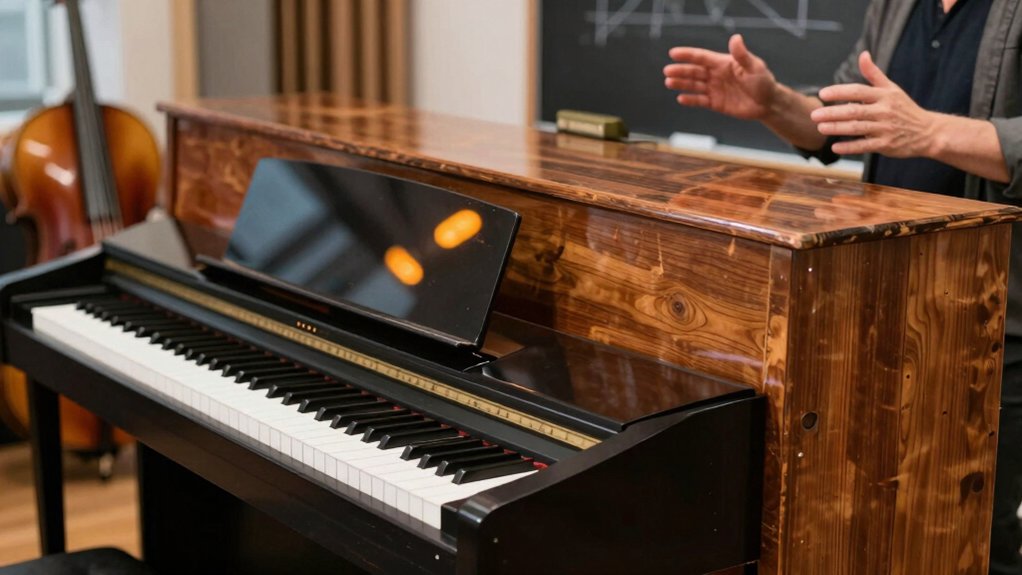
Digital pianos and acoustic pianos each offer distinct advantages for teaching, and the best choice hinges on your instructional goals and your students’ needs. You’ll consider how touch response, expressiveness, and feedback align with curriculum objectives.
Digital models enable standardized practice routines, algorithmic assessment, and portable setups for group or remote lessons, while acoustics provide a natural touch response and nuanced tonal color that support psychoacoustic development.
Evaluate your repertoire focus, whether you emphasize technique, ensemble readiness, or performance auditioning.
For instrumentation and tech integration, prioritize Stylus compatibility and MIDI connectivity to streamline lesson plans, recording, and interface with classroom software.
The evidence suggests a blended approach often yields flexibility, scalability, and consistent practice outcomes without sacrificing pedagogical depth.
Can Digital Pianos Reproduce Teaching Touch and Dynamics?
To compare how teaching touch and dynamics translate to digital pianos, we can build on the earlier discussion of fit between digital and acoustic instruments and focus on perceptual and pedagogical outcomes.
You evaluate how key weight, velocity response, and graded hammer action influence student perception of expressive intent, tempo, and phrasing. Evidence shows variable replication of touch fidelity across models, with some digital keyboards offering advanced sensitivity but less consistent reproducibility under diverse playing styles.
Pedagogically, you should emphasize structured practice that leverages consistent dynamic cues while acknowledging perceptual gaps. Consider keyboard ergonomics when designing assignments that minimize strain and maximize accurate feedback.
Ensure digital connectivity supports teacher-driven demonstrations and real-time correction, reinforcing robust motor learning and transferable technique.
What Teachers Value: Tone, Feel, and Longevity in Practice
Tone, feel, and longevity shape how teachers assess instrument utility in practice, with tone guiding expressive intent, feel aligning with motor expectations, and longevity ensuring consistent performance over time. You evaluate tonal fidelity as a proxy for musical honesty, prioritizing harmony across repertoire and ensemble contexts.
You value touch sensitivity and dynamic range that map to pedagogical objectives, enabling clear contrasts between articulation and phrasing. Longevity matters for classroom consistency, lesson continuity, and cost efficiency, reducing maintenance distractions and ensuring reliable practice sessions.
Portability enters as a practical constraint when scheduling sessions or transporting instruments between rooms, yet shouldn’t compromise core tonal and tactile standards. Evidence shows teachers favor instruments delivering stable action, accurate intonation, and minimal latency, supporting efficient pedagogy and durable skill development.


Digital Pianos as a Beginner Gateway: Pros, Cons, and Best Bets
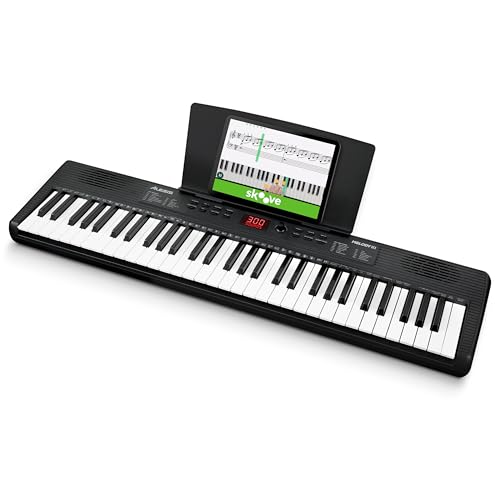
Digital pianos can offer approachable beginner features, realistic touch and sound within a smaller budget. But you’ll need to weigh how these translate to long-term technique and repertoire.
Look for graded action, dependable reliability, and clear build quality to support consistent practice. While recognizing that some models may sacrifice nuance for value.
Start with a plan that maps your goals, budget, and necessary accessories to avoid gaps as you progress.
Beginner-Friendly Features
Beginner-friendly features matter because they directly shape initial engagement and long-term practice habits. When you evaluate digital pianos, you’ll notice how design choices support early learning, from key action to interactive aids. Effective models provide reliable visual feedback and structured practice modes, which guide your technique and routine formation.
A learner-centered instrument emphasizes immediate correction, clear metronome signals, and accessible tutorials, reducing plateaus and frustration. Evidence suggests that consistent, goal-oriented feedback accelerates key learning and builds confidence in beginners. Pedagogy-informed features encourage exploratory practice while promoting correct posture and fingering.
Your choice should align with your current goals, practice time, and preferred learning style.
- Clear key action and tactile response
- Built-in visual feedback and progress tracking
- Structured practice modes and lesson plans
- Compact, durable, and affordable design
Sound And Touch Realism
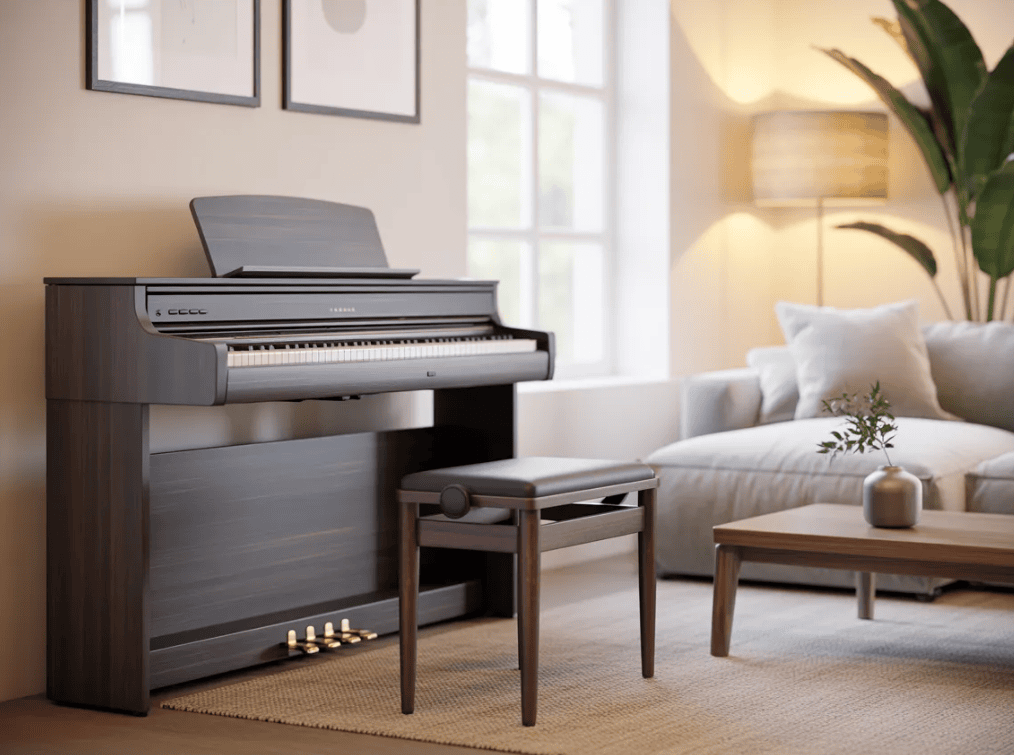
Sound and touch realism in digital pianos matters because it directly influences early technique development and musical confidence. You evaluate keyboard action closely, since responsive keys shape your finger independence, dynamics, and posture.
In practice, weighted or graded hammer action better simulates acoustic feel, supporting consistent rebound and touch control from the first scales to expressive phrases. Pedagogical studies show that realistic touch reduces maladaptive grip and timing errors, aiding clearer articulation.
Speaker quality matters too, because audible feedback reinforces correct dynamics and phrasing; transparent, balanced amplification helps you hear subtle tonal changes without distortion.
However, differences remain among models, so you should test feel and sound together, prioritizing actions that stay stable across velocity ranges and speakers that faithfully reproduce tonal nuance during structured exercises.
Budget And Accessory Needs
Balancing cost with educational value matters more than chasing the newest model when you’re just starting out. You’ll want a digital piano that delivers reliable touch and sound without overspending, focusing on evidence-based needs for beginners.
A clear cost comparison helps you avoid hidden fees from upgrades or subscriptions, and guides you toward durable, beginner-friendly choices that support steady progress. Consider essential accessories and how they impact practice quality, not just price.
Prioritize features with proven pedagogy benefits—pedal compatibility, sustained tone, and responsive keys—over flashy extras. Your budget should align with instructional goals, ensuring you can sustain regular practice and track improvement.
- Cost comparison essentials
- Accessory essentials
- Pedagogy-aligned features
- Long-term value over novelty
Real-World Outcomes: Practice Habits, Progress, and Performances
Real-world practice outcomes show how the two instruments shape day-to-day habits, progress over weeks, and on-stage performance quality. You’ll notice digital pianos often support consistent schedules due to headphone options and classroom-friendly volume, while acoustic practice demands structured routines to prevent fatigue and sustain tone quality.
Evidence suggests finger strength develops through repetitive scales and Chopin-like passages, with acoustic touch more directly correlating to dynamic control. Sight reading improves under structured tempo changes and tactile feedback, though keyboards with graded hammer action aid transferability.
Progress markers align with deliberate practice: measurable tempo increases, accuracy, and expressive judgments during performances. You can expect comparable gains in musical literacy when you combine guided repertoire with regular, goal-driven rehearsal.
Budget, Maintenance, and Long-Term Implications for Families
When families weigh digital vs acoustic pianos, budget, upkeep, and long-term costs become pivotal considerations. You’ll weigh upfront price against maintenance, tuning, and resale value, then project long term investment.
Evidence shows digital pianos lower ongoing costs and require less frequent service, but instrument longevity and touch fidelity influence long term satisfaction. You’ll also consider depreciation, replacement cycles, and potential for shared use across multiple generations.
Balance these cost considerations with pedagogy needs, ensuring programs stay supported without surprises. With careful comparison, you can align purchase with child development timelines and lesson frequency, clarifying what constitutes a sound long term investment for your family.
- Upfront cost vs ongoing maintenance
- Tuning, padding, and digital longevity
- Depreciation and resale potential
- Access to pedagogy-focused features
How to Decide: A Practical Checklist for Your Situation
To decide you’ll start with a practical, evidence-based checklist that maps family constraints to piano needs. You’ll compare play frequency, space, budget, and noise tolerance, then align them with features like keyboard versatility and lesson logistics.
Consider your daily routine: how often will you practice, who else uses the room, and what times are feasible for quiet play? Assess portability options if you move apartments or travel for lessons, and weigh maintenance demands against long-term costs.
Prioritize touch sensitivity, reliable amplification, and headphone compatibility for focus and feedback. Evaluate pedagogy compatibility: can the instrument support your current curriculum and teacher goals?
Use objective benchmarks—velocity curves, key action, metronome reliability—to avoid buyer’s remorse. Choose the model that balances performance with your ongoing instructional needs.
Conclusion
You’re weighing practicality against artistry, and the evidence points to a blended path. Digital pianos excel for practice, assessment, and access, but they can’t fully replace acoustic touch, tone, and dynamic nuance for advanced work. Use digital systems to scaffold technique and repertoire, while reserving acoustic experiences for authentic touch and performance development. Prioritize pedagogy-driven decisions, monitor progress, and revisit your strategy as needs evolve—one instrument alone won’t, but together they propel steadier, deeper musical growth. It’s a superpower sandwich.