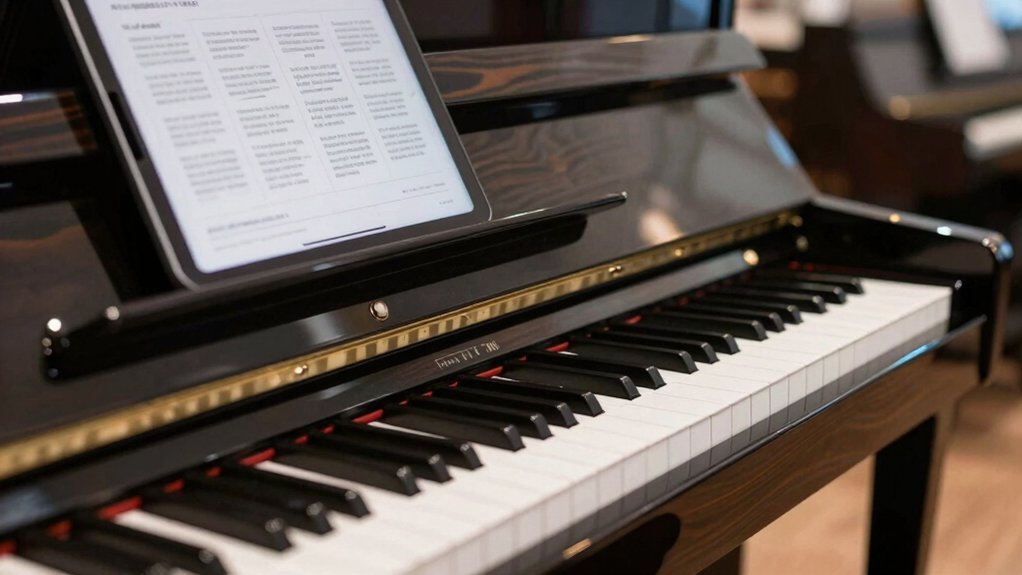
This digital piano buying guide cuts through marketing jargon and overwhelming options to reveal the specific features, specifications, and quality benchmarks that separate exceptional instruments from disappointing purchases. Whether you’re a complete beginner unsure about key action types, an intermediate player seeking upgrade value, or a parent navigating confusing price ranges, understanding weighted keys, sound engines, polyphony counts, and connectivity requirements determines if your investment supports or frustrates musical development. I’ll show you exactly which features matter for your skill level, which specifications manufacturers inflate to justify higher prices, and how to match your budget to models that deliver genuine long-term value.
You’re shopping for a digital piano, but the real value isn’t in glossy specs or flashy demos. How stable are the keys over time, and does the velocity mapping stay consistent as you play louder or softer? What about firmware updates, hidden costs, and service support that actually backs the warranty? There’s more beneath the surface, and spotting the gaps could change what you end up with—if you’re willing to look beyond the marketing hype.
Build Your Shortlist: A Practical Framework
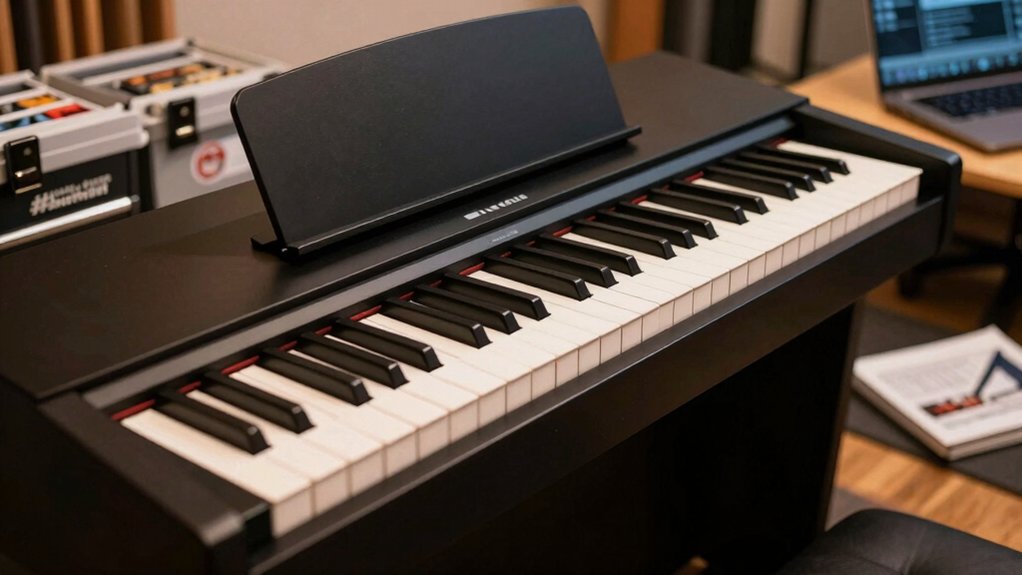
To build a practical shortlist, start with clear criteria you can test against. You’ll test feel, response, and consistency across models, but you’ll also quantify quieter pedals, sampling quality, and firmware updates.
Ask hard questions: does the keyboard action match your fingers, and is the wrist posture tolerable over long sessions? Compare keyboard ergonomics features, such as keyweight, travel, and spacing, and verify they align with your playing style.
Seek objective data: velocity curves, noise floors, and latency figures. Judge aesthetic appeal not as a vanity metric but as how likely you’re to practice daily without distraction.
Filter out models that fail repeatable checks, then map remaining options to budget, support, and upgrade paths. Your shortlist should balance technical merit with real‑world usability, avoiding hype.


Evaluate Touch and Let-off on a Digital Piano
Evaluating touch and let-off on a digital piano demands a skeptical, data-driven eye: how does the action feel across models, and do the mechanical nuances behind the keys actually mirror real pianos?
You should quantify key travel, resistance, and repeatability, then compare against weighted benchmarks from true acoustic actions.
Focus on key sensitivity: does velocity translate predictably into sound or response, or does it wander at the extremes?
Let-off simulation bears scrutiny too: is the reset point consistent, and does any simulated feel resemble the soft release of an acoustic hammer?
Ask manufacturers for test data, and verify it with your own measurements if possible.
Inquire about maintenance impact, calibration options, and long-term stability to avoid buying on looks alone.
Logic over charisma wins here.
Playback Matters: Piano Tones to Headphone Experience
As you move from scrutinizing touch to listening, the real test shifts from what the keys feel like to how the piano tone comes through your headphones. You’ll evaluate whether the digital piano reproduces dynamics, timbre, and transient clarity without sounding synthetic. Do you hear natural decay, believable harmonic content, and consistent response across registers, or does the tone thin out at volume?
Pay attention to headphone quality, since poor cans exaggerate mismatches between sampled tone and output. Data suggests some models maintain tonal balance with closed-back headphones, while others reveal compression artifacts or layering artifacts when driving loud.
Question whether the instrument preserves nuances during pedal depression and chordal density. In short, the right tone delivery hinges on accurate sampling, synthesis, and a headphone setup that won’t mask deficits.
Hidden Costs and Warranty Quirks for Digital Pianos
Hidden costs and warranty quirks can quietly shape the total price of ownership, so don’t skim past the fine print. You’ll likely encounter gaps between advertised coverage and real-world needs, plus fees that quietly inflate the bill. Do the math before you commit, and treat manufacturers’ warranties as living documents, not marketing fluff.
Hidden costs aren’t just repair fees; consider shipping, setup, compatibility, and required accessories that aren’t included. You deserve data-driven clarity, not assurance-speak.
Here are four points to probe:
- Warranty length vs. what’s covered (and what isn’t)
- Required maintenance, calibration, or software updates
- Possible service centers and return policies
- Additional costs for accessories, replacements, and shipping
Match Your Playing Style: Practice, Genre, and Performance Needs
Matching your playing style isn’t a vibes check—it’s a necessity. You’ll want to map practice routines, genre demands, and performance contexts to the piano’s feel.
Ask how pedal sensitivity responds under sustained legato vs. staccato passages, and whether the sustain behaves like a real instrument or a digital approximation. Consider how key material influences touch across dynamic intensities and velocity layers; feel matters when you switch from jazz comping to classical scales.
Data points matter too: response latency, consistency across the keyboard, and noise during quiet passages. Validate by testing in a room similar to performance spaces, with headphones and amplification.
In short, align hardware response with your technique, repertoire, and stage expectations to avoid mismatches later.


Conclusion
So you’ve read the guide, but will you trust every claim brands trumpet? Consider this: studies show key feel and velocity accuracy vary more across models than price tiers—yet many buyers don’t test them thoroughly. Do you know how firmware updates stabilize sound over years or how long the warranty actually covers service? Look beyond specs, quantify your practice needs, and demand transparent maintenance costs. Your choice should be data-driven, not marketing-led, with your playing style in sharp focus.
Use this digital piano buying guide to prioritize weighted hammer action, minimum 64-note polyphony, and established brand reliability over flashy features like excessive voice counts and light-up keys that add cost without improving your playing experience. The specific price ranges, feature requirements, and model recommendations I’ve outlined ensure you invest appropriately for your current skill level while choosing instruments that accommodate years of advancement without premature limitations. Match your budget to realistic practice commitment, focus on touch and sound quality over quantity of features, and purchase from retailers offering solid return policies—then your digital piano will serve your musical journey faithfully for a decade or more.