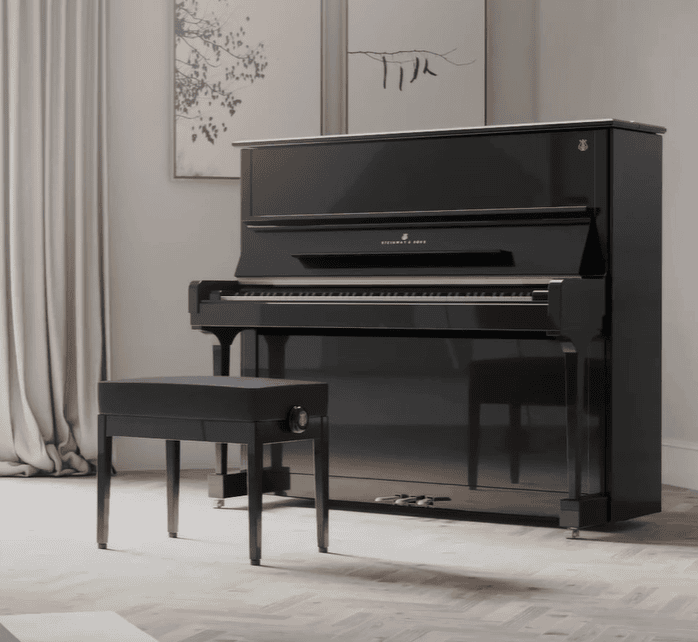
Steinway Upright Piano Price: 2026 New & Used Guide
What Are Steinway Upright Pianos and Their Price Range?
When you first encounter a Steinway upright piano, the experience is visceral—the cabinet’s meticulous craftsmanship, the responsive action under your fingers, and that unmistakable warmth in the treble that’s been the hallmark of Steinway & Sons since 1853. As a professional pianist who’s spent decades performing on everything from concert grands to teaching studio uprights, I can tell you that Steinway’s vertical pianos occupy a unique position in the market: they’re not merely space-saving alternatives to grands, but instruments in their own right with distinct tonal personalities.
Steinway produces upright pianos ranging from 45 inches to 52 inches in height, designed primarily for discerning home pianists, serious students, teaching studios, and smaller performance venues where a grand simply won’t fit. The current lineup includes the Model 4510 (45 inches), the legendary Model 1098 (46.5 inches), and the flagship Model K-52 (52 inches). Each embodies Steinway’s commitment to handcrafted excellence, featuring the same solid spruce soundboards, premium hard rock maple pin blocks, and painstaking action regulation that goes into their concert grands.
In 2026, new Steinway upright piano prices typically range from approximately £32,000 to £40,000 ($40,000 to $50,000 USD) at authorized dealers, with the exact cost depending on model, finish, and customization options. Used and pre-owned Steinway uprights command prices from roughly £8,000 to £25,000 ($10,000 to $32,000 USD), influenced by factors including age, condition, restoration history, and provenance.
This price positioning reflects not just brand prestige—though Steinway’s reputation certainly commands a premium—but genuine quality differentiators. These instruments feature labor-intensive construction techniques that simply can’t be replicated by mass-production methods, resulting in pianos that typically appreciate in value when properly maintained, unlike most consumer goods.
New Steinway Upright Piano Prices by Model
The 2026 pricing landscape for new Steinway uprights reflects broader economic trends, including material cost increases, labor market pressures, and the continuing effects of post-pandemic supply chain adjustments. Steinway & Sons implemented price increases averaging 4-6% annually over the past three years, a trend expected to continue as the company maintains its artisan production methods whilst facing rising costs for premium materials like Sitka spruce, hard rock maple, and various exotic wood veneers.
Purchasing a new Steinway upright means you’re acquiring an instrument that’s been handcrafted over approximately six to twelve months, with each piano receiving individual attention from master craftspeople at either the Astoria, New York facility or the Hamburg, Germany factory. This bespoke approach ensures consistent quality but also drives pricing well above mass-produced alternatives.
Model Breakdown & Pricing Table
Here’s the current 2026 pricing structure for new Steinway upright models at authorized dealers:
| Model | Height | Ebony Satin MSRP | Ebony Polish MSRP | Premium Finishes |
|---|---|---|---|---|
| 4510 | 45″ | £35,000-£37,000 | £37,500-£40,000 | £42,000-£55,000+ |
| 1098 | 46.5″ | £36,000-£38,500 | £38,500-£41,500 | £43,000-£58,000+ |
| K-52 | 52″ | £39,000-£42,000 | £42,000-£45,000 | £47,000-£65,000+ |
Important pricing notes:
- Finish variations: Ebony satin represents the entry point, whilst ebony polish adds approximately £2,500-£3,000 due to the additional labor-intensive hand-rubbing process. Premium finishes like mahogany, walnut, santos rosewood, or exotic veneers can add £5,000-£20,000+ depending on rarity and complexity.
- Spirio | r technology: Adding Steinway’s sophisticated player system to any upright model increases the price by approximately £18,000-£24,000, transforming your instrument into a high-resolution playback and recording device.
- Custom options: Special case designs, art case editions, and bespoke inlays can dramatically increase pricing, sometimes exceeding £100,000 for truly unique commissions.
- Geographic variation: Prices can fluctuate by 5-10% based on regional market conditions, dealer overhead, and local import duties (particularly relevant for Hamburg-manufactured instruments shipped internationally).
Authorized Dealers for New Purchases
Steinway maintains strict authorized dealer networks to ensure proper sales practices, delivery, and post-purchase service. You’ll find Steinway & Sons Piano Galleries in major cities worldwide, alongside select independent authorized dealers who’ve met rigorous standards for showroom facilities, technical expertise, and customer service.
When purchasing new, I strongly recommend visiting multiple dealers if possible. Pricing is generally consistent due to Steinway’s minimum advertised price policies, but dealers often differ in their willingness to include value-adds like extended tuning packages, humidity control systems (essential for instrument longevity), or upgraded bench options. Additionally, the relationship you build with your dealer matters tremendously—you’ll be working with their technicians for years of tuning, regulation, and potential repairs.
Used and Pre-Owned Steinway Upright Prices
The used Steinway upright market represents excellent value for pianists seeking that distinctive Steinway tone and build quality whilst managing budget constraints. I’ve personally purchased several pre-owned Steinways over the years for various teaching studios, and when you find the right instrument—properly maintained or professionally restored—the difference in musical satisfaction far exceeds the price differential.
The secondary market for Steinway uprights is particularly robust because these instruments, when maintained, genuinely improve with age. The soundboard seasoning process, the settling of the cast iron plate, and the gradual compression of felt components all contribute to tonal maturation that many pianists prefer over the brighter character of brand-new instruments.
Prices by Model & Condition
Used Steinway upright pricing varies considerably based on model, age, condition, and restoration status. Here’s a realistic market overview for 2026:
| Model | Age Range | As-Is Condition | Good Condition | Restored/Rebuilt |
|---|---|---|---|---|
| 4510 | Pre-1980 | £8,000-£12,000 | £12,000-£16,000 | £18,000-£24,000 |
| 4510 | 1980-2000 | £10,000-£14,000 | £14,000-£18,000 | £20,000-£26,000 |
| 1098 | Pre-1980 | £9,000-£13,000 | £13,000-£17,000 | £19,000-£26,000 |
| 1098 | 1980-2000 | £11,000-£15,000 | £15,000-£19,000 | £21,000-£28,000 |
| K-52 | Pre-1980 | £12,000-£16,000 | £16,000-£21,000 | £23,000-£30,000 |
| K-52 | 1980-2000 | £14,000-£18,000 | £18,000-£23,000 | £25,000-£32,000 |
| K-52 | 2000-2015 | £18,000-£23,000 | £23,000-£28,000 | £28,000-£35,000 |
Condition definitions:
- As-Is: Original components showing age-appropriate wear; playable but may need action regulation, voicing, or minor repairs within 1-2 years.
- Good Condition: Well-maintained with consistent tuning history; action responsive; minor cosmetic imperfections; likely needs regulation/voicing soon.
- Restored/Rebuilt: Professional restoration including new strings, hammers, dampers, action refurbishment, refinishing, and comprehensive regulation.
Restored vs. As-Is Value
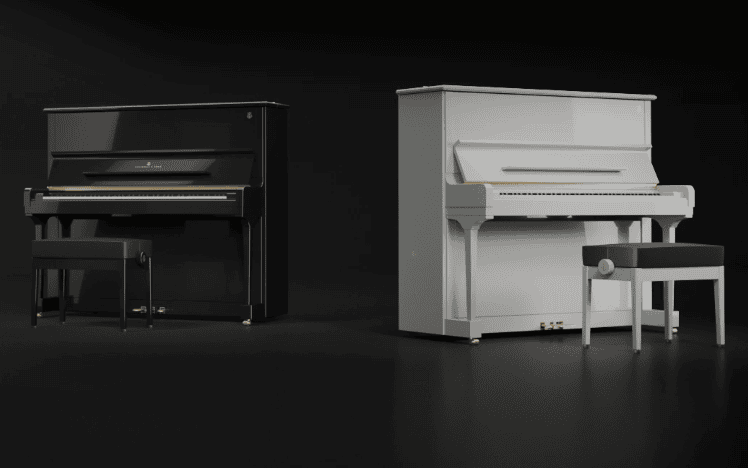
This is where experience becomes invaluable. A properly restored Steinway upright represents extraordinary value—essentially a “new” piano at 50-70% of current retail pricing. Professional restoration typically includes:
- Complete restringing with premium wire
- New hammers (often Renner or Abel premium felt)
- Action rebuilding with new bushings, springs, and felts
- Damper system renewal
- Soundboard repair or replacement if necessary
- Pin block evaluation and potential replacement
- Complete refinishing
- Comprehensive regulation and concert-quality voicing
Quality restoration adds approximately £5,000-£12,000 to market value, but the resulting instrument often plays better than many new pianos due to the matured soundboard and the obsessive attention lavished by restoration specialists. I purchased a 1967 Model 1098 that had undergone full restoration in 2019 for £22,000—it outperforms new uprights costing £40,000+ in tonal complexity and dynamic range.
The caveat: not all “restorations” are equal. Always request detailed documentation, including before/after photos, itemized work lists, and technician credentials. Ideally, have an independent Registered Piano Technician (RPT) evaluate any restored instrument before purchase.
Historical Price Trends by Year
Understanding depreciation and appreciation curves helps identify value opportunities:
| Decade Built | Typical 2026 Value Range | Notable Characteristics |
|---|---|---|
| 1950s-1960s | £10,000-£22,000 | Pre-Teflon era; desirable actions; often need restoration |
| 1970s | £11,000-£24,000 | Teflon bushings (controversial); excellent soundboards |
| 1980s-1990s | £13,000-£26,000 | Modern specifications; approaching “vintage” sweet spot |
| 2000s-2010s | £18,000-£32,000 | Contemporary quality; lower depreciation curve |
| 2015-2020 | £25,000-£38,000 | Nearly new; minimal savings vs. current retail |
Steinway uprights generally depreciate steeply for the first 10-15 years (approximately 40-50% value loss), then stabilize and even appreciate modestly (2-4% annually) if maintained properly. Instruments from the 1950s-1970s, if restored, often command premium pricing due to tonal characteristics many pianists prefer.
Steinway Upright Models: Specs, Sizes & Comparisons
Steinway’s current upright lineup offers three distinct sizes, each engineered for specific acoustic priorities and spatial constraints.
The Model 4510 (45 inches/114 cm) represents Steinway’s most compact vertical piano. Despite its smaller cabinet, it features a surprising bass response thanks to clever soundboard design and extended string lengths. I’ve encountered many pianists who dismiss the 4510 as “just a practice piano,” but when properly voiced, it offers remarkable tonal balance for smaller teaching studios or apartments where every inch matters. The trade-off is reduced volume projection and slightly less sustain in the bass register compared to taller models.
The Model 1098 (46.5 inches/118 cm) occupies the sweet spot in Steinway’s upright range—it’s been in continuous production since the late 19th century for good reason. The additional height provides longer bass strings and increased soundboard area, translating to richer fundamental tones and improved dynamic range. This is the model I recommend most frequently for serious students and teaching professionals. Its proportions deliver approximately 80-85% of what the larger K-52 offers acoustically, at a meaningfully lower price point.
The Model K-52 (52 inches/132 cm) represents Steinway’s flagship upright, originally designed for European markets (hence the “K” designation, from the German “Klavier”). With the longest strings and largest soundboard area in the upright lineup, the K-52 approaches grand piano territory in terms of tonal depth and sustain. I’ve performed chamber music recitals on well-prepared K-52s that genuinely rivalled smaller grands in musical satisfaction. The bass register, in particular, exhibits a gravitas that smaller uprights simply cannot achieve.
Critical comparison: Even the finest Steinway upright cannot replicate the true grand piano experience—the horizontal string orientation, larger soundboard, and different action geometry of grands produce distinct tonal characteristics and touch responses. However, Steinway uprights dramatically outperform comparably-priced Asian-manufactured instruments (Yamaha U-series, Kawai K-series) in terms of tonal complexity, harmonic richness, and aging potential, whilst competitors like Bösendorfer and Bechstein offer different tonal philosophies at similar price points.
Key Factors Influencing Steinway Upright Piano Price
Beyond model and condition, several variables significantly impact Steinway upright pricing:
Finish complexity: As mentioned, ebony represents the standard, but mahogany, walnut, cherry, and exotic wood veneers add substantial costs due to material rarity and finishing labor. Art case pianos—those featuring ornate carvings, inlays, or custom designs—can command multiples of standard pricing.
Restoration quality: Not all piano restoration is equivalent. Work performed by Steinway-trained technicians or recognized master rebuilders (Faust Harrison, Mohr & Mohr, Piano Craft) commands premiums due to documented quality and warranty backing. Conversely, amateur or incomplete restoration actually diminishes value.
Geographic location: Urban markets (London, New York, Los Angeles) typically price 10-20% higher than regional markets due to overhead costs, whilst also offering greater selection. International shipping adds £2,000-£5,000+ for properly crated transcontinental transport.
Provenance: Instruments with documented histories—particularly those owned by notable musicians, institutions, or recording studios—command premiums. Concert hall retirements or institutional sales often offer better value due to professional maintenance histories.
Market timing: Piano prices fluctuate seasonally, with softer pricing typically appearing in January-March and September-October as dealers seek to reduce inventory before fiscal quarters end.
New York vs. Hamburg Uprights
Steinway operates two factories: Astoria, New York (serving the Americas and Asia) and Hamburg, Germany (serving Europe, Middle East, and parts of Asia). Though Steinway insists both facilities produce identical instruments, pianists and technicians often detect subtle differences.
Hamburg Steinways generally exhibit slightly warmer, more European tonal characteristics with pronounced singing treble, whilst New York instruments tend toward brighter, more projecting voices suited to American concert halls and jazz contexts. These differences stem from minor material sourcing variations (different spruce forests, European vs. American hard rock maple), manufacturing tradition differences, and distinct tonal finishing philosophies.
Pricing remains comparable between factories, though import duties and shipping costs can create 5-10% differences depending on destination market.
Maintenance & Resale Value Projections
Steinway uprights, unlike most consumer goods, genuinely appreciate in value when properly maintained. Annual tuning (minimum twice yearly, ideally quarterly for serious use), humidity control (42-55% relative humidity year-round), and periodic regulation ensure optimal performance and value retention.
Well-maintained Steinway uprights appreciate approximately 3-4% annually—roughly tracking inflation whilst preserving purchasing power. Neglected instruments depreciate rapidly as action degradation, soundboard cracks, and pin block deterioration require expensive repairs that can exceed the piano’s market value.
Factor £300-£500 annually for professional maintenance, plus £1,500-£3,000 every 15-20 years for major action servicing. These costs pale compared to the £15,000-£25,000 depreciation experienced by poorly maintained instruments.
Best Places to Buy a Steinway Upright Piano
Purchasing a Steinway upright requires more strategic consideration than most musical instrument acquisitions due to price levels and longevity expectations.
Authorized Steinway dealers offer new instruments with full factory warranties, financing options, and established service relationships. Expect fair but firm pricing—Steinway’s dealer agreements largely eliminate price negotiation, though value-adds (tuning packages, benches, humidity control systems) remain negotiable.
Specialized piano retailers dealing in quality pre-owned instruments provide curated selection with reconditioning guarantees. Reputable dealers like Besbrode Pianos (UK), Piano Distributors (USA), or Piano Gallery (various locations) maintain technician-vetted inventory with transparent condition reporting.
Private party sales offer potential savings of 15-25% compared to dealer pricing but require sophisticated evaluation skills or hiring an independent RPT for pre-purchase inspection (£300-£500 well spent). Private sales eliminate dealer overhead but also warranty protection and return options.
Auction houses occasionally feature Steinways, particularly estate sales or institutional liquidations. I’ve witnessed exceptional values at regional auctions where limited piano expertise results in underpricing, but also catastrophically poor purchases when bidders confuse brand prestige with actual instrument condition.
Financing considerations: Many Steinway dealers offer financing through partners like Allegro Credit or Wells Fargo, with terms extending to 60-84 months at competitive rates for qualified buyers. For instruments exceeding £25,000, financing can make acquisition feasible whilst preserving capital for other investments.


Is a Steinway Upright Worth the Price? Pros, Cons & Alternatives
After three decades performing on hundreds of pianos worldwide, my honest assessment: Steinway uprights represent excellent value for pianists prioritizing longevity, tonal sophistication, and investment preservation—but they’re not universally the “best” choice.
Advantages: Unmatched build quality ensuring 50-100+ year lifespan with proper maintenance; tonal complexity and harmonic richness exceeding comparably-priced competitors; value appreciation rather than depreciation; comprehensive dealer service networks globally; prestige value for teaching studios and performance contexts.
Disadvantages: Significant upfront cost creating accessibility barriers; maintenance requirements (humidity control, professional tuning) exceeding casual instruments; limited tonal variety compared to European alternatives (Bösendorfer, Bechstein, Fazioli offer distinct sound philosophies); size constraints in smaller uprights still limit bass response compared to grands.
Alternatives worth considering:
Yamaha U1/U3 series (£8,000-£15,000): Exceptional reliability, brilliant tone suited to contemporary repertoire, lower maintenance requirements—but lacks Steinway’s tonal warmth and aging potential.
Bösendorfer uprights (£35,000-£55,000): Viennese singing tone, extraordinary bass response, comparable build quality—different tonal philosophy emphasizing transparency over warmth.
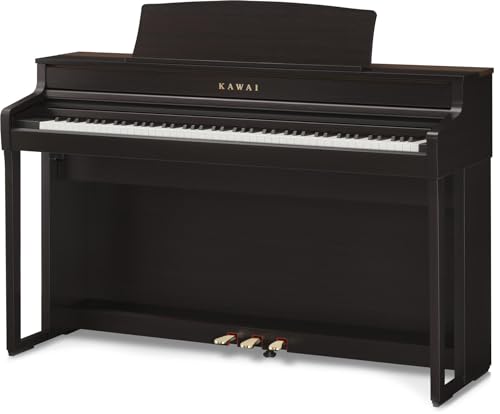
Kawai K-series professionals (£10,000-£20,000): Modern materials (ABS action parts), consistent quality, excellent value—less prestige, faster depreciation.
For serious pianists, teachers, or institutions where the piano serves as primary instrument, Steinway uprights justify their premium. For casual players, students likely to upgrade within 5-10 years, or those preferring contemporary tone colors, alternatives merit serious consideration.


Frequently Asked Questions (FAQ)
What is the price of a new Steinway upright piano?
New Steinway upright pianos range from approximately £35,000 to £45,000 for standard models in ebony finishes (2026 pricing). The Model 4510 starts around £35,000-£37,000, the Model 1098 ranges from £36,000-£38,500, and the flagship Model K-52 costs approximately £39,000-£42,000 in satin ebony. Premium finishes, polish upgrades, and custom options can increase pricing to £65,000+ for exotic wood veneers or art case designs.
How much does a used Steinway upright piano cost?
Used Steinway upright pianos typically range from £10,000 to £25,000 depending on model, age, and condition. Smaller Model 4510s in good condition from the 1980s-1990s might be found for £12,000-£16,000, whilst larger Model K-52s from the same era generally command £16,000-£23,000. Professionally restored instruments add £5,000-£10,000+ to these ranges, with exceptional examples approaching £30,000-£35,000.
What is the cheapest Steinway upright model?
The Model 4510 (45 inches) represents Steinway’s most affordable upright, starting around £35,000-£37,000 new in satin ebony finish. In the used market, pre-1980 Model 4510s in as-is condition can occasionally be found for £8,000-£10,000, though these typically require restoration investment. The 4510 offers genuine Steinway quality in the most compact, budget-conscious package within the current lineup.
Does a Steinway upright piano hold its value?
Yes, Steinway upright pianos generally hold value exceptionally well compared to most piano brands, and often appreciate modestly when properly maintained. Well-maintained instruments typically appreciate 3-4% annually, roughly tracking inflation. After initial 10-15 year depreciation (40-50% value loss), Steinway uprights stabilize and can even appreciate, particularly vintage instruments from desirable production eras (1950s-1970s) that have undergone professional restoration.
How does the Steinway 1098 price compare to the K-52?
The Steinway Model 1098 typically costs £2,500-£4,000 less than the K-52 for new instruments—approximately £36,000-£38,500 versus £39,000-£42,000 in standard ebony satin finishes. In the used market, this differential generally persists proportionally, with 1098s priced £2,000-£5,000 below comparable K-52s of similar age and condition. The 1098 offers exceptional value as it delivers approximately 80-85% of the K-52’s acoustic performance at meaningfully reduced cost.
How do I appraise the price of a Steinway upright piano?
Appraise Steinway upright value by first identifying the serial number (located on the cast iron plate near tuning pins), which determines manufacturing year via Steinway’s serial number database. Assess condition through professional inspection covering soundboard integrity, pin block tightness, action responsiveness, hammer condition, and finish quality. Compare to current market pricing for similar age/model instruments via Piano Buyer Annual Supplement, dealer listings, and completed auction results. Hiring a Registered Piano Technician (RPT) for pre-purchase inspection (£300-£500) provides definitive valuation.
How much does a Steinway upright with player system cost?
Steinway uprights equipped with the Spirio | r high-resolution player system add approximately £18,000-£24,000 to base pricing. A new Model K-52 with Spirio technology costs around £60,000-£65,000 in standard finishes, whilst a Model 1098 with Spirio ranges from £55,000-£60,000. The system enables playback of thousands of performances with extraordinary fidelity and provides recording capabilities, transforming the upright into a sophisticated musical tool and entertainment center.
What’s the best used Steinway upright under £15,000?
The best used Steinway uprights under £15,000 are typically Model 1098s from the 1970s-1990s in good original condition or Model 4510s that have undergone partial restoration. Focus on instruments with documented maintenance histories, original hammers showing moderate wear, tight pin blocks, and stable soundboards. This price range often captures excellent pianos requiring only regulation and voicing rather than major rebuilding, offering genuine Steinway tone quality at accessible pricing for serious students and teaching professionals.
Is buying a new or used Steinway upright better value?
Used Steinway uprights, particularly professionally restored instruments aged 20-50 years, generally represent superior value compared to new purchases. A properly restored 1980s Model K-52 costing £25,000-£28,000 often plays as well or better than a new K-52 at £42,000, whilst the seasoned soundboard provides tonal maturity that new instruments require decades to develop. However, new instruments offer full warranties, latest specifications, and the satisfaction of being first owner—valuable considerations for some buyers.
What alternatives to Steinway uprights offer comparable quality?
Bösendorfer upright models offer comparable build quality with distinctively transparent Viennese tone (£35,000-£55,000). Bechstein uprights provide German engineering excellence with brilliant, projecting voices (£30,000-£50,000). For those prioritizing reliability over prestige, Yamaha U-series professional uprights deliver exceptional consistency and contemporary tone (£8,000-£15,000). Shigeru Kawai uprights combine Japanese precision with premium materials approaching Steinway quality (£18,000-£30,000). Each offers distinct tonal philosophies and value propositions worth auditioning alongside Steinway.
Conclusion: Choose Your Steinway Upright Price Point
Whether you’re contemplating a new Model K-52 at £42,000 or hunting for that perfectly restored 1960s Model 1098 at £22,000, purchasing a Steinway upright represents an investment in musical excellence that transcends mere functionality. These instruments connect you to a lineage extending back to 1853, to countless concert stages, recording studios, and living rooms where musical magic has unfolded.
My recommendation: if budget permits, prioritize the largest model your space accommodates—the K-52’s additional height translates to meaningful musical advantages that compound over decades of ownership. In the used market, seek professionally restored instruments with documented work histories, even if this means stretching budget slightly beyond initially planned—the difference between a £12,000 as-is piano and an £18,000 restored instrument is profound in daily playing satisfaction.
Most importantly, play extensively before committing. Steinways exhibit individual personalities even within the same model—find the instrument that speaks to your musical sensibility, then negotiate from a position of informed confidence. Your Steinway upright, properly chosen and maintained, will likely outlive you whilst providing daily inspiration and, remarkably for a musical instrument, financial appreciation alongside musical enrichment.