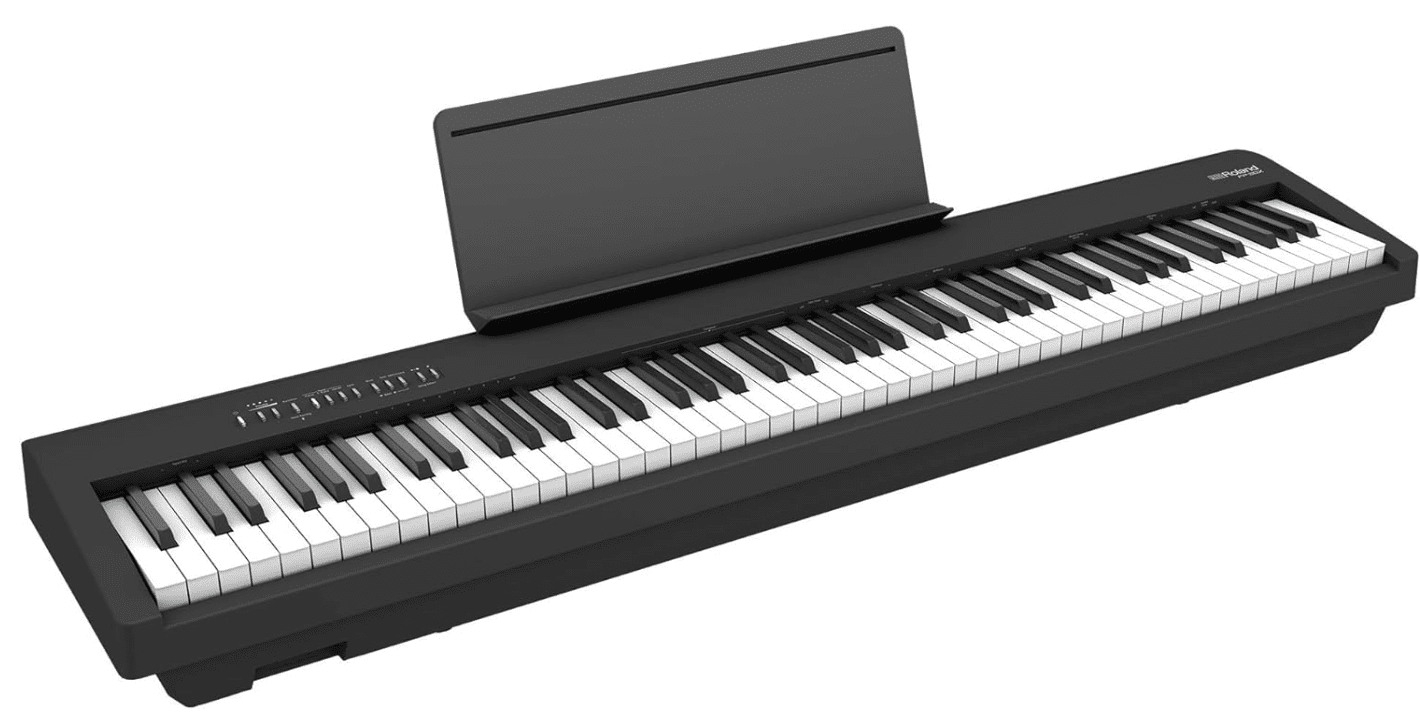
As an experienced digital piano player who has spent years exploring various instruments, I’m excited to share my insights on the Roland FP30X. This model, an update to the popular FP-30, has been making waves in the digital piano market since its release. Let’s dive into what makes this instrument stand out and where it might fall short for different types of players.
Design and Build Quality
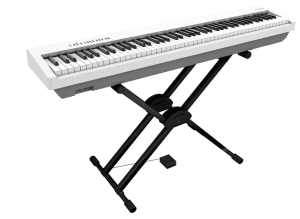
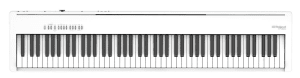
The Roland FP30X boasts a sleek, minimalist design that’s become synonymous with Roland’s digital piano line. Available in black or white, its clean lines and compact form factor make it an attractive addition to any home or studio setup. Measuring 51.2 inches wide, 11.2 inches deep, and 5.8 inches high, it’s remarkably slim for a full 88-key instrument.
Build quality is excellent, as we’ve come to expect from Roland. The casing feels sturdy and well-constructed, inspiring confidence in its durability. Despite its robust build, the FP 30X weighs in at just 31 pounds, making it one of the more portable options in its class. This combination of durability and portability is a significant advantage for gigging musicians or those with limited space.
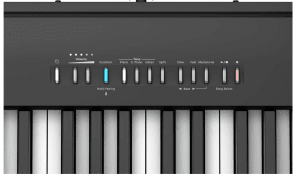
The control panel is simple and intuitive, with clearly labeled buttons and a small LCD screen. While some might prefer more on-board controls, the minimalist approach keeps the focus on playing and helps maintain the sleek aesthetic.
Key Action and Touch Sensitivity
One of the standout features of the FP30X is its PHA-4 Standard keyboard with Escapement. This is the same key action found in some of Roland’s higher-end models, which speaks volumes about the quality on offer here.
The keys have a satisfying weight and responsiveness that closely mimics the feel of an acoustic piano. The ivory-feel key surfaces provide excellent grip, even during extended playing sessions or in humid conditions. The escapement mechanism adds a subtle “notch” sensation when keys are pressed gently, replicating the feel of an acoustic piano’s action.
With 100 levels of touch sensitivity, players can fine-tune the keyboard’s response to their playing style. This level of customization is impressive and allows for a highly personalized playing experience.



Sound Quality
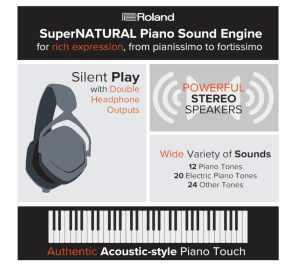
Roland has equipped the FP30X with their SuperNATURAL Piano sound engine, and the results are impressive. The piano tones are rich, dynamic, and highly expressive. The default grand piano sound is particularly noteworthy, offering a wide dynamic range and natural decay that responds beautifully to different playing styles.
Beyond the acoustic piano sounds, the FP-30X offers a variety of other instruments, including electric pianos, strings, organs, and more. While these additional sounds are generally good, they don’t quite reach the same level of realism as the acoustic piano tones. However, they’re more than adequate for practice or performance in various genres.
The 256-note polyphony ensures that even complex pieces with sustained notes and heavy pedaling can be played without any dropped notes. This is a significant improvement over its predecessor and puts the FP30X on par with many higher-end models.
Speakers and Audio Quality
The built-in speaker system, consisting of two 11-watt speakers, delivers surprisingly powerful and clear sound for a compact instrument. The speakers provide enough volume for personal practice and small room performances. The audio is well-balanced, with clear highs and a respectable low end, though it naturally lacks the depth and resonance of a large acoustic piano.
For silent practice or to achieve the best possible sound quality, the FP30X includes a headphone jack. When using good-quality headphones, the instrument really shines, revealing the nuances of its excellent sound engine.
Features and Connectivity
Roland has packed a impressive array of features into the FP30X. Some notable inclusions are:
- Bluetooth audio and MIDI connectivity
- USB to Host port for easy connection to computers or mobile devices
- Dual and Split modes for layering sounds or playing different instruments with each hand
- 30 built-in songs and a one-track recorder
- Metronome with adjustable tempo and time signatures
- Transposition and Master Tuning functions
The Bluetooth connectivity is a standout feature, allowing wireless connection to smart devices for using music apps or playing along with your favorite songs. This opens up a world of possibilities for learning and entertainment.
The USB port allows for easy integration with Digital Audio Workstations (DAWs) and virtual instrument software, making the FP30X a capable MIDI controller for studio use.
Learning and Practice Tools
For students and teachers, the FP30X offers several useful features. The Twin Piano mode splits the keyboard into two identical ranges, perfect for side-by-side lessons. The built-in recorder, while basic, is handy for self-evaluation or capturing ideas.
Roland’s Piano Partner 2 app extends the instrument’s capabilities, offering additional features like score-turning, recording, and interactive learning games. However, it’s worth noting that some users have reported stability issues with the app.
Value for Money
Priced in the mid-range for digital pianos, the Roland FP30X offers excellent value for money. It delivers professional-grade key action, impressive sound quality, and useful features at a price point accessible to serious beginners and intermediate players.
When compared to its competitors, the FP30X holds its own and often comes out ahead in terms of key action and sound quality. However, some rivals offer larger sound libraries or more extensive on-board features, which may appeal to certain users.
Pros:
- Excellent key action with the PHA-4 Standard keyboard
- High-quality SuperNATURAL Piano sound engine
- Compact and portable design
- Bluetooth audio and MIDI connectivity
- Powerful built-in speakers for its size
- 256-note polyphony
- Intuitive and simple control panel
- Good value for money
- Durable build quality
Cons:
- Limited on-board controls may not suit all users
- Non-piano sounds, while good, are not as impressive as the piano tones
- Basic one-track recorder
- Some users report issues with the companion app
- No pitch bend or modulation wheels for synth sounds
- Limited sound editing capabilities on the instrument itself
- No XLR outputs for direct connection to PA systems
- LCD screen is small and basic
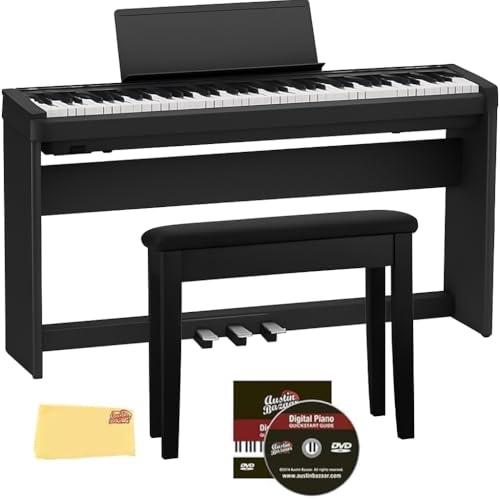
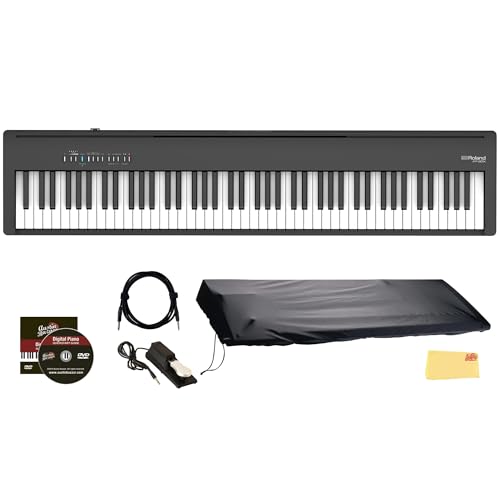
- Sustain pedal included is basic; upgrading to a better pedal or three-pedal unit is recommended for serious players
Wrapping Things Up
The Roland FP30X is a highly capable digital piano that punches above its weight in several key areas. Its standout features are undoubtedly the excellent key action and the high-quality piano sounds, both of which rival those found in much more expensive instruments.
For pianists focused primarily on piano playing, whether for practice, performance, or recording, the FP-30X is an excellent choice. Its realistic feel and expressive sound make it a joy to play, while its portability and Bluetooth connectivity add versatility for various playing situations.
However, for those looking for a wider range of sounds, extensive on-board features, or more detailed control over sound parameters, there might be other options worth considering. The FP30X prioritizes quality over quantity when it comes to sounds and features.
Beginners will find the FP30X to be an instrument they can grow with, thanks to its high-quality action and sound. Intermediate to advanced players will appreciate its nuanced expression and realistic feel, though some may wish for more extensive sound editing capabilities.
In conclusion, the Roland FP30x represents an excellent balance of quality, features, and value. It’s an instrument that can satisfy a wide range of players, from dedicated beginners to experienced pianists looking for a reliable digital piano for home use or gigging. While it may not tick every box for every player, its strengths in the most crucial areas of digital piano design make it a standout option in its price range.
Your next big decision is black or white option!