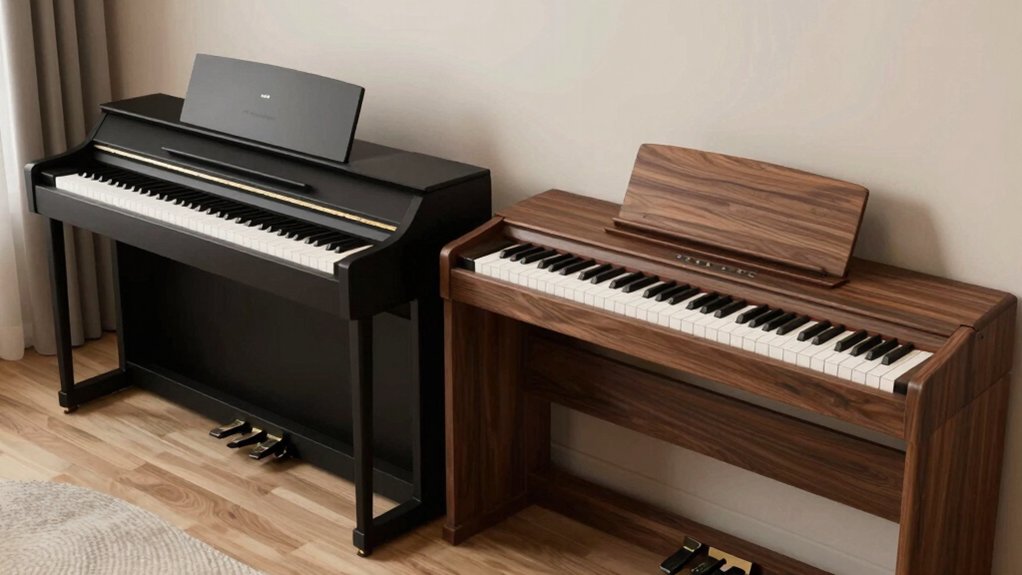
The debate between a stage piano vs digital piano centers on portability and purpose. Understanding this key distinction is essential.
Like two roads diverging in a showroom, a stage piano and a home digital piano pull you toward different priorities. You’ll weigh portability, rugged build, and quick setup against realism, stability, and long practice sessions. Your decision hinges on where and how you intend to play, and what feel you expect from the keys and sounds. Consider what matters most for your gigs, studio work, or quiet practice, and you’ll see the path forward clearly.
Which Is Right for You: Stage Piano or Home Digital Piano?
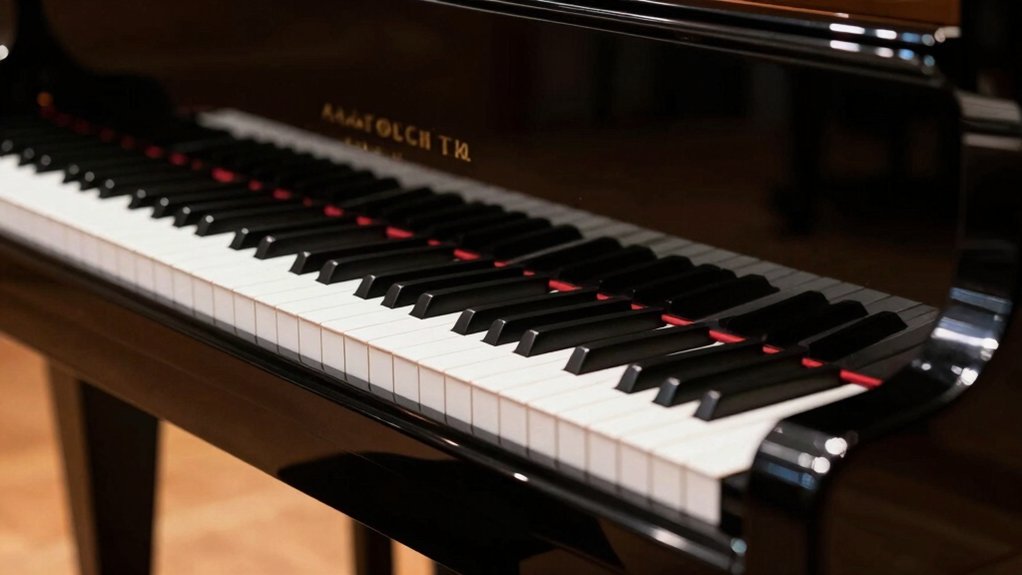
Choosing between a stage piano and a home digital piano hinges on how you plan to use it. If you need portability and live reliability, a stage piano wins, with streamlined controls and robust keyboard sensitivity that stays responsive to your dynamics. You’ll appreciate clear, direct sound layering during performances, allowing you to mix essential textures without dialing through menus.
For home use, a digital piano focuses on realism and long-term comfort, often at the expense of lightweight action. You’ll benefit from expressive, nuanced touch and authentic piano voicing that suits practice and composition.
Evaluate how often you perform versus record, the space you own, and your priority: ultra-precise stage feel or immersive home playability. Your choice hinges on balancing immediacy, control, and tonal depth.
How Action Feels: Keyboard Response for Stage vs Home Players
When you move from evaluating whether a stage piano or home digital piano fits your lifestyle to how it actually feels to play, the keyboard action becomes the deciding factor. You’ll notice two key ideas: keyboard responsiveness and tactile feedback shape confidence, ease, and nuance in your lines, bends, and dynamics.
Stage models often emphasize consistency under heavy use, while home units prioritize expressive range and subtlety at quiet volumes. Your shock of typing touch explains a lot about why you prefer one setup over the other.
- Consistency under load
- Expressive range at varied dynamics
- Immediate tactile feedback for fast passages
- Moderation of key weighting for long practice sessions
Sound Realism: Comparing Acoustic, Electric, and Hybrid Engines
Sound realism hinges on how closely a piano’s core engines mimic real acoustic tone, the clarity and character of electric voices, and how seamlessly hybrid systems blend both worlds. You’ll compare engines by listening for dynamic nuance, sustain, and envelope precision across genres.
Acoustic-mode simulations should preserve natural harmonics, while electric voices must avoid shrill artifacts at high velocity. Hybrid configurations ought to switch transparently between modes, preserving tonal continuity during transitions.
The metric you care about includes sound quality and tonal authenticity: does the instrument maintain palpable room presence, appropriate pedal interaction, and consistent brightness or warmth with register changes?
In practice, a top stage piano delivers cohesive timbres, minimal phase anomalies, and convincing resonance, enabling expressive performance without distracting artifacts.
Consider An Extended Warranty For Your Instrument
Touch and Feel: Graded Hammer Action vs Semi-Weighted Keyboards
If you value nuanced touch, graded hammer action typically mirrors the keystroke resistance from top to bottom, unlike semi-weighted feels that end up more uniform.
You’ll want to weigh the consistency of response across the keyboard against the authenticity of weighting, since each approach influences dynamics and expressiveness.
Consider how your playing style and performance context—stage versus home use—align with the action that best supports your technique and repertoire.
Graded Hammer Action
Graded hammer action simulates the heavier touch of lower piano keys and the lighter feel of the upper ones, providing a more authentic dynamic response than many semi-weighted keyboards. You’ll notice a clearer hierarchy of touch, aligning with expressive playing and nuanced control over dynamics. The contributor here is the weighted keys arrangement, which helps the sound engine translate velocity into audible variation with precision.
- Realistic key weighting enhances expressivity
- Clear dynamic range across the keyboard
- Better falloff and rebound behavior
- Compatible with traditional piano technique cues
This setup favors players seeking tonal fidelity and feel over synthetic immediacy. While it often pairs with robust sound engines, balance remains key: ensure the action complements the overall instrument design, not just the keys themselves.
Semi-Weighted Feelways
Semi-weighted keyboards offer lighter, quicker key returns than graded hammer action, trading some realist texture for a more immediate, synth-like response. You feel the lighter touch, which reduces fatigue during long practice sessions, but you trade dynamic nuance at the top end.
In performance, that translates to a slightly flatter touch curve, making subtle keystrokes harder to isolate. For beginners, the consistency can speed learning, yet advanced players may miss intentional hammer-embedded dynamics.
Keyboard sensitivity varies widely; some models exaggerate aftertouch or velocity, others remain linear. Tone shaping benefits from semi-weighted designs that pair well with electronic amplification and effects.
If you prioritize punchy, percussive attacks and fast repetition, this approach excels; if you seek lush, expressive legato, graded hammer remains preferable.
Connectivity That Counts: Outputs, MIDI, and On-Stage Interfaces
Connectivity options you’ll actually use matter most: output jacks, MIDI capabilities, and on-stage interfaces determine how smoothly a stage piano or home digital piano fits into your setup.
You’ll want clear I/O, reliable MIDI, and flexible routing to minimize latency and maximize compatibility with mixers, computers, and pedals.
Wireless connectivity and mobile apps can simplify control, tuning, and sound selection, but verify latency and platform support before committing.
- Assess a balanced mix of line outputs, headphone output, and USB audio if you record or rehearse
- Check MIDI DIN or USB-MIDI for compatibility with your DAW and controllers
- Consider on-stage interfaces like multiple pedal inputs and USB-C power
- Prioritize app-driven AVR/firmware updates and remote control features
Design for Your Space: Portability, Size, and Build Durability
When space is at a premium—or you move between gigs often—portability and build durability become as critical as sound. You assess a keyboard’s footprint, weight, and case design to minimize setup time and fatigue on the road.
A portable design should fold into your workflow without compromising key feel or stability, while rugged chassis and reinforced hinges protect against daily bumps. Look for a compact form that doesn’t force you to sacrifice essential controls, and verify that leg supports, feet, or carrying handles remain secure after transport.
Durability features matter: spring-loaded latches, shock-absorbing mounts, and water-resistant fabrics extend longevity. Weigh overall build quality against transport ease, ensuring a balanced choice that keeps performance intact between venues.
Practice Quietly: Headphones, Latency, and Timbre at Home
You’ve weighed portability and build durability, now consider how you practice quietly at home. Your goal is true-feel feedback with minimal latency and convincing timbre, so you can improve without waking others. Focus on silent practice options and how headphone features shape your sound landscape.
Latency matters; even small delays distort rhythm. Compare built-in DSP reverb or timbre adjustments that preserve touch response. Your headphone choice should deliver accurate transient response and a natural dynamic range, not just loudness.
Use these considerations to guide testing and setup.
- Evaluate latency specs and how they affect timing
- Compare headphone features like impedance, impedance matching, and driver quality
- Test timbre fidelity across dynamic ranges
- Assess comfort for longer sessions and consistent listening
Balance convenience with accuracy for effective quiet practice.
Budget and Longevity: Price, Value, and Resaleability
Budget and longevity matter as much as upfront features: a stage or home digital piano should deliver solid value over time, not just a low sticker price. You’ll weigh initial cost against ongoing reliability, maintenance, and feature relevance as tech evolves.
Prioritize build quality, key action, and supported formats, since these affect resale value and long-term satisfaction. A lower-priced model may incur hidden costs from replacements or upgrades, eroding overall value.
Do a price comparison across brands and bundles, factoring included warranties, service networks, and update policies. Longevity hinges on durable hardware and lasting software support.
If resale value matters to you, consider widely adopted models with robust parts supply and proven longevity, even if they cost a bit more upfront. Informed, strategic choices protect your investment beyond the thrill of the moment. resale value.
Use-Case Scenarios: Gigs, Studio Sessions, and Home Practice
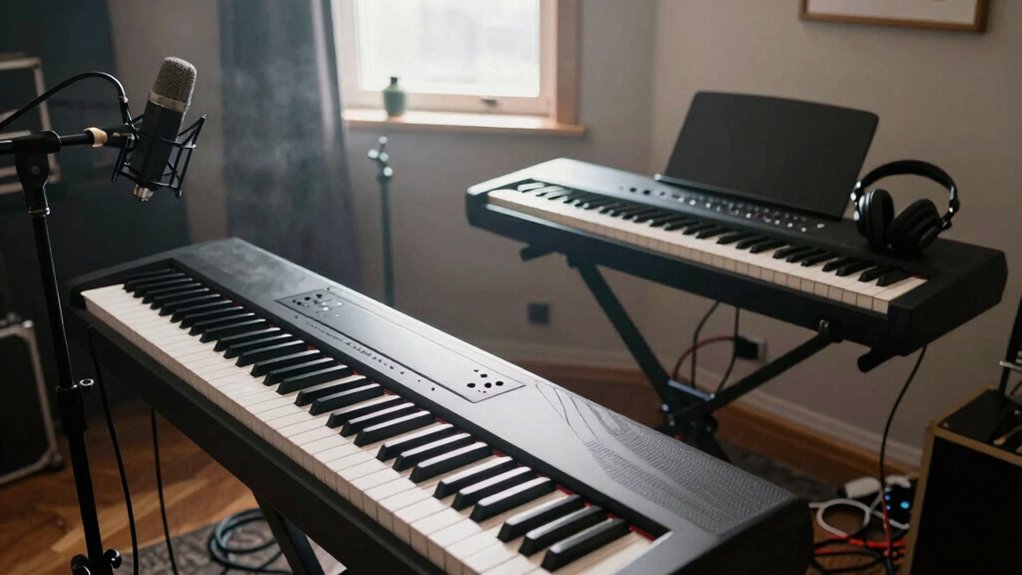
For gigs, studio sessions, and home practice, the right digital piano balances portability, reliability, and tone versatility, since each setting has distinct demands. You’ll prioritize dependable performance, consistent tuning, and flexible effects to match venue acoustics and recording needs.
In gigs, quick sound changes matter; in studios, pristine capture matters; at home, practice gains from customization. Consider digital piano maintenance like regular keyboard checks and firmware updates to avoid glitches.
Sound customization options let you tailor touch response, layering, and EQ for each scenario, reducing fatigue and improving consistency.
Evaluate how pedal feel and keybed affect long sessions. Use these four points to guide decisions:
- portability vs. control
- tonal versatility
- reliability and updates
- maintenance routines
Quick 5-Step Decision Framework: Pick Stage or Home With Confidence
To decide quickly between stage and home use, start with a simple five-step frame that centers on real-world needs: purpose, portability, tonal range, reliability, and maintenance.
Step one, purpose, asks you to weigh gigs or solo practice against studio work.
Step two, portability, evaluates weight, handles, and setup time.
Step three, tonal range, considers onboard sounds and dynamic response.
Step four, reliability, frames fault tolerance, ruggedness, and battery or power concerns.
Step five, maintenance, covers updates, service intervals, and spare parts.
Use these suitability considerations to compare models for beginner vs professional needs, avoiding overkill for learners while ensuring stage-grade options meet performances.
This framework enables a confident pick aligned with your actual use case and progression.
Conclusion
Your choice between a stage piano vs digital piano ultimately depends on your performance needs versus home use. Select accordingly.
Ultimately, you’ll pick based on where you’ll play and how you’ll practice. If portability, rugged reliability, and fast setup matter most, a stage piano is your best bet; for grounded realism, long sessions, and built-in practice comfort, choose a home digital piano. Evaluate action, sound engines, and connectivity against your gigs or bowls of silence at home. Quick verdict: stage for live versatility, home for stable, expressive practice—unless you time-travel back to 1980s keyboards, where both collide.