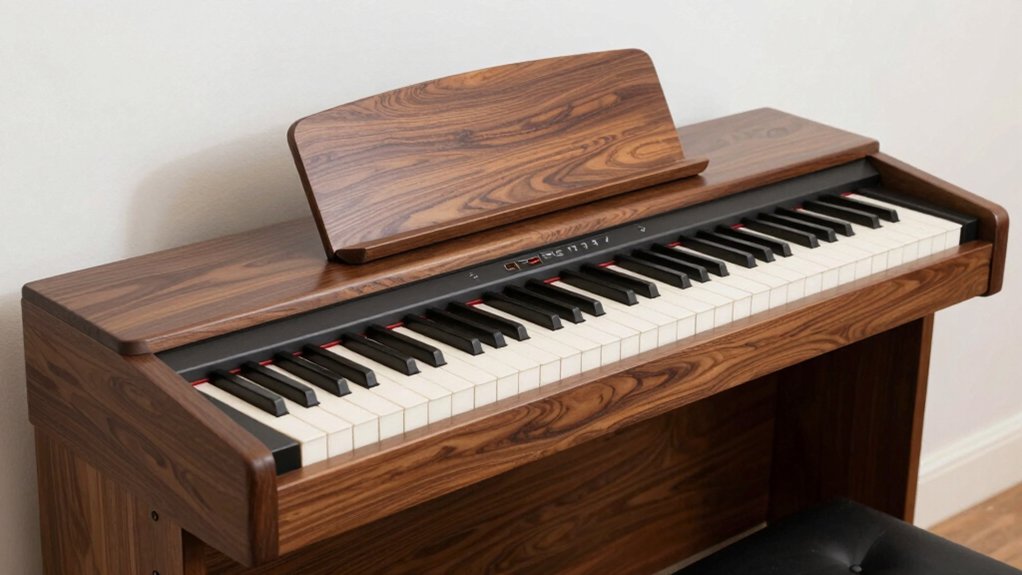
If you’ve ever walked into a music shop and wondered what is the difference between a digital piano and an electronic keyboard, you’re not alone – this is one of the most common questions asked by aspiring musicians and parents shopping for their children’s first instrument. Understanding what is the difference between a digital piano and an electronic keyboard is crucial because choosing the wrong one can affect your learning progress, playing technique, and long-term musical development in ways you might not expect.
You want to know how a digital piano differs from an electronic keyboard, and the answer hinges on feel, sound realism, and purpose. Digital pianos emphasize authentic piano touch, weighted keys, and premium samples with resonance for serious practice and performance. Keyboards prioritize versatility, lighter or non-weighted keys, and a broad sound palette with portability. The choice hinges on your goals and budget—but there’s a clear path to what you’ll gain by digging deeper.
How Digital Pianos Differ From Electronic Keyboards
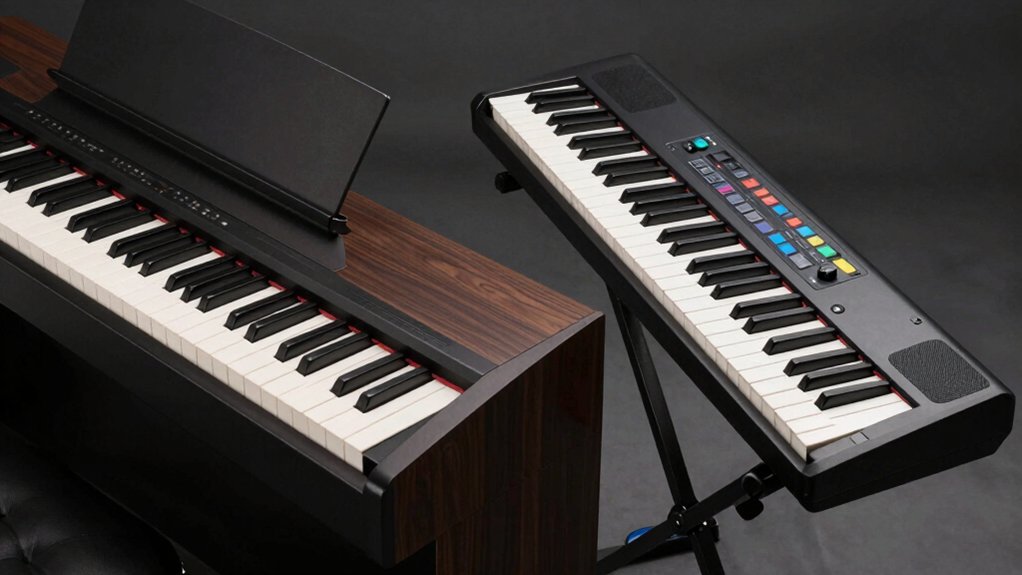
Digital pianos and electronic keyboards diverge in design intent and core capabilities. You’ll notice digital pianos emphasize authentic piano voices, maintained dynamic range, and accurate Music notation integration for rehearsal and performance, not just entertainment.
Electronic keyboards prioritize versatility, portable form, and a broad voice palette, often sacrificing nuanced piano response. In terms of architecture, digital pianos rely on weighted action and higher-quality samples for realism, while keyboards leverage lighter actions and more MIDI-driven sound banks.
MIDI compatibility underpins both, but digital pianos typically offer deeper control over sustain, velocity curves, and note-off behavior aligned to piano repertoires. If you need rigorous notation workflows and expressive fidelity, choose digital pianos; if you seek genre flexibility and travel convenience, pick electronic keyboards.
Keybed Feel: Weighted, Graded, and Responsive Touch
Keybed feel hinges on how the keys respond under your fingers: weighted, graded action, and responsive touch together define a piano-like experience. You’ll notice weighted action provides heft, while graded weighting mirrors acoustic pianos, heavier in the low end and lighter up high.
Responsive touch translates velocity into volume and timbre, enabling expressive crescendos and delicate pianissimo. In practice, a well-designed keybed offers consistent rebound, minimal latency, and predictable escape velocity for fluent runs.
This matters for synth pad sounds, where subtle dynamics shape atmosphere even when pads sit in the background. MIDI connectivity ensures your touch translates cleanly to your instrument layers, allowing you to route gravity, shimmer, and movement precisely.
Choose a keyboard with authentic weight, balanced gradient, and low-latency response for credible performance control.
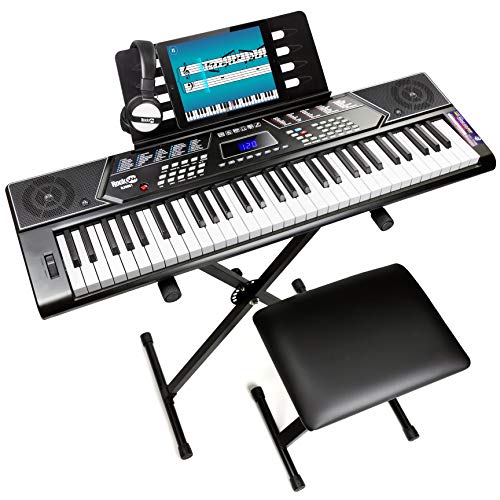

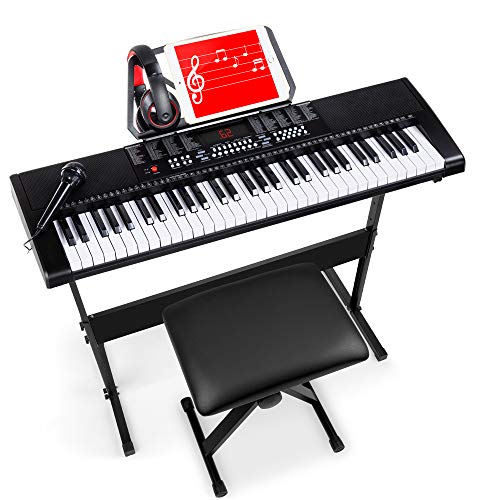

Piano Realism: Samples, Acoustics, and Resonance
Piano realism hinges on how faithfully the instrument’s voices reproduce actual acoustics, sample selection, and sympathetic resonance. You assess realism by listening for natural decay, limbic sustain, and internote interactions that mirror a grand piano.
High-quality samples should cover multiple velocities, dynamic contours, and sympathetic resonance across strings, so chords bloom with authentic depth. Acoustics matter: cabinet resonance, room behavior, and air coupling influence perceived tone.
You’ll notice tone quality shifts with transfer of pedal noise, hammer noise, and pedal-sustain coupling, all affecting realism. Sound modulation must be precise enough to preserve natural vibrato, melodic phrasing, and tonal balance under various playing styles.
A calibrated blend of multisample richness and accurate resonance yields believable performance, without artificial brightness or mechanical artifact.
Core Playing Features: Pedals, Polyphony, and Recording
Pedals, polyphony, and recording define how a keyboard actually performs and captures your play. You’ll notice sustain and expression hinge on pedal quality and function, while polyphony limits how many simultaneous notes ring without cutoffs.
In practice, higher polyphony prevents dropped voices during complex passages or layered chords, giving you reliable performance integrity. Recording capabilities let you capture your phrasing, timing, and dynamics for later editing or MIDI transfer.
When you explore synth sounds, these features reveal how faithfully a device can reproduce textures and shifts under real playing conditions. MIDI connectivity amplifies your setup, letting you route performance data to software synths, DAWs, or external modules while preserving articulation.
Choose models with robust pedal action and sufficient polyphony to support your typical repertoire.
Use Cases and Buying Criteria by Goal and Budget
You’ll map your budget to specific use cases, ensuring every dollar targets your primary goals. Start with a goal-oriented feature checklist to prune irrelevant specs and lock in must-haves like instrument simulations, key feel, and connectivity.
This straightforward approach keeps buying decisions precise, efficient, and aligned with your performance needs.
Use-Case Driven Budgeting
Use-case driven budgeting aligns your purchase with specific musical goals and available funds. You’ll map each goal to a spend band, ensuring you don’t overextend while still meeting performance needs. This approach emphasizes objective evaluation over impulse, so you compare options by value, not hype.
Focus on measurable criteria like keyboard feel, sampling quality, and upgrade paths, then anchor decisions to concrete budgets. Budget options emerge clearly when you separate essential features from nice-to-have upgrades, minimizing overbuy risk.
Brand comparisons become meaningful only when tested against your goals, not popularity. The result is a lean shortlist that prioritizes reliability and scalability over novelty.
- Determine need vs. want within each price tier
- Assess core features for your genre and practice plan
- Compare brands on build quality and service
- Validate total cost of ownership, including accessories
Goal-Oriented Feature Checklist
To align purchasing with concrete goals, apply a goal-oriented feature checklist that maps use cases to buying criteria across budget tiers. You’ll evaluate core capabilities first: key-action responsiveness, touch realism, and polyphony aligned to your practice demands.
For Music education, prioritize reliable metronome, programmable lesson modes, headphone isolation, and instructor-friendly MIDI integration.
In a Studio setup, stress workflow efficiency: seamless sound customization, stable USB audio interfaces, reliable power management, and robust driver support.
Use case filters split by goals—practice, performance, recording, and teaching—then translate to buying criteria: playability, amplification options, output quality, and future-proofing.
Document budget thresholds, weigh trade-offs, and demand transparent specs. This checklist focuses decisiveness, eliminating ambiguity, so you select gear that sustains growth without compromising reliability or pedagogy.


How to Choose: Quick Guide by Genre and Experience
Choosing the right instrument depends on your genre and experience level, and a quick guide can save you from overbuying or underspecifying. You’ll want a structured shortcut that targets core capabilities: sound versatility, input/output routing, and long-term workflow. Prioritize features that directly impact your setup and project speed, not generic specs. Focus on practical fit for your process in music production and live play, with clear attention to MIDI compatibility as a backbone for modern rigs.
- Define your genre and target projects, mapping needed keyboard actions, polyphony, and aftertouch.
- Confirm MIDI compatibility and host integrations with your DAW, plugins, and controllers.
- Assess key action, velocity response, and sustain to match your touch preference.
- Check portability, power, and durability for rehearsals, gigs, or studio use.
Conclusion
In short, you want the instrument that mirrors your aim. If realism and touch matter—weighted keys, authentic piano samples, and expressive dynamics—you’re chasing a digital piano. If versatility and portability win, with a flood of sounds and lighter action, an electronic keyboard fits your quest. Your budget sharpens the edge: invest in real piano feel and polyphony for serious practice, or prioritize features and variety for creative exploration. Choose what channels your音乐 ambition into sound.