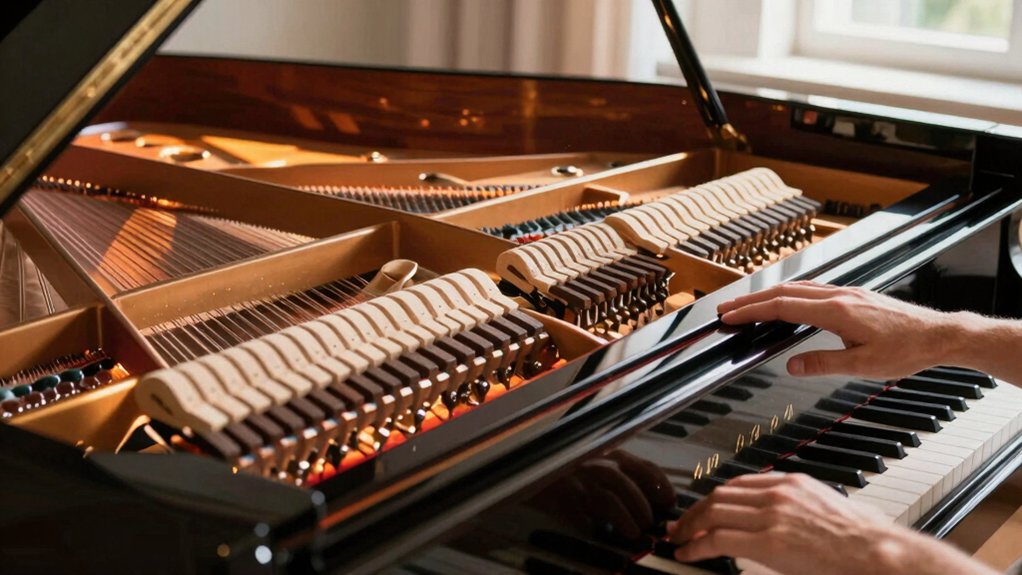
You’ll notice expensive digital pianos deliver more convincing tone and response because they blend multi-velocity sampling with precise physics-based modeling and real-time resonance. Cheaper boards rely on simpler samples and lighter electronics, so they miss hammer noise, pedal behavior, and string sympathetic tones. The gap isn’t just tone—it’s tactile feel and dynamic nuance that align with your touch. If you want to know where those gains come from and whether they justify the cost, consider the specifics behind these differences.
What Makes Digital Pianos Sound Real: The Core Factors
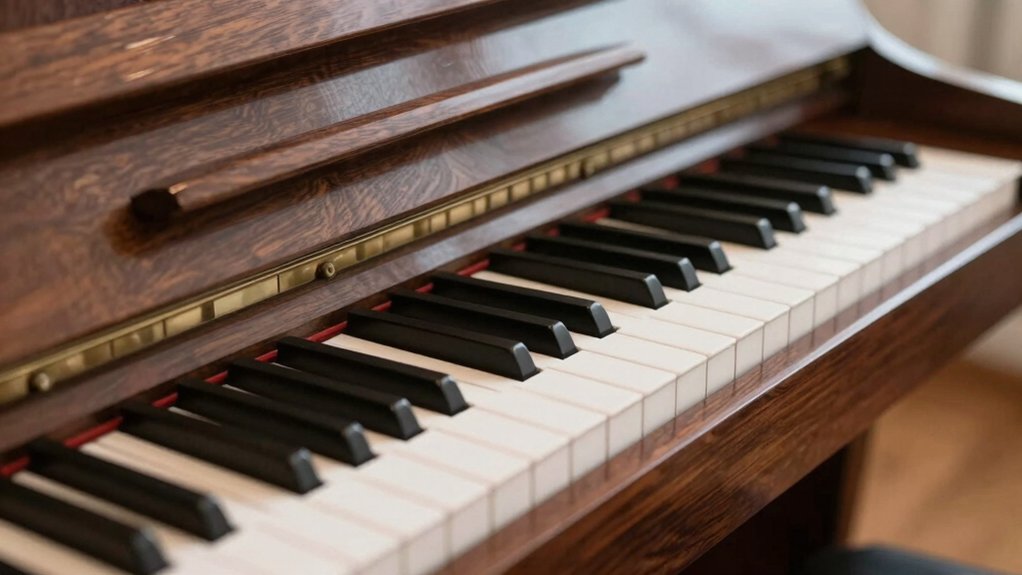
Digital pianos sound real when their core signal path accurately captures and reproduces the acoustic piano’s critical behaviors. You evaluate touch, hammer feel, and timbre consistency across dynamic ranges to judge realism.
The action’s escapement, rebound dynamics, and key geometry determine perceived velocity and control, while the keyboard’s linearity affects articulation fidelity.
On the auditory side, frequency response, harmonic content, and envelope behavior shape spectral realism, especially in decay and sostenuto.
You weigh sample quality, processing latency, and real-time interpolation against resource constraints.
Price comparison matters, but you assess whether enhancements justify cost given your use case.
The brand reputation informs expected longevity, service, and consistent output across programs.
Realism hinges on cohesive interaction among touch, tone, and responsive processing rather than isolated features.
How Multisampling and Hardware Shape Tone
Multisampling depth directly affects the granularity of tonal laddering, so you’ll notice differences as you compare samples at varying velocity layers and release qualities.
Sample library quality sets the ceiling for realism, dynamic response, and consistency across instruments, patches, and expression controls.
Hardware tone shaping—filters, envelopes, and DAC behavior—remaps those raw samples into the audible character you perceive, making careful matching between multisample content and processor design essential for credible realism.
Multisampling Depth Matters
Advanced multisampling depth directly shapes the tonal realism you hear from a digital piano by preserving finer details of a note’s transient and dynamic response. More samples across velocity layers reduce aliasing and improve the fidelity of timbre across the keyboard.
- sampling depth directly influences how accurately dynamics are rendered, especially at loud versus soft levels.
- hardware quality constrains how many simultaneous samples can be processed without breakdown or noise.
- deeper multisampling minimizes phase and tonal artifacts that creep in with limited velocity layering.
- empirical testing shows measurable gains in perceived realism when depth aligns with target touch curves and sustained notes.
Sample Library Quality
A high-quality sample library is the backbone of realistic tone because it directly determines how many articulations, dynamics, and microtimings can be reproduced across the keyboard. You judge tone by how densely the library covers performance geometry: velocity layers, note-offs, and release textures.
In practice, multisampling density, round-robin variation, and loop integrity constrain expressivity more than raw sample count. The library’s organization—directory structure, naming conventions, and articulations—affects workflow and consistency across programs.
Digital piano craftsmanship reveals itself in the careful balancing of timbre across velocity zones and pedal states, not just raw samples. Brand reputation matters, guiding expectations for long-term maintenance and compatibility.
A well-curated, system-tested library supports reliable, repeatable performance across genres, aligning instrument realism with user intention.
Hardware Tone Shaping
Hardware tone is shaped as much by the processor, DAC, and analog circuitry as by the sampled data, so you’ll perceive how signal paths sculpt dynamics, timbre, and pedal response before a note is even played.
1) You’ll observe how touch sensitivity interacts with the analog front end, altering transient behavior and perceived response across velocity layers.
2) Keyboard weighting influences how key motion maps to digital amplitude, affecting per-note consistency and expressiveness under real playing.
3) Multisampling interacts with hold and release circuits, shaping pedal-influenced decays and resonance tails in the real-time path.
4) Calibration across channels ensures tonal alignment, so subtle differences don’t mask articulation or dynamic nuance during performance.
How Piano Modeling Affects Feel and Dynamics
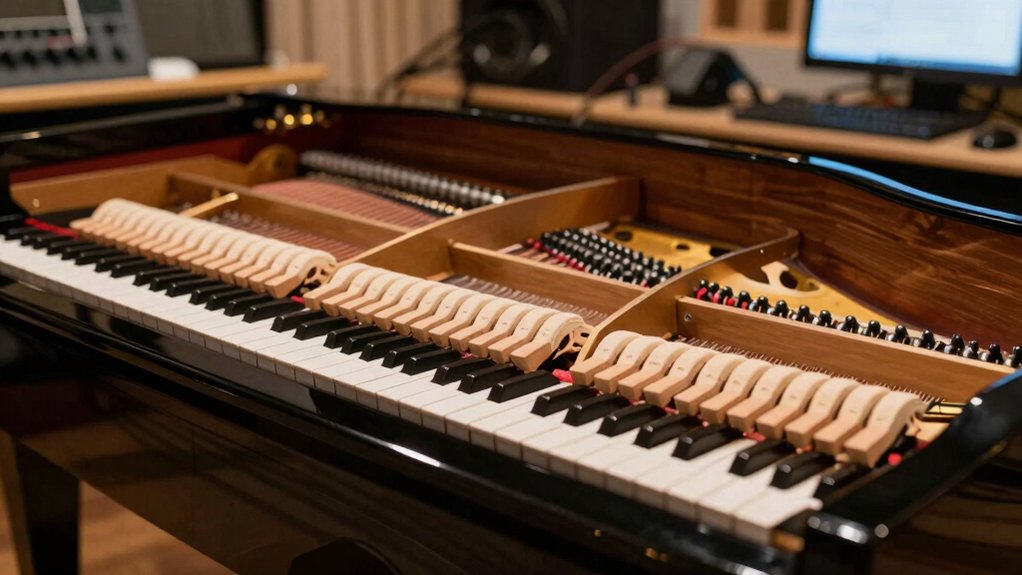
Piano modeling directly shapes how keys translate input into hammer action, and the fidelity of that translation governs both touch feel and dynamic response. You experience feel through calibrated contact timing, weighted inertia, and velocity mapping that together define touch sensitivity.
In practice, modeling adjusts key weighting to emulate hammer leverage, hinge friction, and escapement cues, so a given press yields reproducible hammer velocity. Dynamic range then derives from nonlinear velocity-to-falloff curves, ensuring quiet passages stay controllable while fortissimo remains expressive.
Accurate models align sensor data with physical behavior, minimizing perceptual gaps between digital and acoustic pianos. You’ll notice that refined touch fidelity correlates with consistent key return and predictable response under repeated, rapid articulations.
When implemented with rigorous validation, piano modeling yields intuitive, responsive playability across register ranges.
Why Hammer Noise, Pedaling, and Resonance Matter
You’ll notice how hammer noise, pedal action nuance, and resonance realism shape the tactile and auditory cues you rely on during play.
Empirical patterns show that hammer strike timing, pedal return force, and body resonance interact to produce consistent touch and sustain across registers.
Understanding these factors helps you evaluate instrument realism beyond presets and quantify how material design influences listening and response.
Hammer Noise Dynamics
Hammer noise emerges from the mechanical interaction between keys, hammers, and strings, and it matters because small timing or contact variations directly affect perceived tone, dynamic response, and rhythmic precision. You feel the micro-impacts, not just the overall loudness, as you press and release.
This dynamic depends on hammer velocity, knuckle strike, and string stiffness, which collectively shape attack, decay, and sustain. In digital emulation, matching these subtleties yields higher fidelity to real pianos, reinforcing key tactile and aesthetic appeal.
You evaluate how hammer deceleration and contact duration influence articulation clarity, particularly at rapid passages. Precision data guides algorithmic refinements, reducing artifacts that break immersion.
- Material coupling and strike timing
- Velocity-dependent contact duration
- Decay envelopes and hammer rebound
- Perceptual alignment with real pianos
Pedal Action Nuance
Pedal action shapes how sustained tone evolves, how resonance builds and decays, and how articulations land in real-time playability. You assess each digital piano’s pedal subsystem as a sequence of mechanically linked events: depressing, hold duration, release timing, and return spring behavior.
Pedal sensitivity matters because small changes in travel or force alter perceived sustain and the onset of partial releases, which directly influences phrasing and legato feel.
Pedal noise, when present, reveals the coupling between switch, sensor, and mechanical play. In high-quality units, noise is minimized without compromising response, yielding a smoother progression between pressed and released states.
The most convincing models emulate acoustic hammer–damper timing, aligning tactile feedback with auditory outcomes for precise, repeatable performance.
Resonance Realism Factors
Resonance realism hinges on how closely digital pianos reproduce the sustained interaction between strings, hammers, and dampers. You evaluate models by how hammer noise, pedal action, and string wake interact, not by isolated samples. Realism emerges from physics-based modeling, sensor feedback, and enclosure acoustics, plus how noise floors mirror mechanical friction.
You’ll notice that subtle string resonance under sustain pedal informs perceived authenticity, especially when multiple notes overlap. Precision in timing, velocity, and damper release governs perceptual cohesion. The goal is causal, not cosmetic, accuracy, aligning digital behavior with acoustic expectations.
- String resonance timing and decay are consistent across pedal transitions
- Hammer noise spectrum aligns with dynamic range and contact point
- Sustain pedal interpolation preserves legato feel
- Mechanical-to-electronic coupling mirrors physical energy transfer
When Budget Boards Work: Practical Buying Scenarios
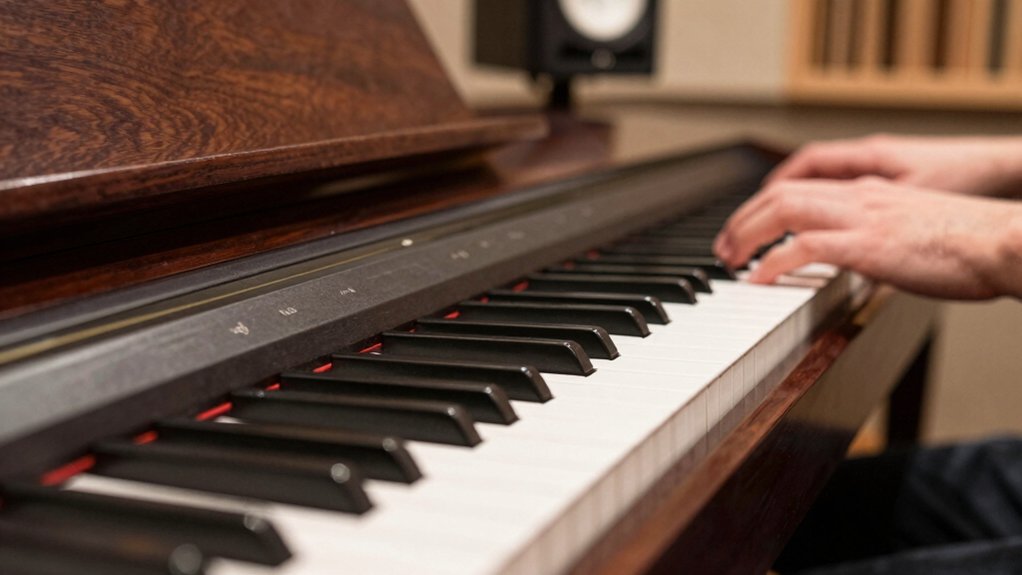
When you’re budgeting for a digital piano, practical buying scenarios reveal how cost constraints shape feature priorities and long-term value. You’ll compare boards by raw polyphony, responsive keyboard action, and sample quality per dollar, not glamour.
In budget-friendly setups, you trade high-resolution hammer modeling for reliable velocity sensing and consistent touch, ensuring entry level performance meets core needs. You’ll favor models with robust build, adequate Bluetooth latency, and proven firmware updates over marginal cosmetic gains.
Empirical testing shows that affordable boards can reproduce essential dynamics if the instrument includes graded-weight keys and a stable A/D converter. Favor devices with transparent specs, measured keybed stiffness, and verifiable after-sales support, aligning price with durable performance rather than hype.
This pragmatic approach yields predictable, functional satisfaction within constrained budgets.
A Practical Checklist to Evaluate Value in a Digital Piano
To assess value in a digital piano, build a practical checklist that prioritizes measurable performance over glossy specs. You’ll judge tactile response, frequency response, and pedal behavior with repeatable tests, not anecdotes. Focus on construction quality, keybed material, and controller latency to ensure consistent playability under real use.
Consider long‑term reliability, serviceability, and firmware support as core value drivers, rather than marketing claims. Value emerges from objective consistency, not brand hype or digital aesthetics alone; brand reputation matters when support and calibration are predictable.
- Keybed realism, key travel, and rebound consistency.
- Latency, DAC quality, and measurement of dynamic range.
- Pedal polynomial behavior, half‑pedal sensing, and sustain authenticity.
- Reliability trajectory, software updates, and parts availability.
Conclusion
You’ll notice the difference when you push a key: richer harmonics, responsive dynamics, and the subtle whisper of hammer and string physics. Expensive models don’t just sample; they simulate, fuse, and breathe with your touch. Cheaper boards cling to plain tones and canned relativity, like static on a vinyl wintry night. In rigorous, empirical terms, value equals how faithfully the board reproduces physical interactions under real playing conditions, not just how loud it can pretend to be.