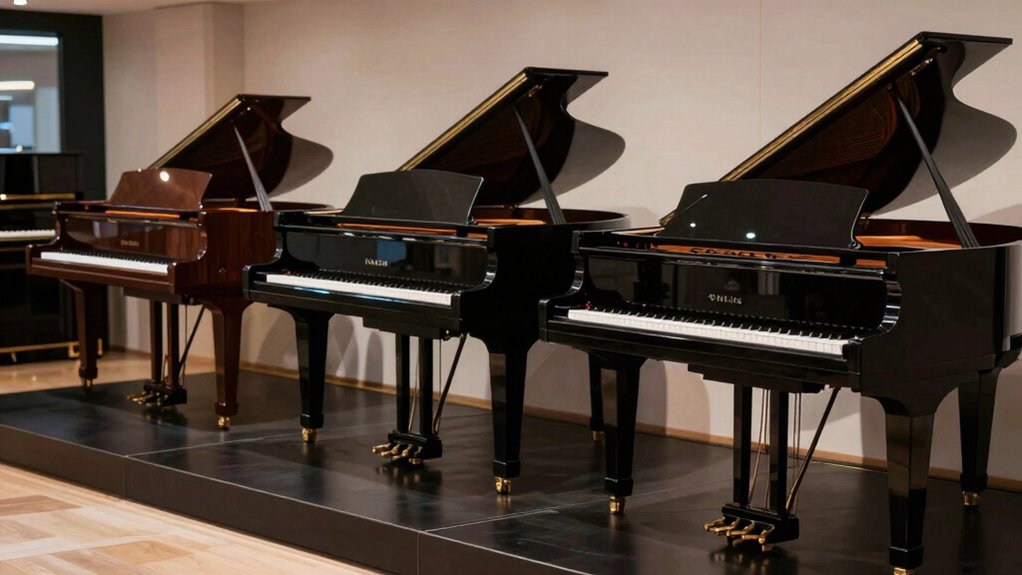
The Yamaha vs Roland vs Casio digital pianos debate dominates forums and music stores because these three manufacturers command the entry-to-intermediate market with distinct philosophies about sound character, key action design, and feature priorities that produce genuinely different playing experiences despite similar specifications on paper. Yamaha emphasizes bright, clear grand piano tones and consistent quality across price points, Roland focuses on expressive SuperNATURAL sound modeling with nuanced touch response, while Casio delivers impressive features and quality at aggressively competitive prices that challenge preconceptions about budget instruments.
This comprehensive brand comparison reveals the specific strengths and weaknesses of each manufacturer’s approach, which sound profiles and key actions suit different musical styles and preferences, and exactly where each brand delivers best value across budget, intermediate, and premium price tiers.
You’ll compare Yamaha, Roland, and Casio not by brand buzz but by feel, tone, and workflow, where action and voicing meet your fingers’ expectations. Each makes a different claim about realism, consistency, and user-friendliness, and the gaps matter when you’re on a gig or at home. The question isn’t who dominates, but which strengths align with your technique and setup—and what trade-offs you’re willing to accept as you push for that elusive musical edge.
How to Judge Action, Voicing, and Touch Across Brands
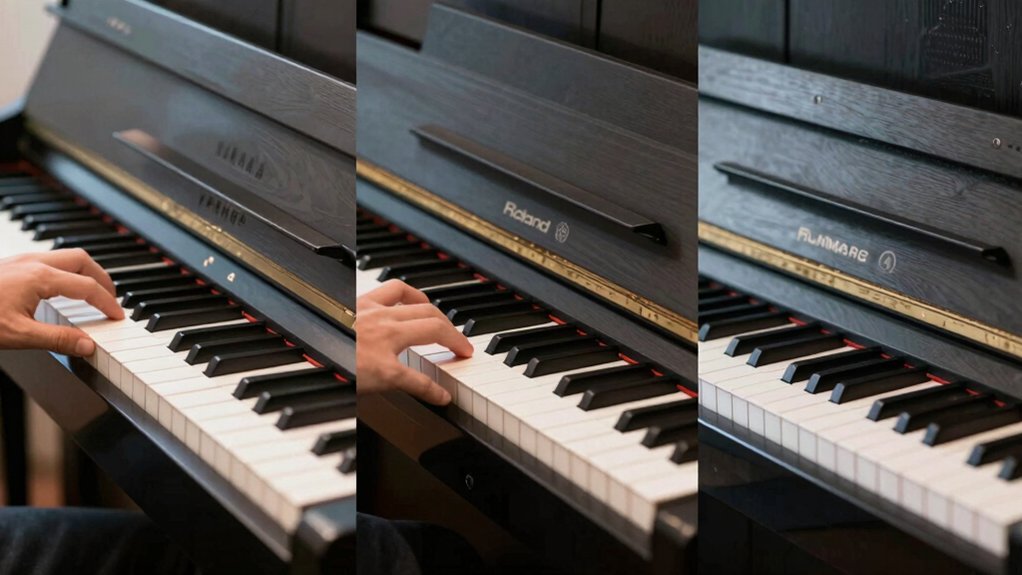
When evaluating action, voicing, and touch across brands, you should start by isolating the core mechanical cues: key travel, resistance, and keybed rigidity.
You’ll then compare how each keyboard translates these cues into feel, noting consistency across registers and repeatable response under rapid sequences.
Focus on tactile feedback: linear, graded, or topped textures that inform your touch.
Assess voicing by listening for hammer or tine resonance, excluding aesthetics from the core sound.
Consider keyboard ergonomics—how key spacing, fall-off, and surface texture support comfortable sessions and precise articulation.
Brand reputation matters for long-term maintenance and firmware support, so factor reliability into your judgment.
Your conclusion should balance nuance, objective metrics, and your personal playing priorities.
Yamaha vs Roland vs Casio: Core Strengths in Feel and Sound
You’ll notice Yamaha, Roland, and Casio each carve a distinct feel and touch profile, shaping how keys respond and how you perceive articulation.
In sound, you’ll hear authentic timbres and dynamic responsiveness that reflect each brand’s core engineering choices, from hammer action to tonal modeling.
This alignment between tactile fidelity and sonic realism sets the baseline for evaluating playability across genres and use cases.
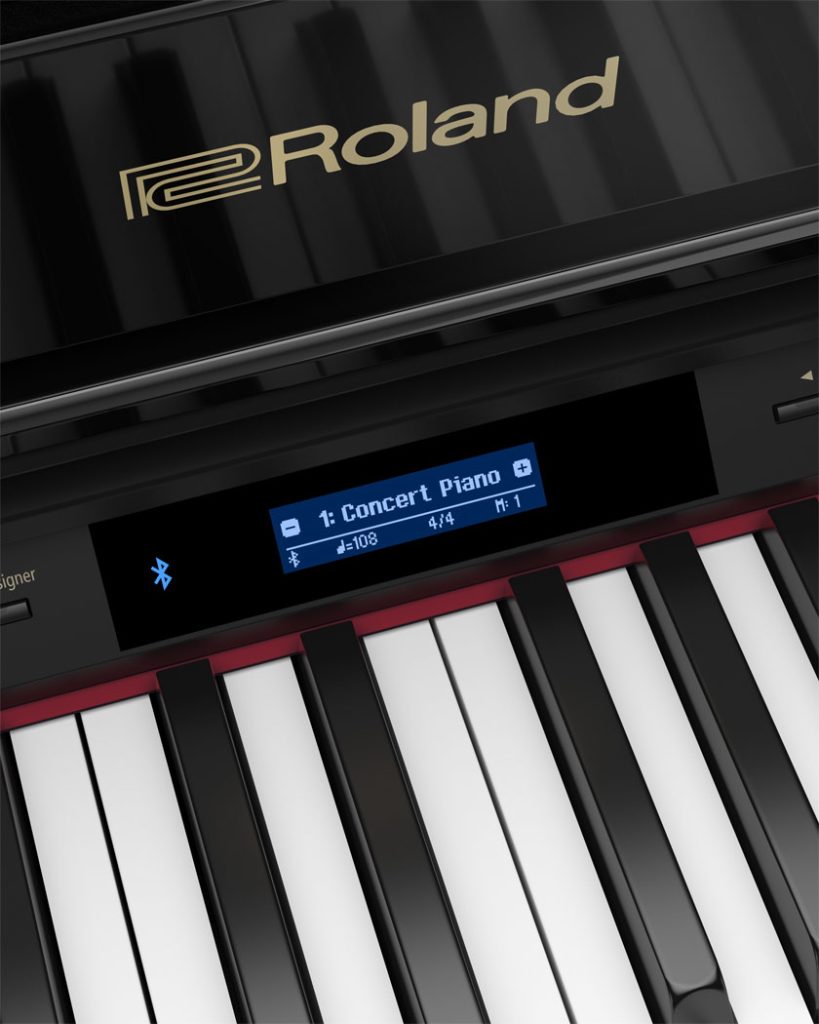
Feel And Touch Fidelity
Feel and touch fidelity is the battleground where Yamaha, Roland, and Casio prove their Pianos’ promise in real play. You’ll notice how key action, response consistency, and coupling to chassis influence expressiveness across genres.
Yamaha emphasizes graded hammer action with steady weight that mirrors acoustic pianos, aiding pedal nuance and dynamic layering, while Roland prioritizes tactile consistency across the board, delivering a linear response that suits modern fast passages.
Casio leans toward compact realism, optimizing rebound for rapid articulation without sacrificing control.
Keyboard ergonomics matter: travel, key surface texture, and spacing shape your comfort and precision over long sessions. Aesthetic design isn’t just looks; it informs hinge points and key stability.
Together, they define how faithfully you translate intention into touch.
Sound Authenticity Compared
Sound authenticity sits at the intersection of keyboard feel and tonal character, where Yamaha, Roland, and Casio each foreground different strengths. You’ll notice that Yamaha emphasizes harmonic richness and consistent dynamic response, yielding a more natural piano core that responds predictably at moderate velocities.
Roland tends toward a refined, polished timbre with blended articulation; its effects chain often preserves ambient space, making the tone feel more immersive in mixed environments.
Casio trades some nuanced dynamic nuance for accessibility and consistency, delivering clean articulation with reliable sample playback across presets.
Keyboard weight influences perceived authenticity, shaping strike impact and resonance coupling, while aesthetic design subtly guides your listening expectations through cabinet resonance cues.
In short, choose based on which tonal fingerprint aligns with your playing posture and room acoustics.
Connectivity, Apps, and Workflow: What Actually Helps Your Playing
You’ll evaluate how connectivity basics, app workflows, and real-time performance tools actually streamline practice and live play.
We’ll compare how each brand’s ecosystem supports quick setup, reliable data transfer, and intuitive controls across devices, apps, and onstage scenarios.
This discussion centers on practical gains: streamlined workflows, meaningful app features, and integration methods that translate to smoother playing.
Connectivity Essentials
Connectivity isn’t just about ports; it’s about how smoothly gear, apps, and your DAW fit into your playing flow. You want a seamless handshake between keyboard, computer, and plugins, so you can focus on nuance rather than setup.
MIDI compatibility matters because it defines latency, channel mapping, and integration with third-party software. Look for devices that offer stable USB-C or USB MIDI, trunked through a solid driver stack, and clear support for your DAW’s preferred workflow.
Bluetooth connectivity can simplify practice setups, but verify range and audio latency meet real-time needs. Consider supported profiles, firmware upgrade paths, and how each instrument negotiates sustain, aftertouch, and velocity curves when you layer sources.
In practice, the best connectivity reduces friction without compromising tone or tactile feel.
App Workflow Tips
Efficient app workflow starts with choosing tools that align with your music goals and your DAW’s strengths, then tightening your setup so apps, plugins, and hardware talk the same language. You’ll optimize connectivity by mapping MIDI, audio, and control signals to a coherent digital interface, minimizing latency and session drift.
Prioritize apps that mirror your workflow: think coordinating tempo, track templates, and project templates that reduce setup time between gigs. Customization options matter—leverage key commands, macro scripts, and scalable presets to maintain focus during performance.
Stay mindful of version compatibility, driver stability, and platform constraints to avoid fragmentation. Regularly audit plugins for CPU load and stability, and document your routing for quick troubleshooting.
This disciplined approach keeps your creative flow uninterrupted and playback reliable.
Performance Integration Methods
Performance integration hinges on how you fuse connectivity, apps, and workflow into a seamless playing experience. You’ll evaluate interfaces, prioritizing low-latency MIDI plus audio routing that stays reliable under live conditions. Focus on USB, Bluetooth, and internal routing options, mapping them to your DAW and practice routines without adding complexity.
App ecosystems matter; select those that offer stable updates, onboard metronomes, and scaleable layering for practice drills. Keyboard ergonomics influence sustained performance, so choose controllers with adjustable action, triplet-friendly layouts, and sensible position presets that reduce fatigue.
Aesthetic design isn’t cosmetic—it guides your posture and access to controls during long sessions. As you compare brands, seek ecosystems that minimize setup time, maximize recallability, and support future workflow expansion.
Value, Warranties, and Longevity: What You Get for Your Money
When you’re weighing value, warranties, and longevity across Yamaha, Roland, and Casio, you’re not just comparing price tags—you’re evaluating build quality, service networks, and component durability that affect long‑term ownership costs.
Across the trio, price range reflects feature depth, material heft, and repairability more than sticker price alone. Yamaha tends to deliver robust keyboards with broad dealer support, boosting perceived value and resale stability.
Roland emphasizes service sustainability and system longevity, often justifying higher initial outlay through reliability and continuity of parts.
Casio, meanwhile, fits budget buyers with solid core features and quicker refresh cycles, trading some longevity for affordability.
Brand reputation matters here: consistent support and component sourcing reduce total cost of ownership, making value a function of risk management and uptime.

Best Fit by Player Type: Studio, Stage, and Home Use
Studio, stage, and home use each demand different strengths from Yamaha, Roland, and Casio, so the best fit hinges on how you prioritize reliability, connectivity, and tactile feel.
For studio work, you’ll value ergonomic keyboard action and low latency—areas where Yamaha’s craftsmanship shines and Casio offers accessible, consistent feel.
On stage, you’ll lean into reliability and quick connectivity; Roland’s robust stage ecosystems and brand reputation edge ahead here, especially with seamless MIDI and pedal ergonomics.
At home, Casio often delivers cost-effective features, compact footprints, and intuitive interfaces that suit learning vibes and practice routines.
Consider keyboard ergonomics across models to reduce fatigue during long sessions, and weigh brand reputation as a signal of ongoing support and firmware updates.
Surprising Trade-Offs and Hidden Gems in Each Line
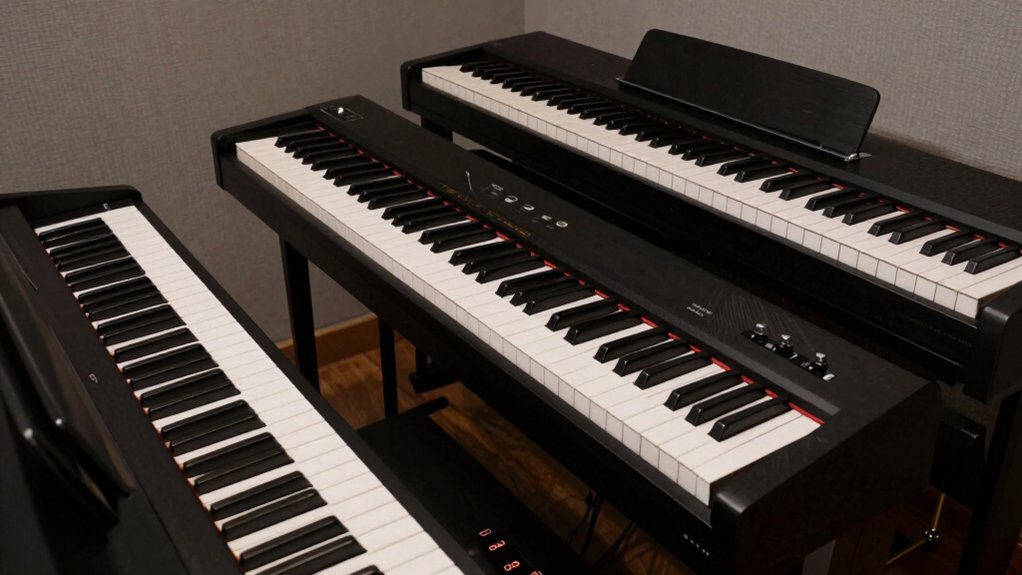
Hidden trade-offs show up as much in lines as in models: Yamaha’s action and sustain typically excel, but you may trade some depth of onboard effects for lighter weight. Roland’s rugged reliability often comes with a slightly steeper price and busier user interfaces. Casio’s budget-friendly lineage offers approachable features, yet some higher-end feel and professional polish may lag behind.
In this light, you’ll assess keyboard ergonomics across brands, noting keybed feel, weight distribution, and control placement. Brand reputation matters when you’re choosing feel over polish, because workflow efficiency wins on stage and in studio.
You’ll likely find Yamaha delivering consistent action, Roland emphasizing reliability, and Casio delivering value with practical interfaces. The hidden gems often live in software integration, touch sensitivity, and nuanced timbre layering.
Consider An Extended Warranty For Your Instrument
Conclusion
You’ll walk away with a clear, pragmatic map: pick Yamaha for authentic touch and warmth, Roland for stage-ready polish and consistency, Casio for affordable, plug-and-play sessions. It’s a three-pronged compass, not a winner-takes-all duel. Your choice hinges on where you’ll ride the longest—studio finesse, live robustness, or home convenience. Think of the market as a piano—three strings, one melody—and you’ll tune to the brand that best harmonizes with your playing goals.