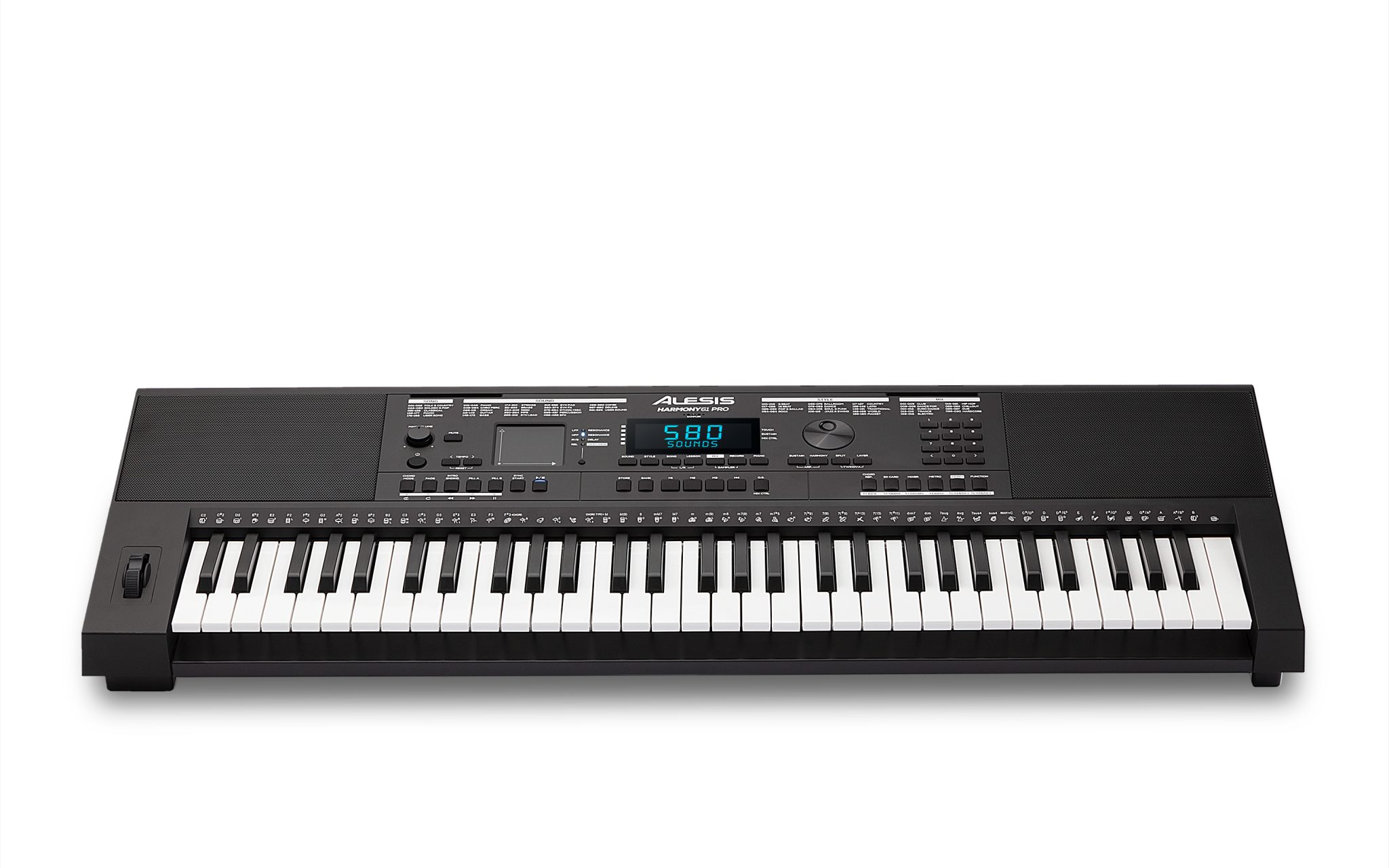
The 88 keys vs 61 keys decision fundamentally determines which musical repertoire you can play, how your technique develops, and whether your keyboard remains adequate as skills advance or becomes a limiting factor requiring replacement within months.
While 88-key instruments provide the full 7¼-octave piano range essential for classical music and advanced playing, 61-key keyboards offer lower prices, compact footprints, and sufficient range for pop songs, electronic music production, and basic chord accompaniment that many casual players never exceed. This practical comparison reveals exactly when the missing 27 keys on 61-key models create genuine musical limitations versus unnecessary expense, helping you match keyboard size to your actual playing goals, space constraints, and realistic assessment of long-term commitment rather than sales pressure or vague aspirations.
Choosing between 88 and 61 keys hinges on your goals and space. If you need full-range play, nuanced dynamics, and future versatility, an 88-key setup makes sense; if you prioritize portability, quick setup, and affordable practice, a 61-key model fits better. Consider your repertoire, where you’ll play, and how much you value extended range versus ease of transport. The right choice isn’t just about today—it hinges on how you’ll use it you in the long run. So, what will you prioritize first?
Who Should Choose 88 Keys or 61 Keys
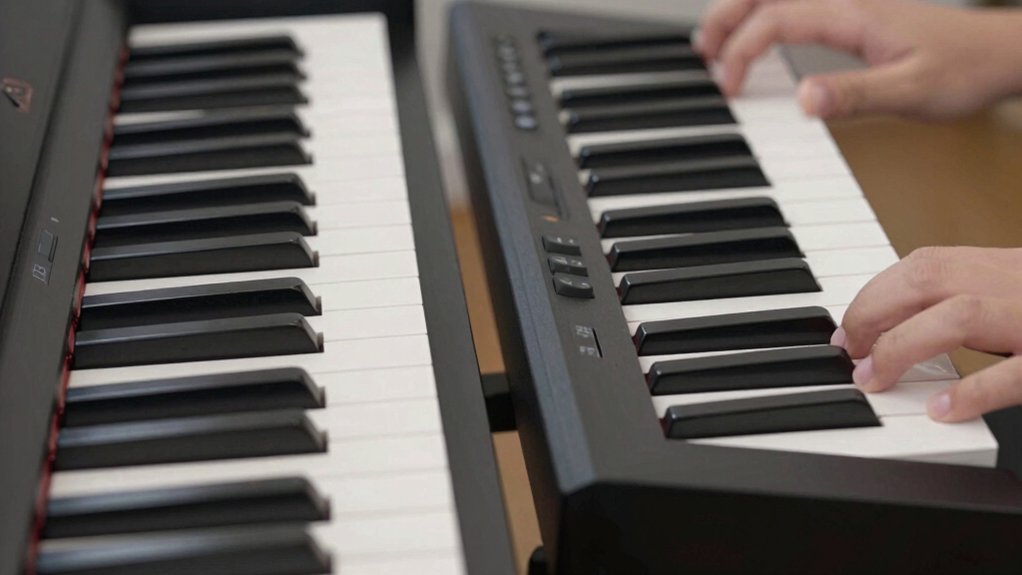
Choosing between 88-key and 61-key keyboards comes down to your goals and space.
If you’re chasing deep notes and dynamic range for complex pieces, 88 keys serve music theory needs and realism in performance. You’ll benefit from full pedal control, better resonance, and a familiar touch for technique that matters in classical exams or advanced repertoire.
On the other hand, 61 keys prioritize portability and quick setup, ideal for practice on the go, quick chord work, and genres with limited low-end needs.
Your focus on Keyboard maintenance matters too; fewer keys typically mean less mechanical wear and simpler upkeep.
Decide based on repertoire, practice habits, and whether your environment demands compact gear or extended tonal possibilities.
How Keyboard Size Shapes Your Range and Playability
Your keyboard size limits the range you can reach and the ease with which you execute complex passages.
With fewer keys, you’ll adapt fingering and hand position, often narrowing your upper and lower limits while affecting velocity and accuracy.
Understanding this balance helps you choose a setup that matches your repertoire and playing style.
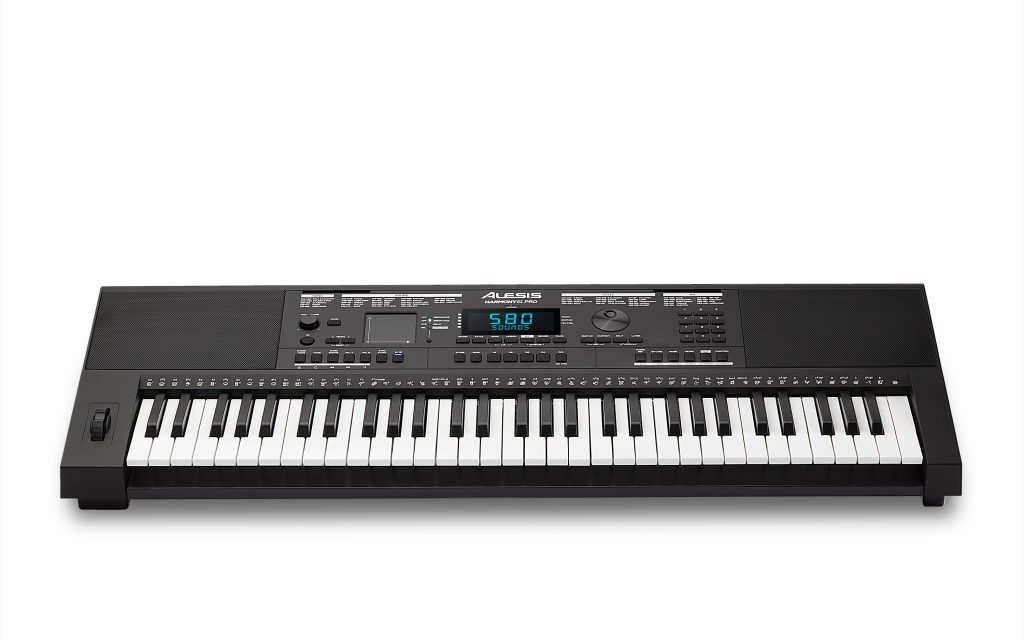
Key Range Impacts
The keyboard size you choose directly shapes your playable range and, by extension, your technique. Your key range determines how you access bass lines, high melodies, and rapid passagework, influencing phrasing and breath between notes.
On a 88-key board, you gain expansive lows and a wide melodic canvas, which supports broad musical expression but can tempt unnecessary leaps or dense textures in compact passages. A 61-key layout narrows the span, compressing ranges and forcing you to rethink voicings, inversions, and octave placement.
This constraint alters your control over dynamics and articulation, sharpening focus on accurate fingering and efficient hand position. In practice, recognize how limitations shape musical expression, then tailor your repertoire and technique accordingly.


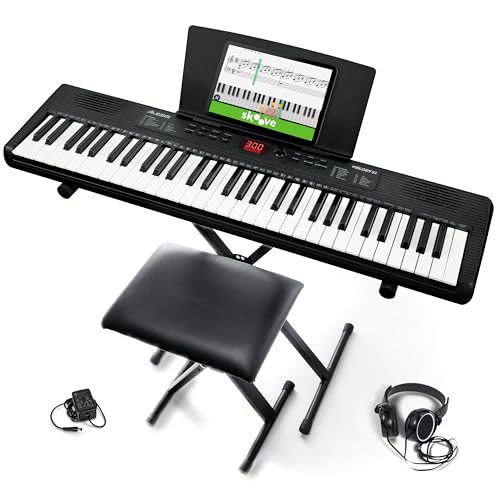
Playability On Size
Size directly shapes how you play. When you choose 61 keys, your reach and finger spacing compress, nudging you toward compact patterns and closer hand positions. That shifts your playability, often reducing large spans and affecting your fluidity in complex chops.
With 88 keys, you gain extended range, which supports expansive melodic lines and bass lines without repositioning. However, more keys invite further stretches and precision tasks, potentially exposing technical limitations in fast passages or intricate chord voicings.
Your musical expression benefits from a broader canvas, yet the extra notes can tempt overreliance on range instead of technique. In short, size frames phrasing and accuracy, shaping practical routes for expression and revealing hidden technical limitations.
Key Factors: Portability, Setup, and Stage Considerations
When evaluating portability, setup, and stage considerations, you’ll find that 88-key keyboards deliver fuller tactile response at the cost of bulk, while 61-key models maximize lightness and quick setup but may limit expressiveness.
In practice, portability hinges on weight, case size, and pedal compatibility; setup emphasizes immediate access to basic controls and layer modes without extensive routing.
For stage use, consider how you’ll integrate with live rigs, monitors, and backline, since cable management and power draws affect efficiency.
Music theory demands full keys for complex chord voicings, yet electronic features like split, transpose, and arpeggiator can compensate on smaller boards.
Evaluate how features align with your workflow, not just size, to balance performance needs with transport realities.
Budget, Value, and Long-Term Costs for 88- Vs 61-KEY Setups
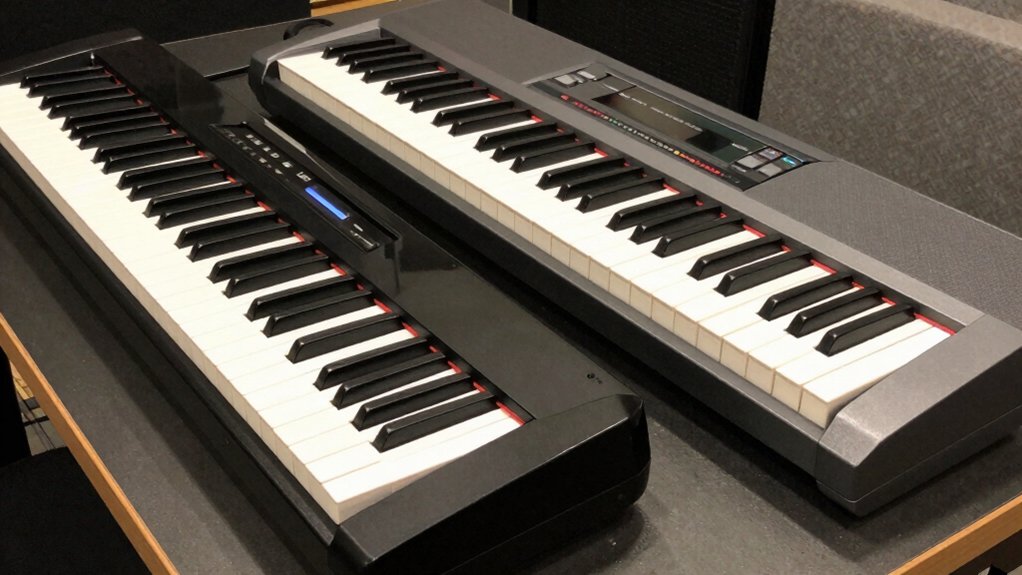
Balancing budget and value matters more on 88-key boards because their higher cost tends to bundle more expressive features, while 61-key models often undercut price with leaner specs.
Over time, long-term costs hinge on build quality, keybed feel, and software inclusions, not just sticker price.
If you prioritize digital interfaces and seamless integration, 88-key options may justify the spend with more robust controllers, multitrack storage, and upgrade paths.
For casual practice or specific music genres, 61-key setups can satisfy needs at a lower annualized cost, especially when you’re selective about expansions.
Assess ongoing expenses like subscriptions, warranty coverage, and accessory investments.
Your choice should align with your workflow, compatibility, and whether you expect upgrades or stability over years.
Use-Case Scenarios: From Bedroom Practice to Live Gigs
Whether you’re setting up in a bedroom or prepping for a live gig, the use-case landscape for 88-key versus 61-key boards hinges on workflow, portability, and performance demands.
In practice, 88-key setups suit piano-centric routines and layered performances where range matters, preserving sound quality across registers. Your learning curve involves mastering finger reach and dynamics, plus more complex controller assignments.
By contrast, 61-key boards excel for compact practice, quick-song changes, and portable rigs, trading some tonal breadth for speed and setup efficiency. Consider your typical repertoire, DAW integration, and how often you travel.
If you’re prioritizing realism and long-term versatility, 88 keys justify the space and cost; if you value immediacy and travel, 61 keys reduce friction without crippling capability.
Evaluating Your Needs: A Quick Decision Framework
To decide between 88-key and 61-key boards, start by mapping your core needs: musical goals, workflow, and travel constraints. You’ll quickly see what matters: if you chase wide-range pieces or pianistic passages, 88 keys offer more headroom; if portability and quick setup win, 61 keys suffice.
Consider how you’ll arrange layers, splits, or velocity curves in your typical sessions, and where you’ll carry gear. For beginners, this framework clarifies initial investments and future-proofing, guiding beginner advice toward realistic usage.
Time-saving habits—template practice, simple gigs, or studio work—favor compact boards, while ambitious performance or repertoire demands justify full-size keyboards. Decide now, then practice deliberately to validate your framework.


Common Pitfalls and Smart Upgrades for Each Size
Common pitfalls tend to differ by size, so start by identifying where your setup most often trips you up.
For 88-key bodies, you’ll likely overcomplicate transport and desk space, so upgrades should prioritize stability and feel: consider weighted action, robust stands, and spill-resistant surfaces.
If you value composition depth, pair a digital piano with proper touch sensitivity and headphone isolation to avoid latency and fatigue.
On 61-key rigs, spacing and portability tempt shortcuts; counter with ergonomic layouts, reliable MIDI mapping, and compact controllers that preserve velocity response.
Smart upgrades include midi controllers that bridge software and hardware, plus compact audio interfaces for clean, low-latency sound.
Choose digital pianos for realism, and midi controllers for versatility, then tailor upgrades to your primary workflow.
Conclusion
Choosing between 88 and 61 keys comes down to your needs, not just your fingers. If you crave full range and expressive classical pieces, 88 keys are your stage; if you prize portability and quick sessions, 61 keys fit better. Weigh repertoire, space, and budget, then plan for future upgrades when your goals grow. Think long-term: buy the size that keeps you playing, not the one that’s easier to carry. Your perfect fit awaits in the balance between reach and release.