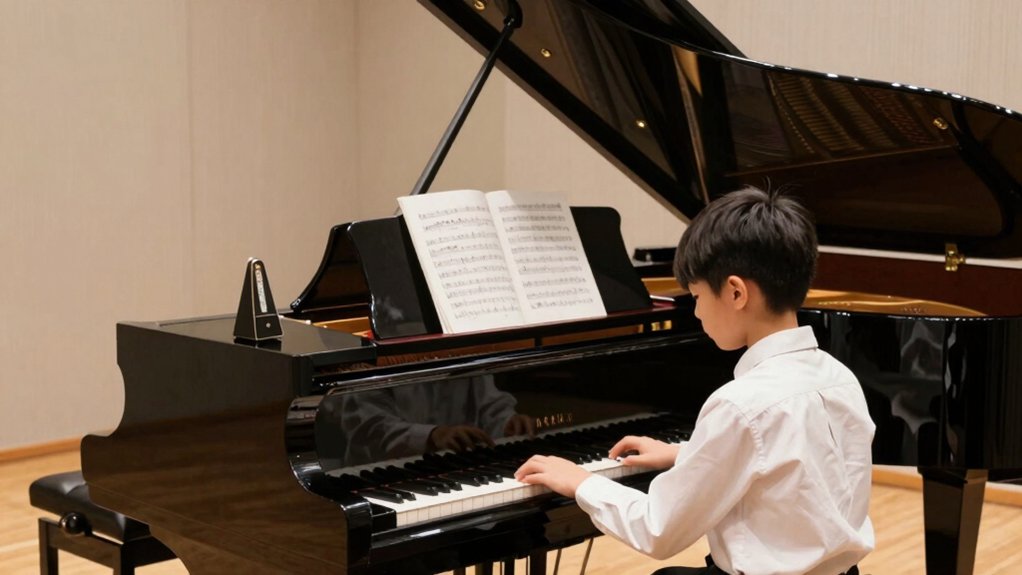
Are digital pianos good enough for classical training is a contentious question that divides classical piano teachers, with traditionalists insisting on acoustic instruments while pragmatic instructors acknowledge that modern digital technology has dramatically narrowed the performance gap. The answer depends critically on your advancement level, the specific digital piano model quality, and whether you’re developing foundational technique or preparing for professional classical performance. This straightforward analysis reveals exactly which digital pianos meet classical training standards, at what skill levels the limitations become problematic, and when investing in an acoustic piano transitions from preference to genuine necessity for your musical development.
You might be surprised to learn that a top-tier digital piano can mimic graded hammer action and nuanced pedal response closely enough for serious classical study. You’ll assess touch, tone, and sustain as you would with an acoustic, weighing how real the keys feel and how the instrument echoes your dynamics. If you’re budgeting space and time, a few subtle differences could shape your progress, so consider how each option stacks up against your technique goals. Let’s consider what matters most.
Choosing a Digital Piano for Classical Study: What Matters
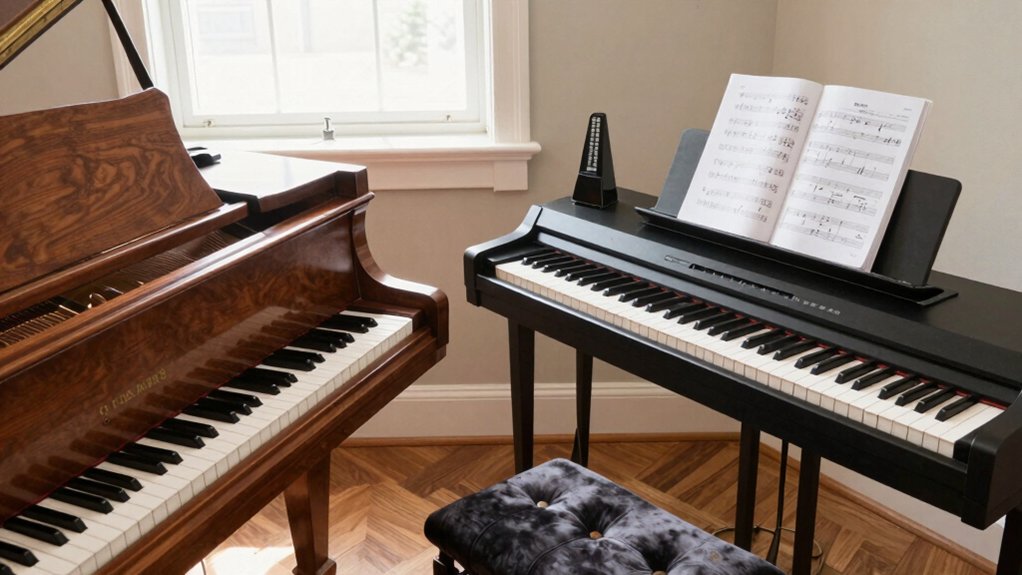
Choosing a digital piano for classical study hinges on how faithfully it reproduces touch, tone, and dynamic range. You’ll want a keyboard that responds predictably to articulation, so you can study phrasing without fighting the instrument.
Focus on dynamic layering, velocity sensitivity, and consistent repeatability across registers. Compare digital piano brands by how transparently they convey piano-like nuance rather than novelty features.
Look for reliable pedal behavior, balanced sampling, and quiet, precise key noise that won’t distort your studies.
Beginner friendly features can help you build technique, but they shouldn’t mask weaknesses in tonal clarity or touch response.
Prioritize reviews that quantify realism, and test in-store with music you know well to confirm suitability for classical repertoire.
Keyboard Action and Touch: How Digital Pianos Compare to Acoustic Pianos
As you shift from choosing a digital piano to evaluating how it plays, the action and touch become the heart of your classical practice. You’ll notice key weight differences, where some models feel heavier and more piano-like, while others send a lighter, less responsive signal.
Touch sensitivity matters even more: a responsive keyboard should translate your dynamic intent consistently across registers, not just at fortissimo or pianissimo extremes. Compare action types—graded weighted, spring-free, or simulations of mechanical counters—and assess rebound accuracy, not just key travel.
Your goal is predictability: a digital action that mirrors acoustic response without forcing you to compensate. In practice, evaluate repetition ease, control precision, and quiet consistency under slow scales and polyphonic textures. When it aligns, your technical development benefits immediately.
Tone, Dynamics, and Pedal Realism for a Grand-Piano Feel
Tone, dynamics, and pedal realism are what ultimately sell the sense of a grand piano in a digital model: you want a core tone that breathes, responds to touch with nuanced shaping, and sustains with natural phase and resonance.
You’ll notice subtle timbre changes as you layer chords, and the sustain should feel springy rather than dead. Dynamics must map cleanly across soft to fortissimo without abrupt shifts, preserving pedal interactions that mimic real damper and soft pedals.
Assess if keyboard ergonomics support fluent phrasing across long passages, not just quick echoes. Also consider digital piano durability under daily practice, as strong components resist key chatter and noise.
When these elements align, you achieve a convincing, expressive, and reliable grand-piano feel.
Budget, Space, and Practice Time: Practical Buy Considerations
Budget, space, and practice time shape every digital-piano purchase. You’ll weigh footprint against room layout, measuring height, width, and stand stability to avoid crowding your workflow. If you play nightly, consider quieter modes or headphones to protect neighbors and your hearing, while still engaging practice tempo and articulation.
Space planning also means prioritizing essential features over flashy extras; you gain more value from realistic touch, reliable pedal response, and consistent tuning simulations than from glossy presets. Your budget should align with sustained use, not impulse appeal.
Music theory access, teacher recommendations, and structured practice tools help you optimize routines within your available time. Clarify warranty, update cycles, and resale value before committing, so you invest confidently toward measurable musical growth.
A Concrete Evaluation Checklist for Digital Pianos in Classical Repertoire
To evaluate digital pianos for classical repertoire effectively, start with a concrete checklist that prioritizes touch, timbre, and control.
Begin with touch sensitivity: test responsiveness across dynamic ranges, ensuring gradient feels natural and repeatable.
Assess key weighting: compare graded, weighted action against your preferred touch profile, noting if heavier lows and lighter highs mirror acoustic pianos.
Examine timbre consistency across velocity, articulation, and pedal interactions; verify stability under repeated notes and octave transitions.
Evaluate control features: polyphony headroom, reverb and EQ options, damper emulate, and una corda behavior.
Check pedal latency and half-pedal precision, since subtle pedaling shapes legato phrasing.
Consider build quality, lid closure, and sustain stability over sessions.
Finally, confirm compatibility with your repertoire’s expressive demands and your practice workflow.
Conclusion
You can absolutely use a digital piano for serious classical study, especially when you choose models with graded action, authentic pedaling, and nuanced sampling. It won’t be exact to an acoustic grand, but the gap narrows with realism and practice time. Weigh touch, tone, and sustain against space and budget, and you’ll see a clear path forward. In short, you’re not flinching from the challenge—you’re sizing up the tool and going for it, come hell or high water.