
Are weighted keys necessary for learning piano or can beginners start with cheaper options? Discover how key action affects technique, muscle memory, and long-term progress.
The question of whether weighted keys are necessary for learning piano divides piano teachers, music shops, and online communities, with some insisting they’re absolutely essential whilst others claim beginners can start on anything with black and white keys. Understanding if weighted keys are necessary for learning piano comes down to your musical ambitions and timeline – if you plan to eventually play acoustic pianos or develop proper technique that translates across instruments, weighted keys aren’t just helpful, they’re crucial for building the finger strength, control, and touch sensitivity that separates competent players from those who struggle when they encounter a real piano.
You don’t need perfect piano-weighted keys to start building skills like reading music and rhythm, but your touch will feel different as you progress. Light or semi-weighted keyboards ease initial play, while weighted keys better mimic an acoustic piano and support nuanced dynamics later. The choice hinges on goals, space, and budget, not just a tech spec. If you’re weighing options, consider what you want to accomplish first—and how your setup will grow with you.
How Weighted Keys Change Touch, Tone, and Dynamics
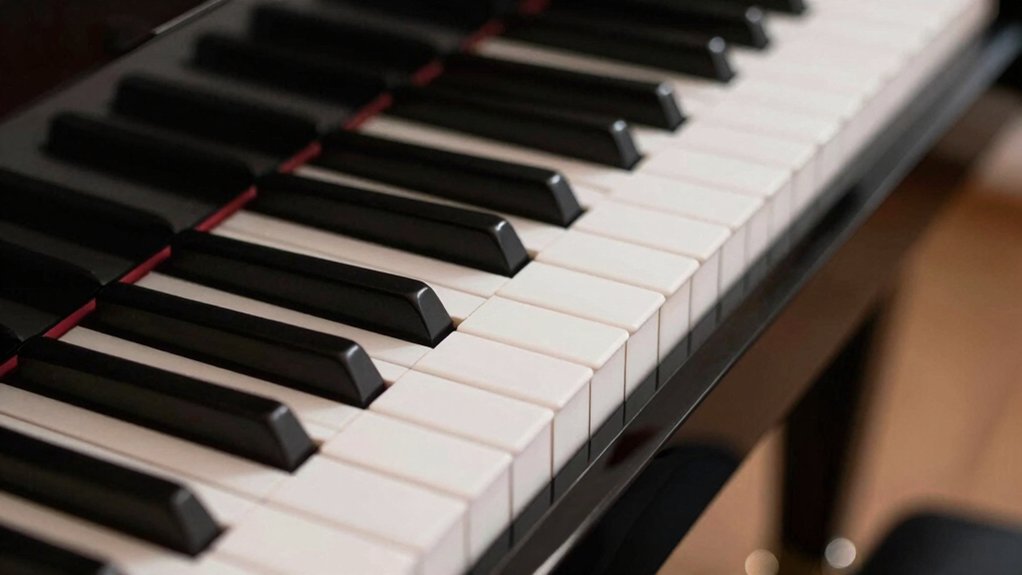
Weighted keys mimic the feel of real pianos, so you engage your finger muscles differently and with less strain than on lighter keyboards. When you play, the heavier action teaches you to control touch more precisely, affecting key responsiveness.
You’ll notice that subtle weight changes translate into lighter or stronger articulation, influencing how cleanly you can release notes and shape phrases. This tactile feedback helps you develop even tone quality across registers, since consistent finger pressure yields steadier dynamics.
Dynamics become more intuitive as you learn to balance weight with velocity, rather than relying on force alone. Over time, your touch becomes more responsive to musical context, supporting expressive phrasing without sacrificing accuracy.
In short, weight informs control, responsiveness, and tonal consistency.
Do Beginners Really Need Weighted Keys?
For beginners, weighted keys aren’t strictly required, but they often pay off in the long run. You’ll notice touch differences early on, yet essentials like rhythm, accuracy, and reading stay achievable without them.
If you start on light-action or unweighted keys, you can still build solid fundamentals by focusing on finger independence, consistent tempo, and correct hand position. Over time, however, you may find weighted keys help you develop dynamic control and a more piano-like feel, which supports broader musicianship.
Pay attention to sight reading skills as you progress, since smooth note recognition reduces hand strain and accelerates learning. Improvisation techniques also benefit from realistic touch cues, enabling you to express ideas with confidence, regardless of your instrument setup.


Weighing Costs: Space, Budget, and Setup Tradeoffs
Choosing the right balance of space, budget, and setup starts with a clear map of your needs. You’ll weigh cost considerations against performance goals, not just sticker price.
Prioritize footprint: desks, stands, and furniture shape how you practice daily. Portability issues matter if you move rooms, travel, or share space with others, so consider lighter keyboards with reliable stands and easy cable management.
Budget wisely for key features you’ll actually use, like proper stand height, stable pedal placement, and noise isolation.
If you’re in a small apartment, a compact, digital option can cut space use and setup time. In larger rooms, you may invest in a heavier instrument for feel and durability.
Balance upfront costs with long-term maintenance and resale value to avoid surprises.
Alternatives to Weighted Keys: Semi-Weighted, Synth-Action, and Digital Pianos
You don’t have to rely on fully weighted keys to learn effectively, because there are solid alternatives that still offer musicality and progress. Semi-weighted keyboards strike a balance, offering lighter touch from beginners while preserving some resistance for technique development.
Synth-action keys mimic an acoustic feel without the heft, often improving responsiveness for fast passages and practice. Digital pianos combine compact form with varied sounds and room-friendly prices, giving you reliable audio and learning tools in one unit.
When choosing, consider touch consistency across velocity layers and how the action supports your evolving technique. Also weigh digital sound quality, headphone compatibility, and maintenance.
Portability considerations matter if you travel or rehearse in different spaces, helping you practice more reliably anywhere.
A Practical Decision Framework: Pick the Right Keyboard for Your Goals
Choosing the right keyboard starts with your goals and how you’ll use the instrument. Consider keyboard action options—weighted, semi-weighted, and synth-action—and match them to what you plan to play and practice most.
Keyboard Action Options
When selecting a keyboard, the action you choose should align with your goals, skill level, and budget, because the feel and responsiveness directly affect your practice and progress.
You’ll encounter several options: weighted, semi-weighted, and unweighted hammer-action keyboards. Weighted and hammer-action emulate piano touch, aiding dynamic control and finger strength development, which helps with music theory concepts and phrasing.
Semi-weighted offers a lighter response, suitable for beginners easing into technique without fatigue. If you primarily practice scales, arpeggios, and sight-reading, unweighted keys can smooth tempo and introduce softer touch.
Consider build quality, key resistance, and long-term comfort. Your decision should balance tactile realism with your current technique, ensuring consistent practice, measurable improvement, and an affordable, sustainable setup.
Goals For Your Keyboard
Your goals steer every key decision, from the type of keyboard to the way you practice. Before buying, map your aims: responsible for developing music theory knowledge, improving finger strength, or simply playing for enjoyment.
If you want to study harmony and rhythmic patterns, a full-size keyboard with weighted keys helps simulate real piano touch and supports accurate dynamics. If portability matters or you’re limited by budget, consider compact models that still offer essential touch sensitivity and MIDI compatibility.
Prioritize build quality, reliable key action, and sustained availability of teaching resources. Align features with your practice plan—short daily sessions or extended daily routines.
Choose flexibility for future growth; your setup should evolve with evolving goals in music theory, technique, and repertoire.
Quick Start Guide: Practice Plan and Gear Suggestions
Getting started with a piano practice plan is easier when you pair a realistic timetable with gear that supports steady progress. Start simple: 20–30 minutes daily builds consistency without burnout.
Choose a keyboard or digital piano with light to moderate action, and ensure a stable bench and proper height for posture. Prioritize a metronome, a reliable recording app, and a method book or curated online lessons to track progress.
Begin with 2–3 short exercises targeting scales, arpeggios, and a single piece per week, gradually increasing complexity as you improve.
Incorporate music therapy principles by balancing technique with mindful breaks and reflection.
For performance techniques, schedule a weekly review session, focusing on tempo control, dynamics, and expression.
Reassess gear every few months as skills evolve.
Conclusion
Weighted keys aren’t strictly essential for learning piano, but they matter as you advance. You’ll notice touch, tone, and dynamics improve with heavier action, while beginners can start with lighter, affordable options. You’ll weigh costs, space, and goals, compare semi-weighted and digital pianos, and choose what fits your plan. You’ll practice with purpose, progress with patience, and revisit your setup as you grow. You’ll decide what aligns with your goals, your budget, and your timeline.