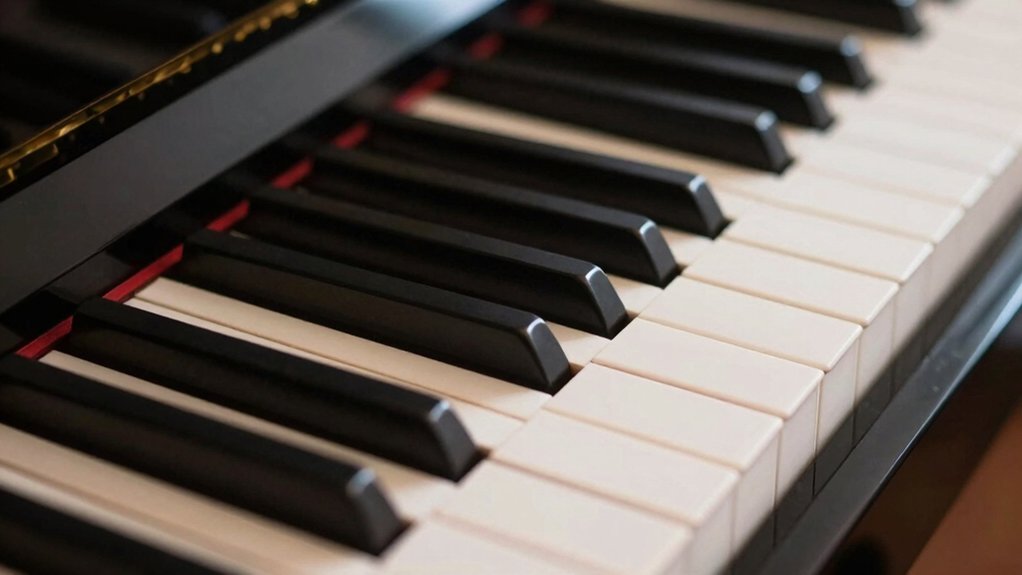
Weighted keys matter because the feel of the keyboard shapes how you control dynamics, not just the sound. You’ll notice how action resistance and rebound influence touch, velocity, and technique, shaping your precision and stamina over longer sessions. A well‑balanced weight profile provides consistent feedback across keys, reducing fatigue and guiding your touch toward expressive control. If you’re focused on technique and progress, the right weighted action can redefine what you can accomplish on a practice session.
What Weighted Keys Are and How They Affect Touch
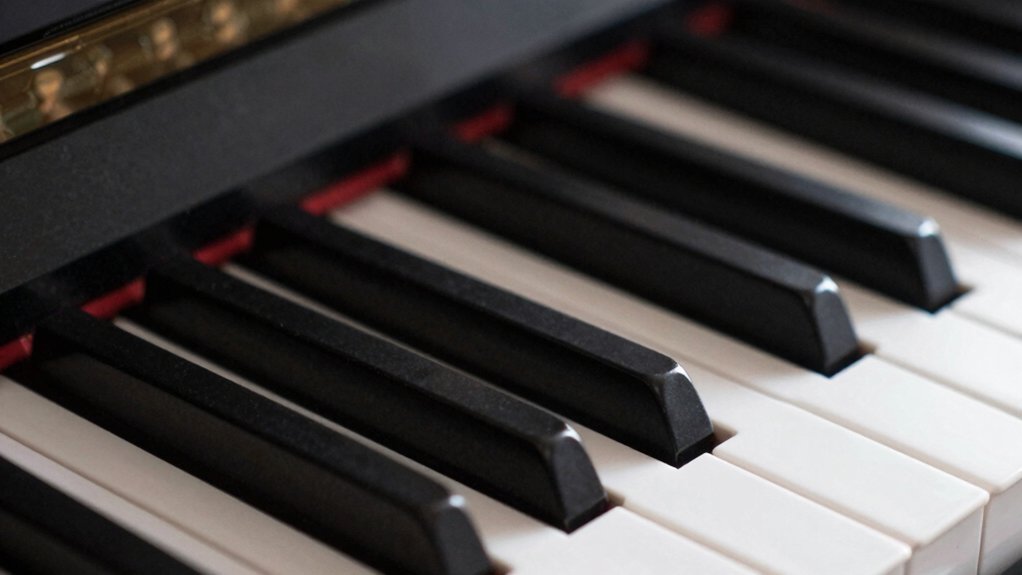
Weighted keys are piano-action components designed to simulate the feel of an acoustic piano by adding varying resistance to key movement.
You’ll notice that this resistance shapes your control, dynamic range, and pedal interaction, influencing touch sensitivity and repetition accuracy.
In digital piano mechanics terms, weighted keys reproduce hammer-like feedback without strings, using calibrated springs, weights, and fulcrums to produce a gradient of force from light to firm.
The goal is repeatable key return and predictable response across key velocities.
When you compare boards, focus on key resistance comparison: how resistance changes with velocity, weight distribution, and center of gravity.
Properly implemented, this yields smoother progression between soft and loud passages, better touch consistency, and a more expressive playing experience.
How Keyboard Action Changes Velocity and Feel
Keyboard action translates your finger movement into velocity by converting rapid key motion into audible and tactile response through mechanical geometry and spring-dynamics, not just electronics.
Your touch interacts with a piano-style or synthesizer action, where hinge points, levers, and return springs define travel, downforce, and release.
As you depress a key, force propagates through a sequence of links, shaping velocity before a note is struck or a sensor is engaged. This chain governs key responsiveness, determining how quickly the system reaches trigger thresholds and resets.
High-fidelity actions minimize lag, while balanced springs prevent overshoot.
Consistent feel across the keyboard reduces finger fatigue, enabling repeatable dynamics.
In practice, action tuning targets linearity of response, stable aftertouch, and predictable resistance as keys travel the full range.
Light, Medium, and Heavy Weights: What Each Feels Like
If you’re feeling the difference between light, medium, and heavy keys, the variation isn’t just about effort—it changes how quickly you reach the trigger, how much you can control dynamics, and how fatigue accumulates over a session.
Light action yields rapid response with minimal travel, encouraging precision at quiet levels but sparking inadvertent notes if your touch isn’t steady.
Medium weights balance trigger latency and control, offering reliable dynamic range without excessive force.
Heavy weights demand deliberate input, reducing accidental hits while narrowing rapid phrasing and increasing forearm effort.
Keybed materials influence feel consistency across temperatures, while key texture affects finger grip and rebound perception.
Together, weight, materials, and texture shape your playability, pedal interaction, and long-term endurance in practical, measurable ways.
How Weighted Action Shapes Technique and Learning
The action weight you’ve felt doesn’t just affect how keys respond; it molds technique and learning by shaping touch selection, phrasing decisions, and keyboard economy. You develop a consistent touch map: heavier actions encourage deliberate timing and even attack, lighter ones reward quick release and precision.
Weighted action directly influences economy of motion; you optimize finger, hand, and wrist movements to minimize unnecessary travel. You’ll calibrate fingering choices to align with resistance, reinforcing repeatable tactile patterns for scales, arpeggios, and dynamic exercises.
In practice, you internalize tactile feedback to anticipate rebounds, reducing over- or under-pressing. This sharpens sensorimotor awareness, improving consistency across registers.
Consider keyboard ergonomics as a framework for posture, alignment, and rests, while using feedback cues to guide gradual technique refinement.
How to Pick the Right Weighted Keyboard for Practice and Play
When choosing a weighted keyboard, start by matching the action to your practice goals and physical comfort, then confirm it through hands-on testing. Prioritize a realistic hammer action or graded weight if you play varied repertoire, and verify key resistance suits finger strength without fatigue.
Assess keyboard features that affect practice efficiency: touch sensitivity, aftertouch, and response consistency across the keyboard’s range. Verify pedal behavior, especially sustain and half-press stability, since sustain contributes to musical phrasing and accuracy.
Consider long-term maintenance: stable action, solid keybed, and accessible keyboard maintenance routines to prevent drift in weight or feel. Compare action curves against recorded music theory exercises to validate predictable dynamics.
Select a model with durable construction and reliable parts to sustain practice quality over time.
Conclusion
You stand at the door of a practice room, and weighted keys are the hinges you trust. Like a map’s compass, they translate intention into motion, guiding your touch with consistent resistance. When you learn on weighted action, the keyboard becomes a mentor, teaching dynamics and control through feel, not noise. Choose your weight like a tool for the task: light for speed, heavy for control, and medium for balanced growth. Mastery follows the tactile path you commit to.