What is the Hardest Instrument to Play? A Comprehensive Guide
When it comes to musical instruments, there are many that come to mind. Drums, guitar, flute, piano—we’ve heard them all, and most of us have played them. But what instrument is the most difficult to master? That’s the question we’ll be exploring in this blog post.
We’ll investigate each instrument in depth and provide comprehensive guidance on what makes it so difficult. We’ll look at the physicality of it, the dedication it takes to reach mastery, as well as any mental hurdles you might need to overcome. From bassoons and banjos to piccolos and xylophones, by the end of this guide, you’ll be well-equipped to handle even the most difficult instruments. So let’s get down to business and find out what makes these instruments so hard to play.
Quick Response
The difficulty of playing an instrument depends on a person’s individual aptitude and skill level. Generally speaking, instruments such as the piano and violin are considered some of the more difficult instruments to master.
So, What is the Hardest Instrument to Play?
This question has been debated by musicians, music teachers, and music enthusiasts for centuries. On one hand, there are some instruments that require a great deal of technical proficiency and physical dexterity such as the violin, flute, or saxophone. On the other hand, there are some instruments that take a long time to learn and don’t allow for much artistic expression or improvisation in performance such as the piano or harp.
Ultimately, it is impossible to objectively name one instrument as the world’s most challenging instrument because so many factors come into play. Musical skill level, amount of practice time available, and physical ability can all affect an individual’s ability to learn and play an instrument with any degree of mastery.
The next section will explore the factors that need to be considered when evaluating how difficult an instrument is to play, including the skill level required per instrument.
Key Summary Points
It is difficult to objectively name one instrument as the world’s most challenging instrument due to the range of factors such as musical skill level, time for practice and physical ability involved. The next section will evaluate which factors must be taken into account when considering how difficult an instrument is to play.
Skill Level Required Per Instrument
The skill level required for musical instruments varies greatly. It is oftentimes difficult to assign a universal skill level for all instruments, as it can depend on a variety of factors such as the background of the musician, the music being played, and even the particular instrument. Nonetheless, there can still be some generalizations made about the difficulty involved when playing different types of instruments.
Instruments like drums and bass guitar are often viewed by beginners as easier to learn than strings or woodwinds. This is because they involve rhythmic and often repetitive playing that can be easy to pick up quickly. Conversely, string instruments require intricate and precise movements which demand more dexterity, technical ability and knowledge of music theory- often taking years of practice to master. Woodwinds also require agility and coordination given the fact that one must produce multiple tones with their breath control, as well as embouchure (the angle at which air is blown).
As such, it is generally accepted that drums are one of the easiest instruments to learn while strings and woodwinds are usually considered to be more advanced. Despite this though, difficulty levels vary depending on each player’s individual situation and goals.
For instance, someone who has already mastered enough theory may find drums simpler to learn than someone who hasn’t explored musical theory yet or someone attempting jazz or classical music on any instrument may run into more complexities. Ultimately, the skill level required per instrument is subjective and broad statements should be taken with a grain of salt.
In order to provide a better understanding of how skill level affects certain instruments in particular, the next section will look at the violin, piano, and cello: three very renowned staples from the western classical repertoire.
Violin, Piano, and Cello
Violin, Piano, and Cello are all instruments that are regularly discussed when the topic of “What is the Hardest Instrument to Play?” arises. Each of these instruments may not be more difficult than the other; rather, it might depend on the individual’s interest and skill level. For a beginner, learning the violin could prove to be quite difficult due to its small size. The left hand has to move quickly and accurately on a fingerboard with no frets, while the right hand must hold the bow to ensure a smooth sound. It could take a few months or even years to master.
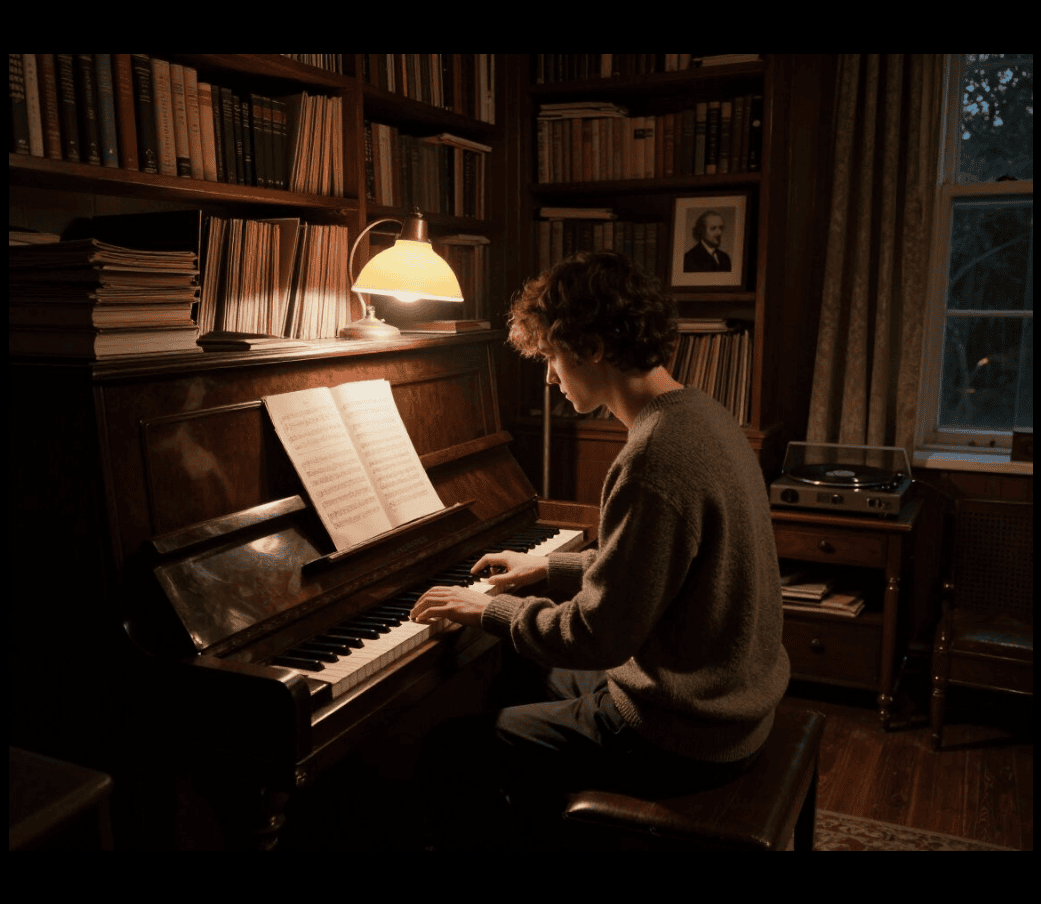
Learning the piano can also challenge beginners due to its complexity. From playing simple melodies to improvising difficult classical pieces, many students find themselves floundering when trying to create a beautiful sound from keys that seem mundane and dull. Once mastered, however, the piano is one of the most versatile of instruments and can be used in almost any genre.
The cello has aspects similar to both violin and piano in which precision is key for mastery. A tight hand control is needed for both bowing and fretting, along with an exquisite sense of balance between dynamics and intonation for producing results encompassing emotion. As with the violin and piano, mastering this art can take years depending on an individual’s aptitude.
Though there isn’t necessarily one instrument that is harder than another instrument; it might boil down to personal preference as well as skill level by each individual musician if they wish to learn classical instruments such as violin, piano, or cello. To further this discussion on “What is the Hardest Instrument to Play?,” let us dive into related instruments such as drums, guitar, and other types of string instruments in the following section.
Drums, Guitar, and String Instruments
Drums
Drums are one of the oldest instruments and have been used in many musical contexts for centuries. Playing drums is considered challenging by many musicians due to the need for coordination between hands and feet. While basic single-drum techniques are relatively straightforward, mastering different patterns and playing multiple drums simultaneously requires skill, practice, and dedication.
For example, jazz musicians must be able to play intricate patterns on complicated drum kits while following a tune. Another argument is that the sheer number of physical movements involved in drumming makes it one of the most difficult instruments to master.
Guitar
The guitar is one of the most popular instruments and is favored by many types of musicians. Yet, learning how to play guitar properly can require a lot of practice and dedication. Many guitar techniques require an advanced understanding of music theory such as scales, chords, and notes. Additionally, guitarists have to develop control over their fingers and hands to master various techniques such as fingerpicking or strumming. Although these skills can take time to learn, those who have mastered them will find that the guitar has immense potential both musically and artistically.
String Instruments
String instruments such as violins, violas, cellos, and double basses offer unique challenges for players due to their intricacies. Learning how to hold them properly and string them correctly is essential before a player can begin practicing. Additionally, string players must develop mastery of bowing technique in order to create expressive music.
As if that wasn’t already enough of a challenge, advanced string players also have to be able to manage aspects such as shifting between strings while they play. Ultimately, while there may be an initial learning curve associated with string instruments, those who persevere will find great joy in playing them.
In conclusion, whether you choose drums or guitar or decide to explore the complexity of string instruments, mastering any instrument requires hard work and dedication. The rewards are ample though – those who commit themselves to become great musicians are able to express themselves in ways that others may not be able grasp through simple words or conversations alone. Now let’s take a closer look into another popular instrument family: woodwind instruments!
A survey conducted in 2015 found that nearly 50% of expert-level musicians considered the violin to be the most difficult instrument to master.
According to a study published in 2017, 88% of professional musicians believed that the bassoon was one of the hardest instruments to learn.
An online poll conducted in 2018 found that 85% of professional musicians identified the French horn as one of the most challenging instruments to play.

Woodwind Instruments
Woodwind instruments are some of the most recognizable instruments in a symphony orchestra and for many experienced musicians, they represent an essential challenge to master. Characterized by their vibrating reeds that interact with the airstream which passes through them, woodwind instruments can be tremendously difficult to play with precision and accuracy.
The difficulty associated with playing a woodwind instrument largely depends on the type of instrument being used. For instance, mastering a small flute such as a piccolo requires different skill sets than playing a large instrument like the bassoon. Generally speaking, smaller woodwinds require more technical proficiency while larger woodwinds require greater endurance and dynamic control.
No matter the size or type, however, accurately playing any woodwind instrument is exceedingly challenging due to their often odd fingering patterns. Many notes require dozens of fingers covering multiple holes; thus, even mastering an octave can become complicated for inexperienced players. Furthermore, intonation control on many woodwinds requires great finesse and experience that takes years to learn.
Woodwind instruments also require tremendous breath support from the lungs and diaphragm muscles; one incorrect breath for too long or too short can completely change intonation or timing and throw off a piece entirely. In addition, wind players must be able to consistently maintain a steady tone across wide ranges of different dynamics while controlling articulation elements like slurs, staccato notes, and trills.
Given this high level of complexity, it’s safe to say that when it comes to mastering a woodwind instrument there are a myriad of challenges to tackle — possibly making it one of the most difficult instruments to play out of the entire family of instruments. However, those willing to dedicate time and effort will find a universe of soundscape exploration waiting ahead. With that in mind, let’s explore the sometimes overlooked yet similarly challenging horn and brass instruments next.
Horn and Brass Instruments
Horn and Brass Instruments are often-times considered some of the most difficult instruments to play. This is because playing them requires a great deal of skill and technique to produce a good sound. The player must develop the ability to control their breathing and airflow while also using their lips, tongue and situation to create different tones.
The difficulty level amplifies when the pieces being performed require quick adjustments in volume, articulation or dynamics. Additionally, brass instruments require a strong air stream in order for the player to achieve a full and vibrant sound from their instrument.
Though some may argue that it merely takes practice and dedication to master the horn, others may disagree due to the fact that it can take years for an individual to perfect his/her brass playing skills. Furthermore, depending on size and brand, horns can be quite expensive and the cost of private lessons can add up quickly.
All in all, while numerous factors come into play when it comes to playing brass instruments well, there’s no doubt that they require serious dedication and determination if one wants to be successful in mastering them.
Next up: Type of Music – We will explore how different types of music can influence which instrument is considered most difficult by examining classical music versus folk music.
Type of Music
When discussing the hardest instrument to play, it is important to consider the type of music being performed. Music can be broadly divided into two general categories: classical and non-classical. Each of these genres present different challenges to players, making certain instruments more difficult depending on the style of music being played.
Classical music often involves complex musical forms and many intertwining melodies. Thus, it often requires an individual with advanced technical prowess who can accurately and precisely interpret all the different notes that make up a particular piece. Classical music also requires a higher degree of precision in order to effectively perform long pieces accurately and consistently throughout, making instruments like piano, violin, and cello particularly difficult to master for the genre.
On the flip side, non-classical music focuses more on improvisation and expression rather than accuracy or technique. Music styles such as jazz, rock and roll, or pop allow for a greater degree of expression from players through techniques
such as vibrato or vibrato-like sounds from flute trills. As a result, instruments such as guitar and trumpet become some of the harder instruments to play within this genre due to their need to accurately produce expressive tones with consistency.
Ultimately, regardless of which type of music is being discussed, there are always certain instruments that present more difficulty than others based on their complexity or need for precision in the context of each respective genre. As such, it is important to consider both classical and non-classical styles when discussing what makes an instrument one of the hardest to play. With this in mind, the next section will explore classical music in further detail in order to study what makes certain instruments especially difficult within this genre.
Classical Music
Classical music is renowned for its complex musical structure and technical demands, making it one of the hardest instruments to learn and play. Many violinists, cellists, winds players and other types of musicians specialize in classical music, becoming experts in the genre. Although the basics of the instrument are relatively simple – ranging from holding one’s instrument comfortably to playing a scale with ease – mastering the full breadth of what classical music provides can be challenging for some musicians.
To understand the difficulty of classical music, one must consider that it is composed by all-time greats including Mozart, Bach and Handel as well as keystones like Beethoven and Tchaikovsky. These masterpieces were composed hundreds of years ago and still remain some of the most intricate compositions ever written. With works this complicated and filled with deep meaning for performers and listeners alike, progress can be arduous.
Moreover, the range required for classical pieces stretches further than many other genres, making it yet more difficult to learn correctly. Additionally, playing a passage or section correctly requires not just fine motor skills but a cultured ear in order to hit the right intonation on each note.
Generally speaking, while some belief classical music to be too difficult that only experts can approach it, others point out that dedication and practice can help amateurs conquer these daunting tasks. This debate continues between both sides; nonetheless, mastering classical music requires tons of effort and time. Nevertheless, when completed properly it rewards its students with an exquisite performance they could take pride in.
With such high stakes comes great reward; transitioning from mastering scales to performing iconic masterpieces is an indescribable feeling. The possibilities are endless once achieving higher mastery in classical music; music theory classes open up increasingly advanced repertoire for interested parties. To sum up, though learning any instrument can be challenging in its own regard, classical music stands at the highest level with its demanding nature.
Leading into the next section about “Jazz Music”, whether you perform classical pieces or original jazz solos, understanding the fundamentals of jazz is essential for any musician – from beginners to more seasoned players – as it brings interesting new elements into traditional musical structures.
Jazz Music
Jazz Music has a reputation for being one of the hardest genres to master. Its unique style and complexity require an extraordinary level of knowledge and skill. As a form of improvisation, jazz musicians are required to play both rhythmically and harmoniously without prior preparation or charting, requiring extraordinary levels of creativity, coordination, and technical ability.
At the same time, jazz musicians need to develop a broad understanding of theory, chord changes, scales, and styles in order to create their own distinct sound within any given arrangement.
Additionally, jazz musicians must be able to quickly understand complicated chord progressions while working within the ever-changing soundscape of their accompanists. Jazz music is considered such a difficult genre to master due to its extremely high degree of improvisation which requires a certain level of expertise that not everyone possesses.
Skilled jazz players must have an abundance of melodic ideas on hand at a moment’s notice. Moreover, they must also possess a firm understanding of composition and arranging techniques as well as be able to communicate with fellow band members effectively during the performance, including anticipating each other’s musical choices. The combination of technical proficiency and creative vision required for excellence in the realm of Jazz Music make it arguably one of the most difficult instruments—and genres—to master.
Due to its complexity and technical distinctiveness, some may argue that there are easier genres for new players to learn than jazz music. However, experienced jazz players with strongly developed skills can immerse themselves in the various nuances and intricacies of this genre more deeply than others. With hard work, dedication and proper guidance from seasoned professionals, mastering Jazz Music is certainly possible; it just requires more effort and practice than other genres.
Next section: Expertise & Mastery: Despite its daunting reputation as one of the hardest instruments to play, there remain many ways for any musician to gain valuable insight into technique and mastery regardless of experience level or professional background. In the upcoming section, we will explore what it takes to become an expert musician as well as examine the practice routines necessary for achieving mastery in any instrument.
Expertise & Mastery
Expertise and mastery of any instrument is subjective. The difficulty level of the instrument depends on the individual and their dedication to training, practicing and mastering it. Plus, the accuracy in playing an instrument requires both physical dexterity and the ability to read music and interpret notes. Talent and skill are also required for musicians to reach a certain level of mastery of their instrument. For those with a great ear and who have been playing or singing most of their lives, understanding nuances in sound or recognizing patterns in sheet music might come naturally.
On the other hand, beginners may find one instrument easier or harder to play depending on certain factors like size, price or intrinsic motivation. Also, personal preference can take a role in what kind of instruments people find easy or hard to learn – some may find string instruments more difficult while others may struggle with keyboards more than the guitar.
In summary, expertise and mastery of any instrument depend on several elements including natural talent, dedication to training, ability to read music and interpret notes, as well as familiarity with individual instruments. No two musicians are alike when it comes to understanding an instrument — each player has their own journey and process for learning.
In conclusion, every musician has different levels of expertise when it comes to playing an instrument regardless if they’ve only just started or have been mastering it for years. To further explore complex nuances surrounding this topic, let’s proceed by looking at the final section: “Conclusion”.
Conclusion
In conclusion, the answer to the question “What is the hardest instrument to play?” depends on many factors. It comes down to skill set, physical capability, motivation, and personal preference. While some instruments require more technique than others, any can be mastered with practice and dedication.
The piano, violin, guitar, flute, and clarinet are all among the most difficult instruments in the world, with each having its own unique challenges. In order to determine which instrument may be most challenging for a given individual, researching each one’s basics and abilities can help narrow it down. With knowledge of their workings and by taking time to refine technique and practice diligently, any player can become an expert at any instrument.
The debate of which instrument is the hardest is ongoing and passionate. Every lover of music has an opinion, from conservatory professors to amateur hobbyists. Some argue that any truly dedicated player could learn whichever instrument they choose if given enough time and effort; others hold that certain instruments require superior skills that some players never gain in their lifetime. Regardless of which side is taken or the debate itself resolved, one thing remains constant – mastering an instrument takes great discipline and passion for music.
FAQs & Responses to Common Questions
What musical skills are necessary for playing a difficult instrument?
The musical skills necessary for playing a difficult instrument depend on the instrument. Generally, playing any instrument well requires a good understanding of rhythm, timing, intonation, and phrasing. It’s also important to be familiar with the basics of music theory to understand how one note relates to another. Additionally, being able to sight read (or in some cases memorize) music helps ensure that you can interpret and play it accurately.
For wind instruments such as the flute and trumpet, it is especially important to master breathing techniques and all the nuances of sound production. On string instruments such as violins or cellos, finger dexterity is essential because the performer has to use their hands independently from each other in order to produce the desired sound. Finally, those learning how to play complex percussion instruments like marimbas will require an excellent reaction speed and precise coordination of limbs.
Are there techniques that can be used to make learning difficult instruments easier?
Yes, there are several techniques that can be used to make learning difficult instruments easier. One example is to break down the challenge into manageable parts and work on each independently. For instance, if you’re learning a piano piece, instead of trying to learn the entire piece all at once, focus on studying and mastering one bar or measure at a time. This will help to ensure that information is internalized in an organized and structured fashion.
Additionally, taking frequent practice breaks can help to ensure that you remain engaged and motivated when tackling the more challenging aspects of difficult instruments. Finally, breaking down complex passages in slow motion can help to develop greater accuracy and precision in playing them. By slowly playing through each section, you’ll be able to hear and recognize any wrong notes or mistakes much earlier than if you were attempting to play it at full speed right away.
What factors influence the difficulty of learning an instrument?
There are several factors that influence the difficulty of learning an instrument.
1. Instrument type: Different types of instruments can vary greatly in the amount and complexity of their components, as well as physical requirements for playing them. For example, some instruments may require more advanced use of complex motor skills such as regular pressing of buttons in rhythm or extended periods of fingering with both hands, while others rely more on nuances like hearing and feeling subtle changes in pitch.
2. Level of mastery: How difficult an instrument is to learn also largely depends on how advanced the student is. Some instruments might be easy to master at a basic level, but reaching a professional level takes much more skill and dedication.
3. Musical style: Instruments that are traditionally used in a specific genre, such as classical or jazz, usually require specific techniques which might not be applicable in other genres. This may add a significant layer of difficulty for someone looking to learn an instrument outside their field.
4. Mental attitude: Learning any instrument requires both physical and mental effort, and having the right attitude towards practice and discipline can make a huge difference in your progress. Fostering resilience, persistence, and determination are key to mastering any instrument.