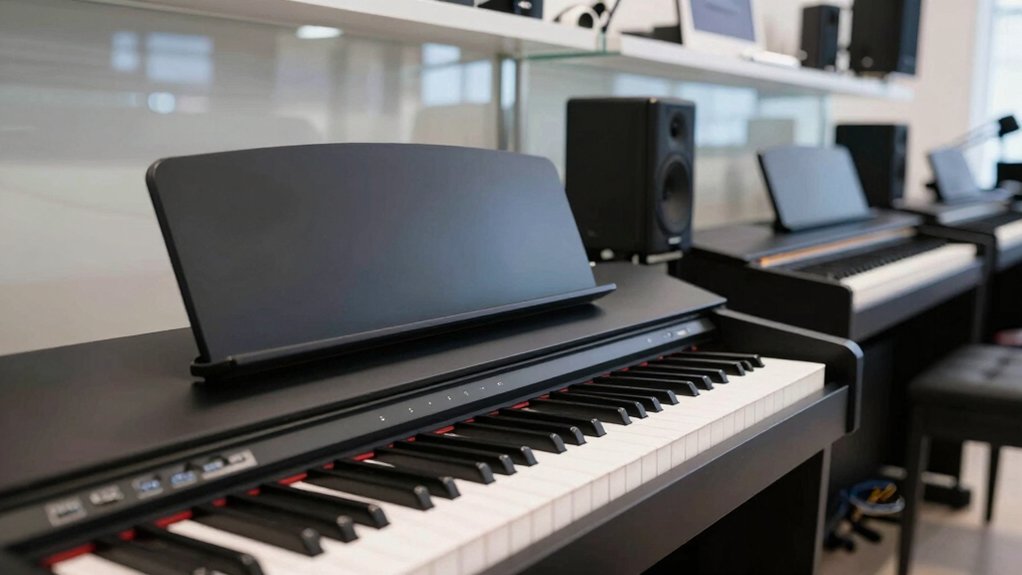
Not sure what should I look for when buying a digital piano? Discover the essential features, specifications, and quality markers that separate excellent instruments from disappointing purchases for any budget.
Under soft piano light, you feel the keys respond like a real instrument. You’ll want graded hammer action for a consistent, nuanced touch, solid sound that stays clean at higher volumes, and reliable speakers or line-out for your space. Look for solid connectivity—USB, MIDI, optional Bluetooth—and practical pedals. Balance price with build quality and adjustable settings to fit practice, recording, or stage needs. If you can align these, you’ll know exactly where to start as you compare models.
Digital Piano Basics: Action, Sound, and Connectivity
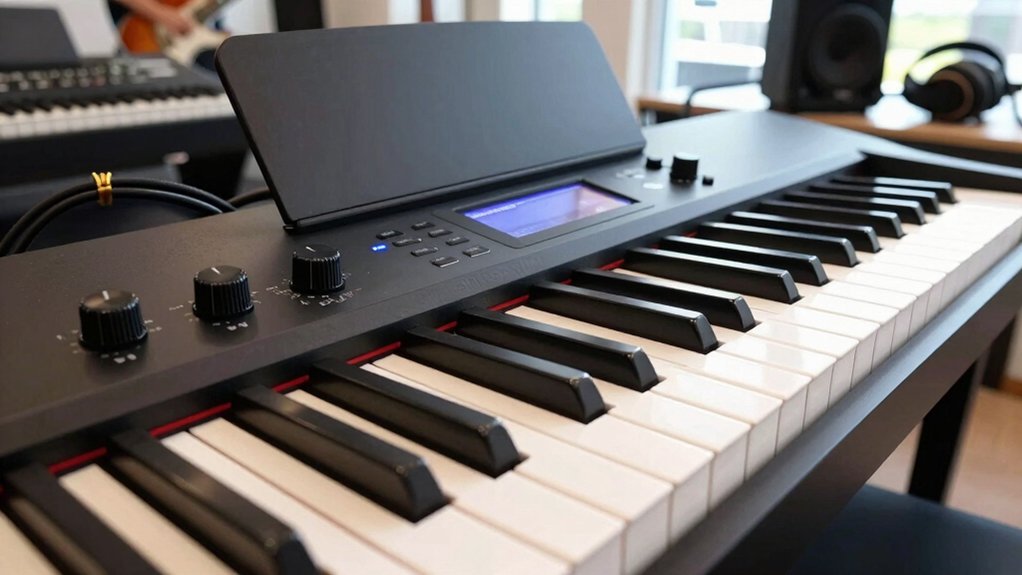
When you’re evaluating a digital piano, start with action, sound, and connectivity—the three pillars that determine feel, tone, and versatility.
You’ll assess keyboard sensitivity by how responsive the keys are to touch, including gradual dynamics and repeat accuracy. Consider key material, which influences weight, rebound, and durability, shaping your tactile experience and long-term wear.
Action quality matters for expressive playing: graded hammer, sum-to-damp, or semi-weighted options affect attack consistency and pedal response.
Sound quality hinges on speaker design, polyphony, and A/D conversion, ensuring clarity across registers and subtle nuances.
Connectivity should support your setup, with USB, MIDI, Bluetooth, and sustain pedal compatibility.
Prioritize models that balance tactile realism, durable construction, and practical integration with your practice or performance workflow.


Evaluate Keyboard Action on a Digital Piano
Evaluating keyboard action on a digital piano starts with how the keys respond under your touch. You want consistent, predictable motion from the moment you press until the note sounds.
Test for key weighting and travel: weighted keys should imitate an acoustic piano feel, with noticeable resistance that increases toward the higher end. Assess key responsiveness by playing scales and arpeggios—notice any latency, uneven springiness, or dead zones.
Check repeatability across the keyboard; a good action feels uniform from C to C. Consider the action type: graded heavier for lower notes can aid accuracy, while non-graded action prioritizes uniformity.
Balance touch sensitivity with dynamic control, so soft passages remain expressive without sacrificing precision. Finally, make certain the keys register accurately at your typical playing force.
Sound Quality, Speakers, and Room Fit
Sound quality, speaker setup, and room fit determine how faithfully a digital piano reproduces piano timbre and dynamics in real-world listening spaces. You’ll want to assess the built-in speakers for clarity across registers, headroom at higher volumes, and the absence of distortion.
If you plan to pair with external monitors, verify line-out compatibility and power handling to preserve dynamics.
Room interactions matter: consider cabinet resonance, diffusion, and bass tightness in typical listening positions. Evaluate digital piano aesthetics and how speaker placement aligns with your room, since appearance influences placement and acoustics.
Brand reputation matters for consistent voicing, firmware support, and service. Prioritize models with verifiable SPL performance, realistic hammer response, and balanced tonal curves that translate well to your environment.
Essential Features for Practice and Performance
You’ll want a digital piano that supports efficient practice and reliable performance, with features that adapt to your level and repertoire rather than boastful specifications. Prioritize responsive key action, realistic hammer feel, and adjustable touch sensitivity to match your technique.
Look for metronome reliability, a clear record/playback path, and scalable practice modes that segment tempos, dynamics, and phrasing. In performance-ready layouts, confirm dependable damping, headphone isolation, and minimal latency for late-night work without distractions.
Connectivity matters: music app compatibility should extend to pedagogy apps, lesson platforms, and MIDI control without cumbersome workarounds. Ensure presets for common repertoires, easy switching between practice and stage settings, and a compact, aesthetic design that complements your space while remaining durable and portable.
Budgeting for Maximum Value on a Digital Piano
To maximize value, start by clearly defining your use case, budget ceiling, and must-have features. Then map those needs to price bands—entry, mid, and pro—so you can prioritize essential elements over flashy specs.
You’ll assess core factors like keyboard action, polyphony, and speaker quality within each band, preventing overinvestment in unnecessary luxuries.
Compare total ownership costs, not just sticker price, by weighing pricing options against long-term value, durability, and aftercare.
Check warranty coverage details—duration, what’s covered, and return options—so you aren’t trapped by hidden costs after purchase.


Align your choice with expected usage: practice, recording, or performance.
In practice, a balanced move is choosing the highest tier that fits your budget while meeting critical musical needs and reliability expectations.
Conclusion
When you buy a digital piano, prioritize action, sound, and connectivity that match real playing needs. You want graded hammer action for consistency, clear, balanced tone across registers, and reliable amplification or headphones for private practice. Seek USB/MIDI, Bluetooth, and pedal compatibility to future-proof setups. Check build durability, adjustable touch, and speaker quality for your space. Compare models within your budget, test feel and tone, and confirm warranty. Choose smartly, invest thoughtfully, and enjoy dependable, expressive performance.
If you’re wondering what should I look for when buying a digital piano, you’re asking the right question before making what could be a substantial investment in your musical future. Knowing what should I look for when buying a digital piano will save you from costly mistakes like choosing an instrument with non-weighted keys that damages your technique, inadequate polyphony that cuts off notes mid-performance, or poor-quality speakers that make even expensive sound engines sound tinny and lifeless.